TL;DR
If your dog refuses food with powder on it, change the mixing method before changing the product. Start with a small portion, blend the powder thoroughly, and confirm that your dog finishes it before serving the rest of the meal. If they reject their regular food without the powder, stop focusing on the supplement and pay attention to the broader appetite change.
A brief veterinary check is appropriate when appetite changes persist, your dog seems unwell, or they refuse ordinary food as well as the supplemented portion.
Why does my dog refuse food with powder on it?
The powder may change the smell, taste, texture, or moisture of a familiar meal. Some powders settle at the bottom, form visible clumps, or leave an odor that becomes stronger when mixed into a full bowl. A dog who normally eats the food may reject the bowl because the new version is noticeably different.
That does not tell you whether the product itself is suitable. It tells you that your dog is not accepting the current presentation. Before replacing the product, change one part of the feeding method at a time so you can see what makes a difference.
Common variables to check include:
- whether the powder is evenly distributed;
- whether the food is wet enough to hold the powder;
- whether the serving is mixed into too much food;
- whether your dog can smell or see dry patches;
- whether the supplement was introduced at the same time as another food change.
For more detail on preventing settling and clumping in wet food, see Mixing Dog Supplement Into Wet Food: Stop the Settling.
What should you change first?
Use this order rather than changing several variables at once:
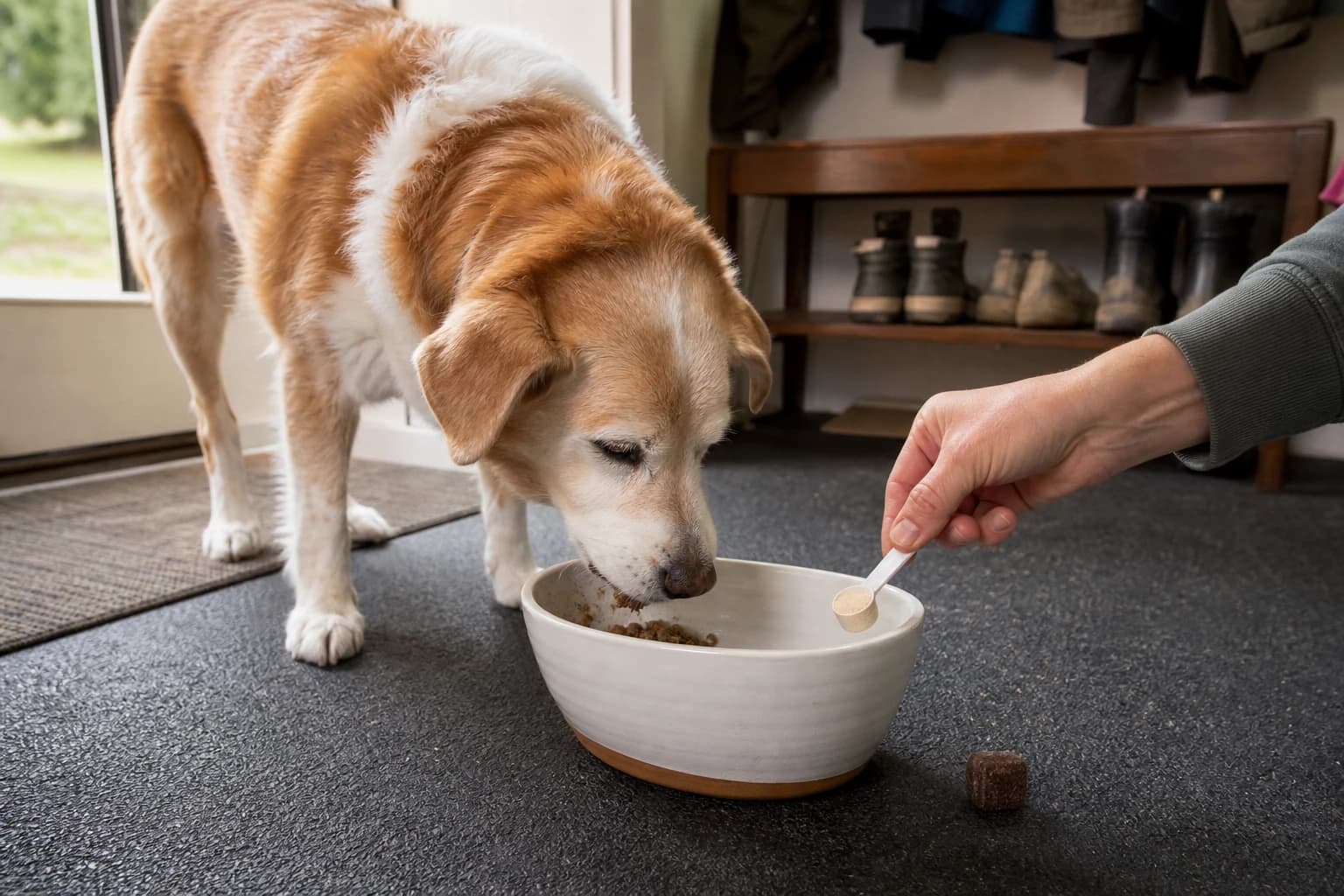
1. Use a small portion. Put aside a small amount of the food your dog already accepts. Mix the powder into that portion instead of hiding it in the entire meal. 2. Blend it completely. Stir until you no longer see dry pockets or a layer collecting at the bottom. If the food is too dry to hold the powder, use only a small amount of a familiar food your dog already eats. 3. Offer the test portion first. This lets you see whether your dog accepts the supplemented food without risking the whole meal. 4. Confirm the bowl is empty. Look at the dish rather than assuming the serving was finished. Powder left behind means your dog may not have received the full labeled serving. 5. Keep the rest of the routine the same. Avoid introducing a new topper, treat, or food at the same time. A one-change trial makes the result easier to interpret.
The aim is not to make the powder disappear at any cost. The aim is to create a repeatable routine your dog accepts and that you can check easily.
A simple three-step mixing test
Test 1: Improve distribution
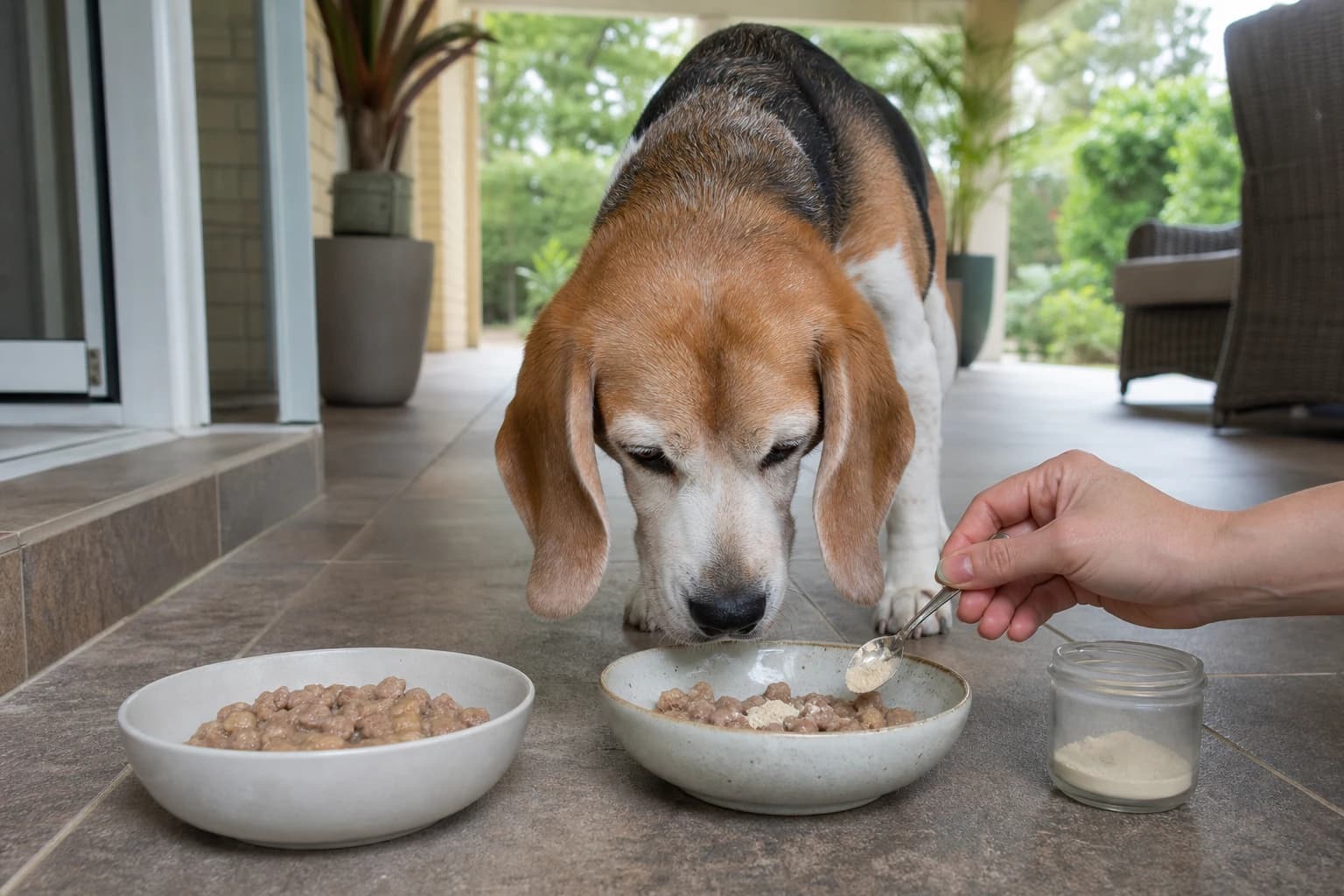
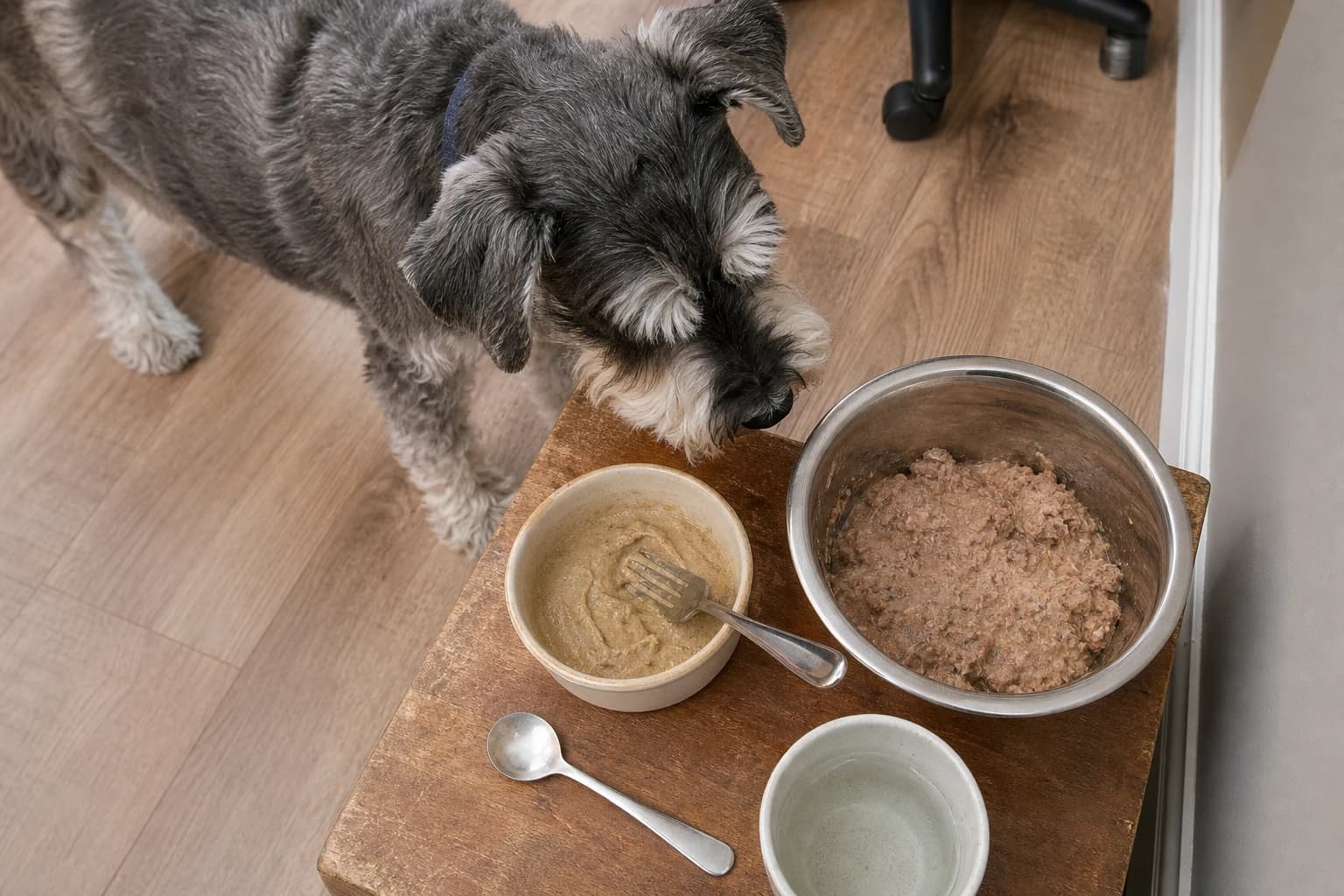
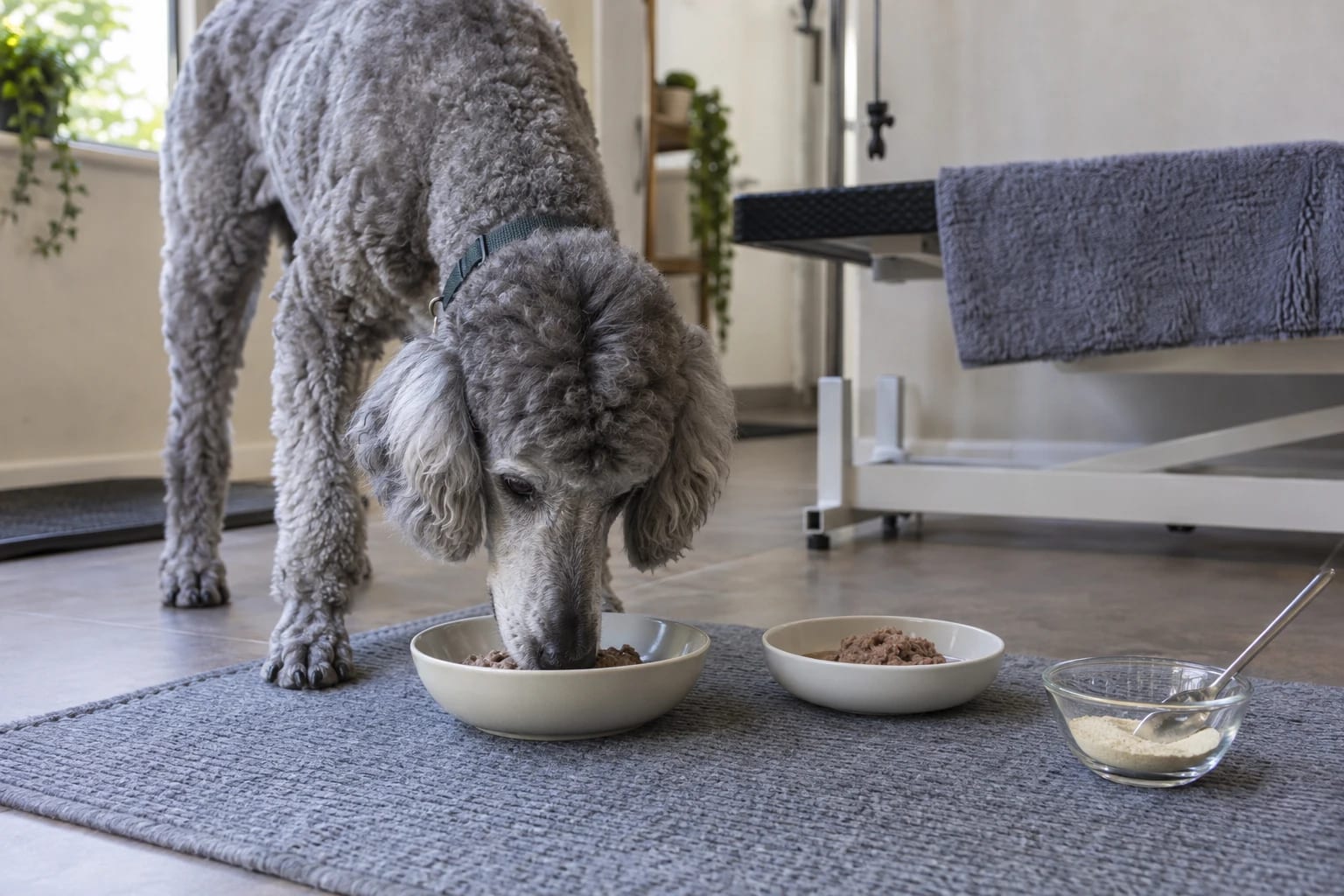
Mix the powder into a small portion of familiar wet food. Press and stir it through the food rather than sprinkling it on top. Serve this portion separately and watch whether your dog eats it completely.
Test 2: Change the food-to-powder contact
If your dog rejects the first test, try a different texture from the foods they already accept. A moist, cohesive food may hold powder more evenly than a dry or crumbly portion. Do not add several new ingredients just to disguise the powder, because you will not know which change affected acceptance.
Test 3: Compare with an unaltered portion
Offer a small unaltered portion on a separate occasion within the same familiar routine. Record whether your dog accepts the plain food, the mixed food, both, or neither. This comparison helps separate a powder presentation problem from a wider appetite change.
Keep the notes simple: date, food offered, whether the powder was mixed or plain, whether the portion was finished, and any other noticeable change. Three days of consistent observations can be more useful than trying a different method at every meal.
When should you change the format instead?
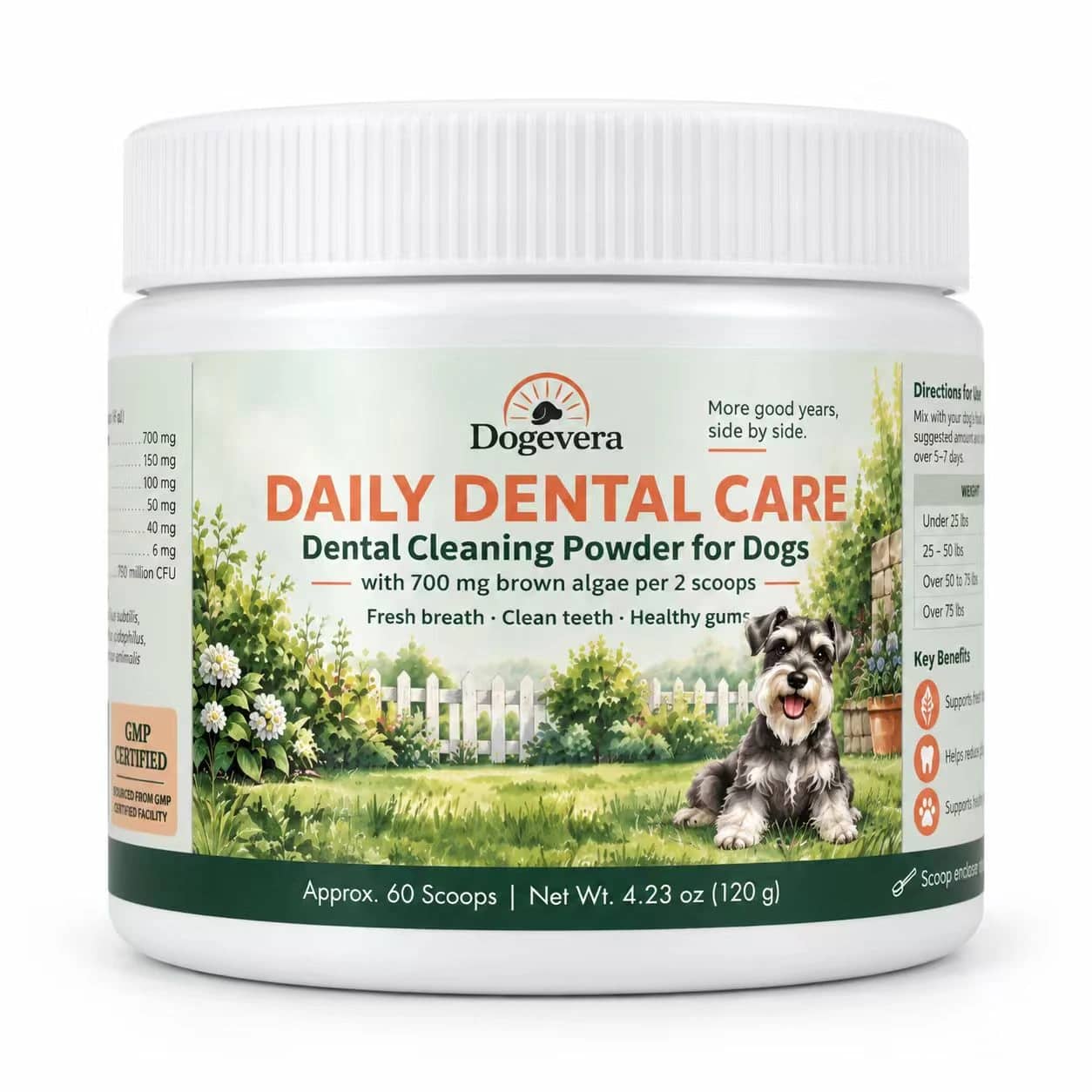
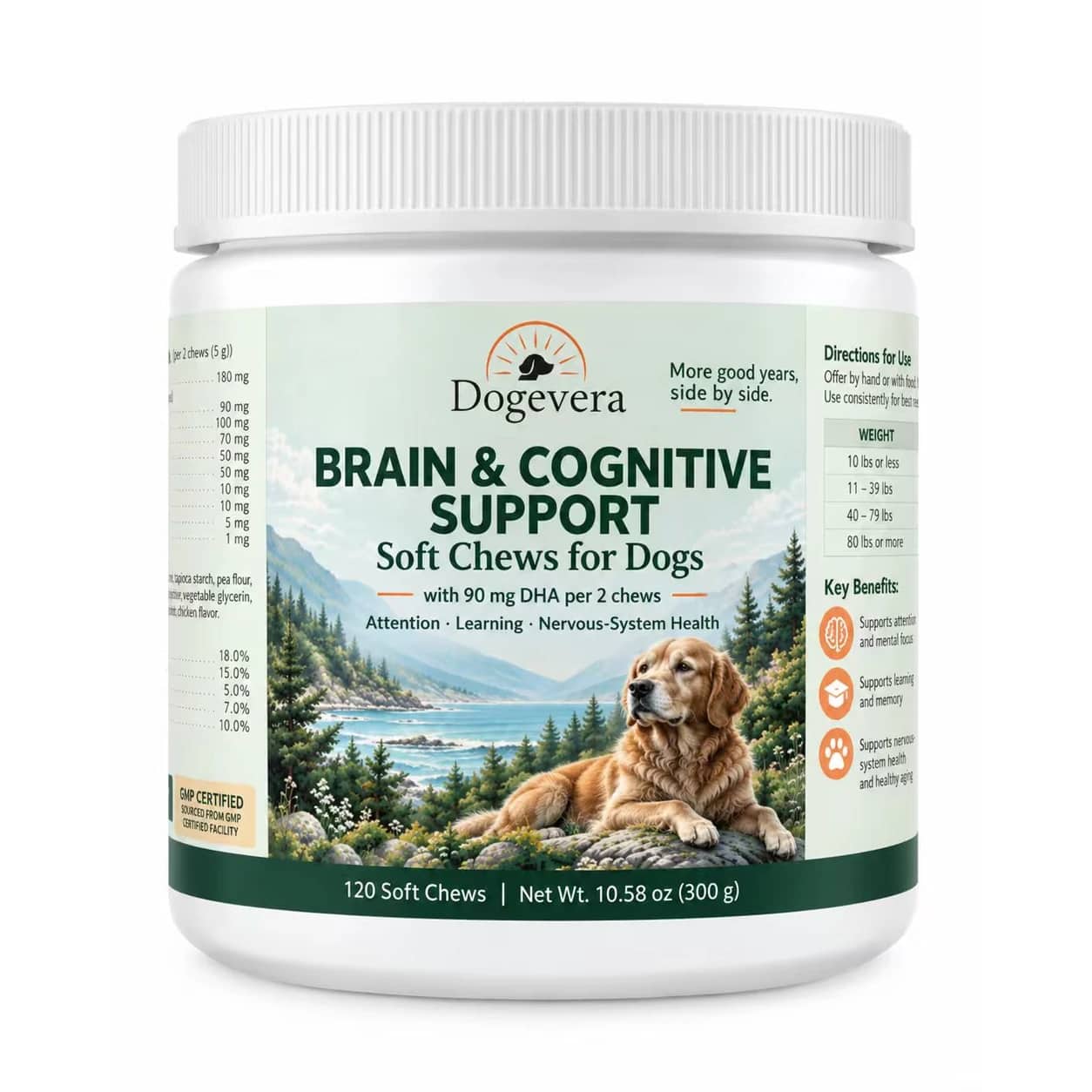
If careful mixing still leads to repeated refusal, the format may not fit your dog’s preferences. Compare the label, serving instructions, ingredients, food acceptance, and daily cost before moving from a powder to another format. The dog supplement powder vs soft chews guide can help organize that comparison.
Do not treat a soft chew as automatically easier or a powder as automatically better. The practical choice is the format your dog can accept consistently, the label explains clearly, and your household can provide as directed. If your dog has food sensitivities or a restricted diet, read the full ingredient panel instead of relying only on the product name.
If you do change products or formats, make that the only major change in the routine. Keep the observation log going so you can tell whether acceptance improved because of the format, the mixing method, or another change.
What if my dog refuses the whole meal?
Take the powder out of the decision first. Offer the usual food without the supplement and observe whether your dog accepts it. A dog who eats the plain meal but rejects the mixed portion points you toward smell, taste, texture, or distribution. A dog who refuses both deserves attention as a broader appetite change rather than a supplement-mixing problem.
Avoid repeatedly adding more powder, treats, or new toppers to persuade your dog to eat. That can make the meal harder to evaluate and may create more food changes than your dog needs. Write down what happened, including whether the refusal was limited to one meal or continued through the routine.
If your dog develops a noticeable reaction after starting a supplement, use the guidance in Dog Reaction to New Supplement: What to Watch and contact your veterinarian for advice about whether to stop it. If diarrhea occurs after starting one, Dog Diarrhea After Starting a Supplement: What to Do covers the observations to record.
FAQ
Should I hide the powder in the whole meal?
Usually, a small test portion is easier to check. If your dog rejects it, you have not lost the entire meal, and you can see whether any powder remains in the bowl.
Can I mix powder with a favorite treat?
Use a familiar food your dog already eats rather than adding several new treats. Keep the portion small enough that you can confirm it was finished.
Should I change the product immediately?
Not necessarily. First improve distribution, test a small portion, and compare the mixed food with the plain food. Change the format when the current one remains unacceptable despite a consistent mixing routine.
What does an unfinished bowl mean?
It means you cannot assume your dog received the full labeled serving. Check what remains, record it, and avoid automatically adding another serving unless your veterinarian or the package directions tell you how to handle a missed portion.
For individual health questions, your veterinarian remains the best partner.