At a Glance
When signs of anxiety show up in an older dog, resist the urge to overhaul their entire routine at once. Keep mealtimes, walks, rest, and interactions on a consistent schedule. Set up a comfortable spot where they won't be disturbed, then lean on calm activities plus familiar sounds and scents to help them feel secure.
If the change comes on suddenly, keeps intensifying, or clearly disrupts their eating, sleeping, activity, or bathroom habits, contact your veterinarian to figure out what's going on.
Why does a senior dog suddenly become anxious?
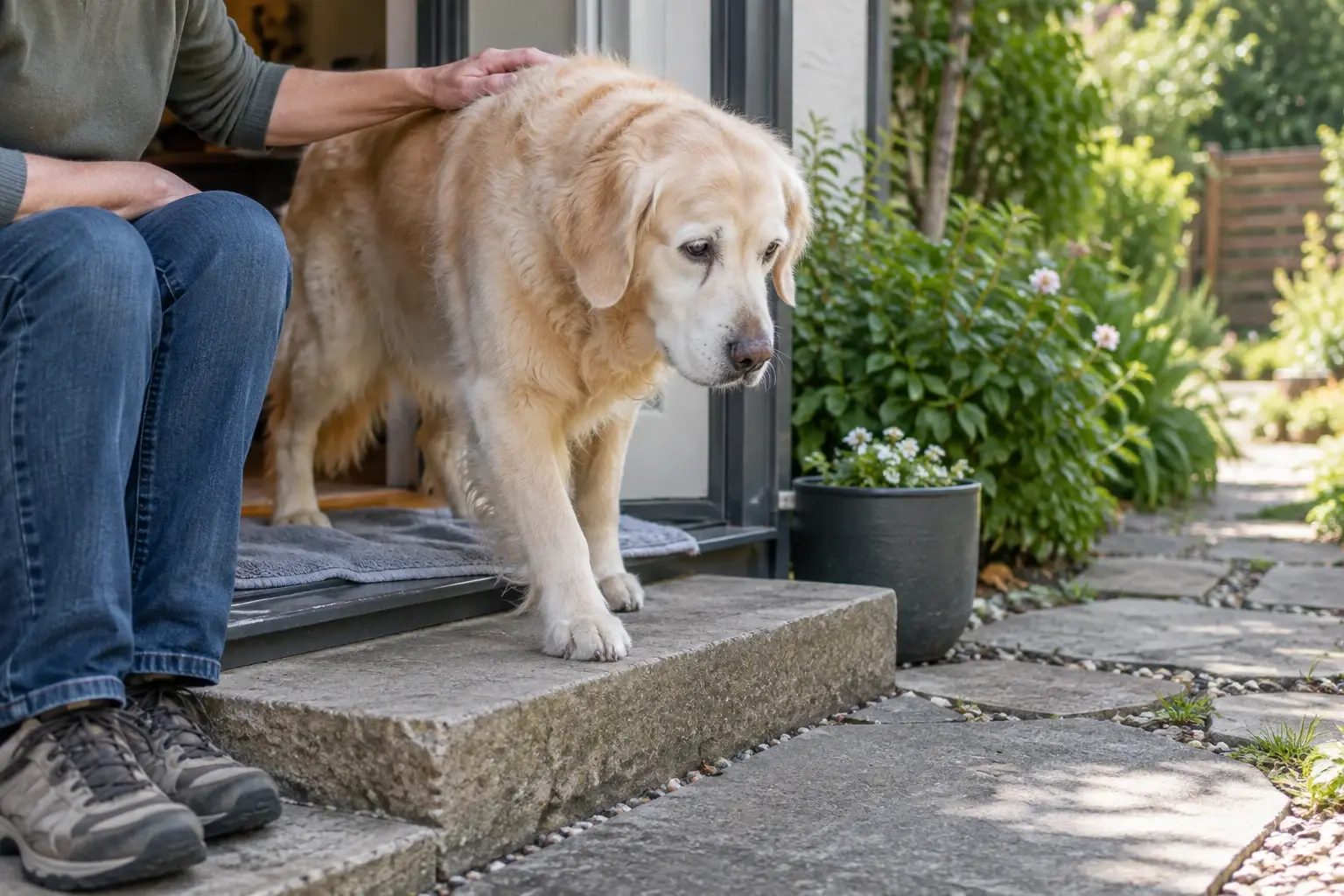
You may notice the small details first: your dog paces around the house, has trouble settling in the evening, keeps seeking out family members, vocalizes more when left alone, seems tense around noises or changes in the environment, or suddenly struggles with interactions they used to enjoy. These signs help you describe what's happening, but no single behavior on its own tells you the cause.
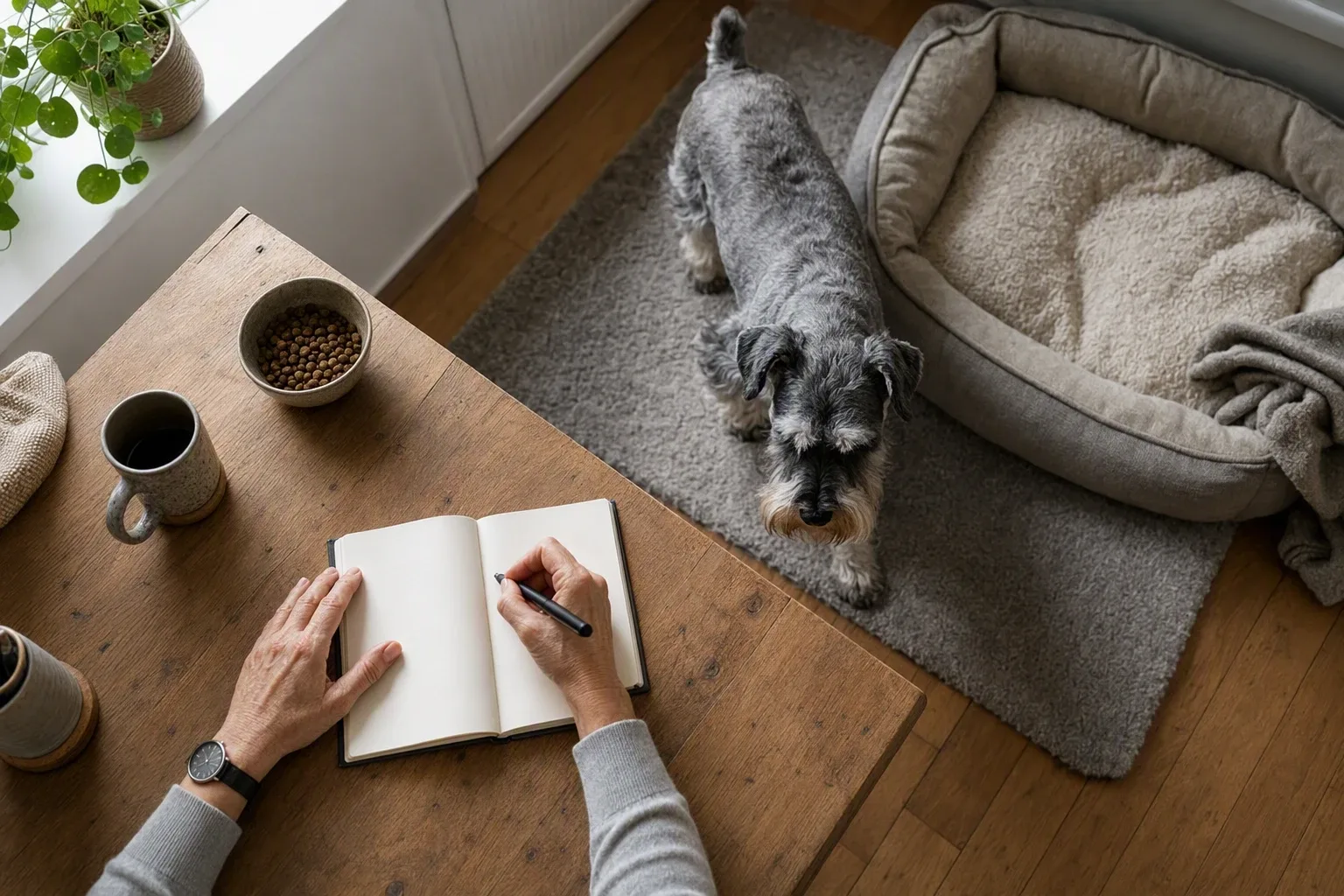
Start by noting when and where the behavior appears, what was going on at the time, and how your dog reacts when you approach, turn off the lights, grab your keys to leave, or when things quiet back down. Also track appetite, water intake, sleep, gait, how they handle stairs, and their bathroom habits. These structured observations are far more useful when talking to your vet than simply saying, "He's been really anxious lately." You can check out the page on noticing behavior changes in senior dogs, focusing on "what happened" rather than rushing to label the behavior.
Three steps to figure out what to adjust
Break each episode of restlessness into three moments: before the trigger, during the episode, and after your dog settles.
1. Before the trigger: Were there visitors, noise, rearranged furniture, time alone, a changed walking route, or a shifted schedule? 2. During the episode: Is your dog seeking you out, avoiding a noise, pacing nonstop, or simply unable to find a comfortable position? Watch their ears, posture, breathing rate, and whether they'll accept familiar comfort. 3. After they settle: What helps them rest? Your quiet presence, a softer voice, returning to their usual mat, or moving away from whatever stimulated them?
Three days of notes are usually enough to start spotting patterns. If one particular change keeps showing up right before the restlessness, scale that change back first instead of adding several new measures at once. By adjusting only one major factor per day, you'll also see more clearly which setup works for your dog.
How do you build a predictable daily rhythm?
Try to keep a similar sequence for key moments: a potty break on waking, then meals and rest; during the day, short calm activities like sniffing around the yard or walking slowly; in the evening, fewer exciting games and no sudden changes to the environment. The goal isn't to fill every minute, but to help your dog anticipate what comes next.
Outdoors, stick to familiar, flat routes that are easy to shorten, adjusting pace and distance to how your dog is doing that day. If they seem tired, hesitant, or want to head home, there's no need to push through just to finish the plan. Indoors, offer activities like searching out a familiar scent, walking slowly toward their food bowl, or a brief moment of company on their mat; the activity shouldn't become a challenge they have to complete no matter what.
Everyone in the household should follow the same rules, too. Avoid, for example, one person constantly calling or petting your dog while they're resting while someone else expects them to engage immediately. Consistent responses from everyone are themselves a daily anchor. For more ideas on setting up your home, see the guide to at-home care and activities for senior dogs.
A quiet, easily accessible resting spot
Put the resting area somewhere your dog can see family members without being constantly disturbed by foot traffic. The mat should be easy to reach and clear of anything they could trip over. If their hearing or vision has changed, also avoid approaching them suddenly from behind. A familiar blanket, steady indoor lighting, and gentle background noise all help keep the environment consistent.
When your dog heads to this space on their own, don't immediately call them over to play. Respond with a soft, brief word, then let them decide whether to come out or stay put. When they come to you, you can offer gentle interaction; if they turn away, move off, or stiffen, stop petting.
Never use this spot as a place for punishment and never force your dog to stay there. A sense of security comes from predictability and the freedom to choose, not from being confined to a particular place.
Which signs warrant a prompt vet visit?
If the restlessness appears suddenly, persists despite your routine adjustments, or worsens in repeated episodes, bring your notes to the veterinarian. Pay particular attention to a marked change in appetite or water intake, changes in sleep or activity level, difficulty walking, more frequent bathroom trips, a tendency to hide, resistance to touch, or any disruption to their rest and daily life.
For the appointment, bring your three days of notes and describe roughly when the behavior first appeared, any recent changes to the environment, medications or supplements in use, and which measures helped or made things worse. Never give your dog a calming product made for humans, and never change their medication or supplements on your own. This article offers low-risk everyday care tips; it doesn't replace a veterinarian's evaluation of your dog's specific situation.
FAQ
Is a senior dog that suddenly becomes clingy necessarily anxious?
Not necessarily. Increased need for closeness is just an observable change. It can show up alongside shifts in schedule, environment, hearing, or vision, or in tolerance for activity. Note the context, how long it lasts, and other changes in daily life first, then decide whether it's time to call your vet.
My dog won't stay in his resting spot, should I carry him back there?
Generally, there's no need to force him back. First check whether the spot is too noisy, too warm, slippery, or hard to reach, then move the familiar blanket to wherever he chooses to settle himself. When he approaches you, stay calm and avoid turning the resting spot into a mandatory obedience exercise.
Should I stay by his side constantly or leave him alone?
Follow his lead. If he comes to you and settles in your presence, stay close, speaking little and softly. If he turns away, moves off, or goes back to his mat, give him quiet space. A steady, measured response does far more to preserve predictable routines than constant attention.
Support is not a guaranteed treatment
Use a predictable routine, choices about resting space and gentle handling as practical support. A new pattern can also involve discomfort or sensory changes. Do not interpret improvement after an environmental change as a diagnosis or promise that a routine will treat every case.
Related reading
- Senior Dog Pacing at Night: What to Record
- Mental Stimulation for Senior Dogs: Gentle Games You Can Do at Home
References
- Associations between physical activity and cognitive dysfunction in older companion dogs: results from the Dog Aging Project. GeroScience. 2023. PMID: 36129565. DOI: 10.1007/s11357-022-00655-8.
- AAHA Senior Care Guidelines for Dogs and Cats — Journal of the American Animal Hospital Association (2023). DOI: 10.5326/JAAHA-MS-7343.
- AAHA: evaluating the unhealthy senior pet.
For individual health questions, your veterinarian remains the best partner.