In this article
TL;DR
The dog dementia supplements with the best evidence are omega-3 (DHA and EPA), MCT oil diets and SAMe. In a placebo-controlled trial of 36 older dogs, SAMe cut mental-decline scores by more than half in 41.2% of dogs in 8 weeks, against 15.8% on placebo. In 87 dogs with signs of dementia, a diet with MCT oil and a nutrient blend including fish oil improved all 6 categories of signs in 90 days. A 2025 review of 27 dog trials found omega-3 helped aging dogs' cognition, especially at higher doses. Ginkgo, a phosphatidylserine blend (the core of Senilife), apoaequorin and a newer senolytic combination also have positive studies, mostly smaller. Supplements work best combined with daily walks and brain games, and started early.
Dog dementia supplements compared
| Supplement | Best dog evidence | How long to judge | Best for | Watch out for |
|---|---|---|---|---|
| Omega-3 (DHA, EPA) | 2025 review: benefits in aging dogs, especially at higher doses; DHA-rich algae improved learning in aged Beagles (2017) | 6 to 12 weeks | Every older dog, alone or with other options | Extra fat and calories; caution after pancreatitis |
| MCT oil diets | 87 dogs with dementia signs improved in all 6 categories in 90 days (2018); aged Beagles on 5.5% MCT did better on most tests over 8 months (2010) | 6 to 12 weeks | Dogs that can switch food | Built into complete diets; adding oil alone is untested and adds calories |
| SAMe | 36 dogs, double-blind: 41.2% vs 15.8% improved by more than half in 8 weeks (2008) | 4 to 8 weeks | Dogs that won't change food | Tell your vet about other medicines |
| Phosphatidylserine + ginkgo + vitamin E + B6 (the core of Senilife) | 9 aged Beagles, crossover: better short-term memory, long-lasting (2008) | 4 to 8 weeks | Mild early signs | Small lab study |
| Ginkgo biloba | 42 older dogs, open trial: rated good or very good in 79% at 8 weeks (2006) | 8 weeks | Combined products | No placebo group; ask your vet before surgery or with blood thinners |
| Antioxidant diet | Aged Beagles over 2 years learned better; diet plus enrichment worked best (2005) | 6 to 12 weeks | Long-term support | Prescription diets need a vet |
| Apoaequorin (sold as Neutricks) | Rated as promising in the 2025 review | 4 to 8 weeks | Owners wanting a single chew | Few independent studies |
| Senolytic + NAD+ precursor (LY-D6/2) | 70 dogs with mild to moderate impairment: owner-rated cognition improved most on the full dose at 3 months (2024) | 3 months | Mild to moderate signs | In-clinic cognitive tests and activity did not differ from placebo |
| Melatonin | Recommended for sleep problems; no controlled trial in senior dogs | 1 to 2 weeks | Night waking | Use a product without xylitol, with your vet's guidance |
Omega-3: DHA and EPA
DHA is a major fat in the brain. The 2025 systematic review of 30 cat and dog trials found that omega-3 fatty acids showed cognitive benefits in aging pets, especially at higher doses, and noted that antioxidants such as vitamins E and C help keep omega-3 stable. In a 2017 study, aged Beagles fed a DHA-rich algae improved on learning tasks. Fish oil was also part of the nutrient blend in the 87-dog MCT trial.
- Sources: fish oil gives both EPA and DHA; algal oil is a rich source of DHA. See salmon oil vs fish oil vs krill oil.
- Amount: count DHA plus EPA on the label. See the omega-3 dosage chart.
MCT oil and brain diets
Medium-chain triglycerides (MCT) are fats the liver turns into ketones, an alternative fuel for aging brain cells.
- Aged Beagles (2010): dogs on a diet with 5.5% MCT for 8 months did significantly better on most cognitive tests than controls, with the biggest gains on the hardest tasks, and had higher blood ketones.
- Dogs with dementia signs (2018): 87 dogs fed a diet with 6.5% MCT oil and a "brain protection blend" of antioxidants, B vitamins, fish oil and arginine improved in all 6 categories of signs over 90 days; the control diet improved in 4 of 6. The study was run by the food's maker.
Purina sells this approach as Pro Plan Bright Mind for older dogs and as a veterinary diet for dogs with signs of dementia. If you add MCT oil yourself, ask your vet first: it is pure fat and the trials built it into a complete food.
SAMe
S-adenosylmethionine (SAMe) is a compound the body makes and uses in many brain and liver processes. In the 2008 double-blind trial of 36 dogs over 8 years old with signs of mental decline, the overall impairment score fell by more than half in 41.2% of dogs on SAMe tablets for 8 weeks, against 15.8% on placebo, and activity and awareness improved more than with placebo. SAMe tablets for dogs are sold under names such as Novifit, and SAMe is also sold for liver support.
Senilife and ginkgo
- The phosphatidylserine blend: in a 2008 crossover study, 9 aged Beagles given a commercial supplement with phosphatidylserine, ginkgo, vitamin E and vitamin B6 (pyridoxine), the core of Senilife, performed significantly better on a short-term memory task than on the control, and the effect lasted.
- Ginkgo alone: in a 2006 open trial of 42 older dogs given a standardized ginkgo leaf extract for 8 weeks, behavior problems fell significantly, and investigators rated the result good or very good in 79% of dogs. There was no placebo group.
Newer options
- Apoaequorin, a calcium-binding protein originally from jellyfish, is sold for dogs as Neutricks. The 2025 review listed it among supplements that "showed promise".
- LY-D6/2, a combination of a senolytic and an NAD+ precursor, was tested in 70 dogs with mild to moderate cognitive impairment in 2024. Owner-rated cognitive scores improved most in the full-dose group at 3 months. In-clinic cognitive tests and activity monitors showed no difference, and every group improved somewhat, which the authors attribute partly to a placebo effect.
Which supplement fits your dog?
- Early or mild signs (some night waking, occasional confusion): omega-3 plus a brain diet or MCT, with daily brain games. This is where the trials showed the clearest gains.
- A dog that won't change food: SAMe tablets, or a daily chew with DHA and ginkgo.
- Night waking and pacing: a fixed routine, more daytime activity and, with your vet, melatonin. See senior dog pacing at night.
- Moderate to severe signs: ask your vet about selegiline, the drug used for canine cognitive dysfunction, and add diet and supplements alongside. See dog dementia treatment.
- An overweight dog or one with past pancreatitis: go easy on added fats such as MCT oil and fish oil, and ask your vet about a complete brain diet instead.
- A dog that also has stiff joints: pain can look like confusion and disturb sleep. Treat it too. In a 2002 study, 83% of dogs given green-lipped mussel powder with their food improved their arthritis score by 30% or more within 6 weeks, against 7% without it: see our green lipped mussel for dogs and the best joint supplement for dogs.
What a vet sees
Dementia is common among the older dogs seen by a small-animal vet Morty has known for years, who asked us not to use their name. In the vet's experience, an MRI shows brain changes in most of these dogs, but most owners decide against further tests, because an older dog needs anesthesia for the scan and that carries some risk. In severe cases a dog can lose its memory almost completely. The vet's usual recommendation is selegiline, a prescription medicine approved in the US for canine cognitive dysfunction, plus DHA, the omega-3 covered above. See salmon oil vs fish oil for dogs for choosing a DHA source.
Rule out other causes first
Pain, hearing and vision loss, kidney, liver and hormone disease can all cause signs that look like dementia. A vet check first means the supplement goes to the right problem. See dog dementia: signs, stages and how long dogs live with it.
Supplements work better with exercise and brain games
- In the 2-year Beagle study, an antioxidant diet and behavioral enrichment each helped, and the combination worked best.
- In 11,574 dogs in the Dog Aging Project, more physical activity went with milder signs and lower odds of clinical dementia.
Daily sniffing walks, food puzzles and short training sessions are part of the plan. See mental stimulation for senior dogs.
FAQ
What is the best supplement for dog dementia?
Omega-3 (DHA and EPA), MCT oil diets and SAMe have the strongest dog evidence. SAMe more than halved impairment scores in 41.2% of dogs, against 15.8% on placebo, in 8 weeks.
Do dog dementia supplements really work?
Several have positive controlled studies, and the 2025 review found the clearest benefits for omega-3 at higher doses. Expect gradual change over 6 to 12 weeks, not a cure.
Can I give my dog fish oil for dementia?
Yes. Omega-3 from fish oil or algal oil supports the aging brain, and higher doses showed more benefit in the 2025 review. Count EPA plus DHA and ask your vet if your dog has had pancreatitis.
Senilife vs Neutricks: which is better?
Senilife's combination of phosphatidylserine, ginkgo, vitamin E and B6 improved memory in a small study of 9 aged Beagles. Neutricks' apoaequorin was rated as promising in a 2025 review. Neither has a large placebo-controlled trial in pet dogs.
Can I give my dog human dementia supplements?
Some ingredients are the same, such as fish oil, SAMe and ginkgo, but human products may contain xylitol or other ingredients unsafe for dogs, and the doses differ. Use products made for dogs, or ask your vet to check a human one.
How long do dementia supplements take to work in dogs?
Diets usually need 6 to 12 weeks. The SAMe and ginkgo trials measured results at 8 weeks, and the senolytic trial at 3 months.
References
- Blanchard T, et al. Enhancing cognitive functions in aged dogs and cats: a systematic review of enriched diets and nutraceuticals. GeroScience. 2025. PMID: 39827310
- Rème CA, et al. Effect of S-adenosylmethionine tablets on the reduction of age-related mental decline in dogs: a double-blinded, placebo-controlled trial. Veterinary Therapeutics. 2008. PMID: 18597245
- Pan Y, et al. Dietary supplementation with medium-chain TAG has long-lasting cognition-enhancing effects in aged dogs. British Journal of Nutrition. 2010. PMID: 20141643
- Pan Y, et al. Efficacy of a therapeutic diet on dogs with signs of cognitive dysfunction syndrome (CDS). Frontiers in Nutrition. 2018. PMID: 30619873
- Araujo JA, Landsberg GM, Milgram NW, Miolo A. Improvement of short-term memory performance in aged beagles by a nutraceutical supplement containing phosphatidylserine, Ginkgo biloba, vitamin E, and pyridoxine. Canadian Veterinary Journal. 2008. PMID: 18481547
- Reichling J, et al. Reduction of behavioural disturbances in elderly dogs supplemented with a standardised Ginkgo leaf extract. Schweizer Archiv für Tierheilkunde. 2006. PMID: 16739899
- Hadley KB, Bauer J, Milgram NW. The oil-rich alga Schizochytrium sp. as a dietary source of docosahexaenoic acid improves shape discrimination learning associated with visual processing in a canine model of senescence. 2017. PMID: 28288702
- Milgram NW, et al. Learning ability in aged beagle dogs is preserved by behavioral enrichment and dietary fortification: a two-year longitudinal study. Neurobiology of Aging. 2005. PMID: 15585348
- Simon KE, et al. A randomized, controlled clinical trial demonstrates improved owner-assessed cognitive function in senior dogs receiving a senolytic and NAD+ precursor combination. Scientific Reports. 2024. PMID: 38811634
- Bray EE, et al. Associations between physical activity and cognitive dysfunction in older companion dogs: results from the Dog Aging Project. GeroScience. 2023. PMID: 36129565
- VCA Animal Hospitals. Nutrition for Dogs With Cognitive Dysfunction Syndrome (CDS), Melatonin.
Put this into practice
Daily joint support for senior dogs
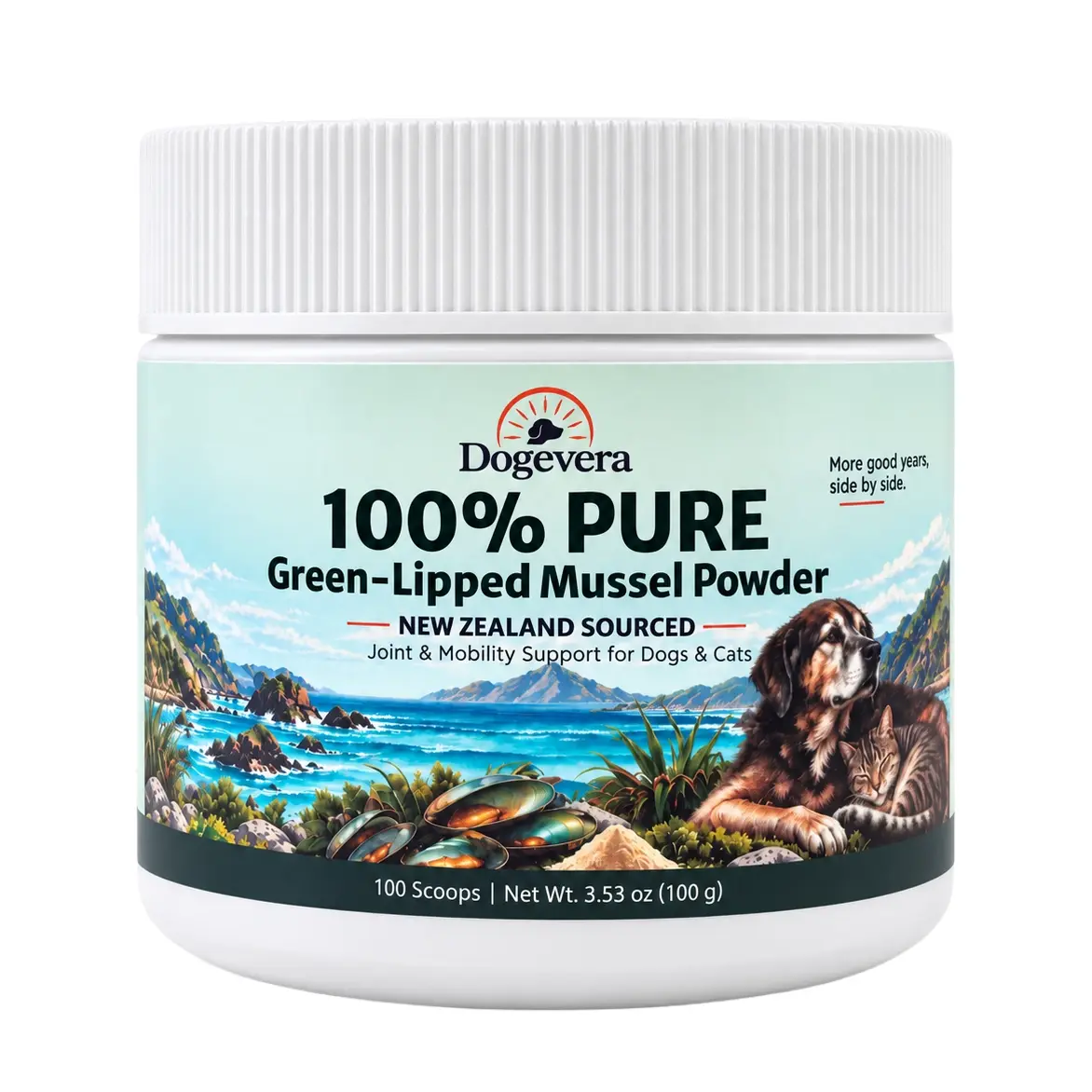
100% New Zealand Green-Lipped Mussel Powder for Dogs4.5142 reviews
- 100% New Zealand green-lipped mussel. No fillers, no blends.
- Naturally rich in ETA omega-3s and GAGs for hips and joints
- One scoop on food, dosed by your dog’s weight
Black Friday40% off your first subscription order
Free shipping · 100-day money-back guarantee