In this article
TL;DR
Salmon oil is a fish oil, so the real comparison is how much EPA and DHA each serving gives. The fish matters less than the label. Krill oil carries its omega-3 in a different form: in a 2020 study of 20 Alaskan Huskies given the same 1.7 g of EPA plus DHA a day for 6 weeks, krill raised the EPA level in red blood cells from 1.84% to 4.42%, against 1.90% to 2.46% with fish oil. Flaxseed oil barely helps: in a 2021 study, its plant omega-3 did not raise dogs' omega-3 index, while krill oil did. Cod liver oil adds vitamins A and D, and coconut oil has no omega-3 at all. For joints, combine an omega-3 oil dosed by EPA and DHA with green-lipped mussel, which works differently: in a 2002 study, 83% of dogs given green-lipped mussel powder improved their arthritis score by 30% or more within 6 weeks, against 7% without it.
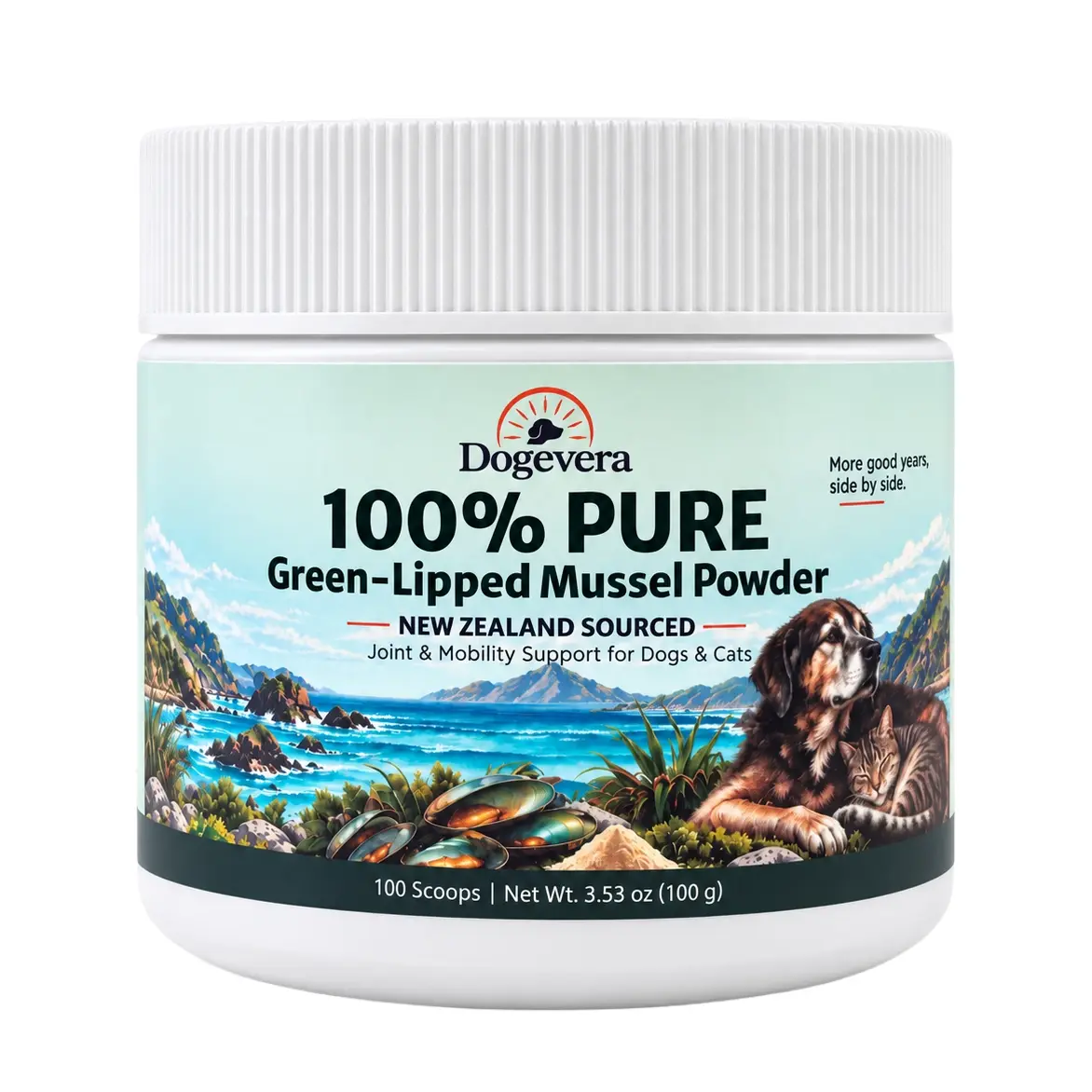
Daily joint support. Our green lipped mussel for dogs is 100% New Zealand green-lipped mussel with nothing added, dosed by weight and stirred into food. It adds little fat, so it does not change your dog's fish-oil total. What the studies show.
Omega-3 sources for dogs compared
| Source | Main omega-3 | What the dog studies show | Best for | Watch out for |
|---|---|---|---|---|
| Fish oil (anchovy, sardine, mackerel) | EPA and DHA | The most joint trials: 82% vs 38% improved weight bearing (2010); a 2022 review of 72 trials found clear pain relief | Joints, skin, everyday use | Fishy breath, loose stool at high doses, goes rancid |
| Salmon oil | EPA and DHA | Same as fish oil; it is a fish oil from one species | Dogs that like the taste, liquid pumps for food | Amounts vary a lot; read EPA + DHA |
| Krill oil | EPA and DHA, bound to phospholipids, plus astaxanthin | Raised red-cell EPA more than fish oil at the same dose (2020) | Dogs that need a smaller serving, no fishy burps | Usually less EPA + DHA per gram; krill is a crustacean |
| Algal oil | Mainly DHA | DHA-rich algae improved learning in aged Beagles (2017) | Brain support, dogs with fish allergy | Little EPA in many products |
| Cod liver oil | EPA and DHA, plus vitamins A and D | Not interchangeable with fish oil | Occasional use only | Vitamin A and D build up at omega-3 doses |
| Flaxseed or hemp oil | ALA (plant omega-3) | Did not raise the omega-3 index in dogs (2021) | Does not replace fish oil | Dogs convert little ALA to EPA and DHA |
| Coconut oil | None | Contains medium-chain fats, not omega-3 | Not for omega-3 | Adds calories and saturated fat |
| Green-lipped mussel powder | Very little (whole food) | 83% vs 7% improved in 6 weeks (2002); extracts beat placebo alongside carprofen (2023) | Joint support alongside fish oil | Shellfish allergy |
Salmon oil vs fish oil
Salmon oil is fish oil made from salmon. "Fish oil" usually means oil from small oily fish such as anchovies and sardines. Both supply EPA and DHA, the two omega-3 fats behind the joint, skin and brain research. Neither is automatically better. A concentrated anchovy oil can give more EPA and DHA per teaspoon than a salmon oil, or the other way round. Turn the bottle over and compare:
- EPA + DHA per serving, in milligrams, not "1,000 mg fish oil".
- Servings per bottle at your dog's dose, for the cost per day.
- A preservative such as mixed tocopherols (vitamin E), and a best-before date.
Krill oil vs fish oil
Krill are small crustaceans. Their oil carries EPA and DHA attached to phospholipids, the fats that make up cell membranes, rather than as triglycerides.
- In the 2020 Husky study, 10 dogs got 1.7 g of EPA plus DHA a day from krill meal and 10 got the same amount from fish oil. After 6 weeks, red-cell EPA rose from 1.84% to 4.42% in the krill group and from 1.90% to 2.46% in the fish-oil group. Omega-6 levels fell in the krill group.
- The catch: krill oil usually supplies less EPA and DHA per gram than concentrated fish oil, so the cost per milligram is often higher. The studies above were run by a krill-ingredient company's researchers.
- Allergy: krill is a crustacean, so skip it for dogs with a shellfish allergy.
Plant oils don't replace fish oil
Flaxseed, hemp and chia oils contain ALA, a short-chain omega-3. Dogs turn very little of it into EPA and DHA. In the 2021 study, 10 Huskies got about 1,068 mg of ALA a day from flaxseed oil and 10 got about 1,155 mg of EPA plus DHA from krill oil. After 6 weeks, only the krill group's EPA and DHA rose, lifting their omega-3 index from 1.68% to 2.7%. Coconut oil contains no omega-3 at all.
Cod liver oil
Cod liver oil is made from the liver, so it is rich in vitamins A and D. At the amounts needed for an omega-3 effect, those vitamins can build up. A review of omega-3 safety in dogs and cats points out that cod liver oil is not interchangeable with fish oil. Use body oil (fish, salmon, krill) for omega-3.
How much EPA and DHA?
- Joints: the 2023 COAST guidelines suggest 75 to 100 mg of EPA plus DHA per kg of body weight a day as a starting amount for dogs with arthritis: about 1,500 to 2,000 mg for a 20 kg (44 lb) dog, with an upper limit that should not be exceeded.
- Brain: a 2025 review found omega-3 helped aging dogs' cognition, especially at higher doses.
- Skin and coat: lower amounts are usually enough.
Full table by weight: omega-3 dosage chart for dogs. Side effects, mostly dose-related stomach upset, fishy odor and extra calories, are covered in omega-3 side effects.
Where green-lipped mussel fits
Green-lipped mussel is often lumped in with fish oil, but it is not an omega-3 supplement. The powder in a 2009 trial supplied at least 9 mg of EPA plus DHA per gram, so even 4 g a day gives a small fraction of a joint dose of fish oil. Its effect is thought to come from a mix of compounds, including other fatty acids and carotenoids, and its dog trials stand on their own:
- 2002, whole powder on food: 83% vs 7% improved by 30% or more in 6 weeks.
- 2023, head to head: two mussel extracts beat placebo alongside carprofen; glucosamine with chondroitin did not.
That is why the two pair well: fish oil for EPA and DHA, green-lipped mussel for its own joint benefits, and the mussel barely changes your omega-3 total. See green-lipped mussel vs fish oil vs glucosamine and green-lipped mussel powder vs oil.
Which omega-3 fits your dog?
- Stiff joints or arthritis: fish or salmon oil dosed by EPA and DHA, plus green-lipped mussel.
- Dry skin, dull coat, itching: fish or salmon oil. See dog itchy skin.
- Senior brain support: DHA from fish or algal oil. See dog dementia supplements compared.
- Fish allergy: algal oil for DHA.
- Shellfish allergy: fish or salmon oil; skip krill and green-lipped mussel.
- History of pancreatitis or on a diet: ask your vet before adding any oil; they are pure fat.
- Fussy eater: try capsules hidden in food or a liquid pump, or a powder that disappears into the bowl.
When your dog refuses fish oil
Not every dog will take it. Morty's own dog refused fish oil completely, and the only way to get it in was to force it into the mouth. If your dog turns away from the bowl too, a few things are worth trying before you give up:
- Smell it first. A dog may refuse oil that has gone rancid. Fresh fish oil smells mildly of fish, not sharp or sour.
- Start tiny. Mix one or two drops into a small amount of wet food or a favorite topper, and build up to the full dose over one to two weeks.
- Change the form. A whole capsule hidden in a treat often goes down when liquid on the food doesn't.
- Try another oil. Some dogs that refuse one fish oil accept salmon oil or krill oil, or the reverse.
- Ask your vet about a joint diet. Several veterinary joint diets already contain high levels of EPA and DHA, so there's nothing to add.
For joint support on top of that, a powder stirred into food is easier for many fussy dogs than oil, and green-lipped mussel is one option. Our green lipped mussel powder for dogs is 100% New Zealand green-lipped mussel with nothing added. Remember that it doesn't replace the EPA and DHA dose from fish oil.
Keep it fresh
Omega-3 oils oxidize. Buy a size you will finish in a couple of months, keep the cap on, store it as the label says (many liquids need the fridge once opened), and throw it out if it smells rancid or sharply fishy.
FAQ
Is salmon oil better than fish oil for dogs?
Not by itself. Salmon oil is a fish oil. Compare the EPA plus DHA per serving and the price per day for your dog's dose.
Is krill oil better than fish oil for dogs?
At the same dose, krill raised dogs' red-cell EPA more than fish oil in a 2020 study. Krill oil usually has less EPA and DHA per gram, so it can cost more per dose, and it is not for dogs with a shellfish allergy.
Can I give my dog coconut oil instead of fish oil?
No. Coconut oil contains no omega-3. It adds calories and saturated fat.
Can dogs take human fish oil?
Plain fish oil capsules made for people are often used for dogs. Dose by EPA plus DHA for your dog's weight, and avoid flavored chews or gummies, which may contain xylitol.
Fish oil or green-lipped mussel for dog joints?
Both have controlled dog trials, and they work differently. Many owners use both: fish oil for EPA and DHA, green-lipped mussel powder for its own joint benefits.
Is cod liver oil good for dogs?
Only in small amounts. It contains vitamins A and D that can build up at omega-3 doses. Use fish, salmon or krill body oil for omega-3.
References
- Burri L, Heggen K, Storsve AB. Higher omega-3 index after dietary inclusion of omega-3 phospholipids versus omega-3 triglycerides in Alaskan Huskies. Veterinary World. 2020. PMID: 32801569
- Dominguez TE, Kaur K, Burri L. Enhanced omega-3 index after long- versus short-chain omega-3 fatty acid supplementation in dogs. Veterinary Medicine and Science. 2021. PMID: 33022896
- Roush JK, et al. Evaluation of the effects of dietary supplementation with fish oil omega-3 fatty acids on weight bearing in dogs with osteoarthritis. JAVMA. 2010. PMID: 20043801
- Barbeau-Grégoire M, et al. A 2022 systematic review and meta-analysis of enriched therapeutic diets and nutraceuticals in canine and feline osteoarthritis. International Journal of Molecular Sciences. 2022. PMID: 36142319
- Cachon T, et al. COAST Development Group's international consensus guidelines for the treatment of canine osteoarthritis. Frontiers in Veterinary Science. 2023.
- Lenox CE, Bauer JE. Potential adverse effects of omega-3 fatty acids in dogs and cats. Journal of Veterinary Internal Medicine. 2013. PMID: 23323770
- Hadley KB, Bauer J, Milgram NW. The oil-rich alga Schizochytrium sp. as a dietary source of docosahexaenoic acid improves shape discrimination learning associated with visual processing in a canine model of senescence. 2017. PMID: 28288702
- Blanchard T, et al. Enhancing cognitive functions in aged dogs and cats: a systematic review of enriched diets and nutraceuticals. GeroScience. 2025. PMID: 39827310
- Bierer TL, Bui LM. Improvement of arthritic signs in dogs fed green-lipped mussel (Perna canaliculus). Journal of Nutrition. 2002.
- Hielm-Björkman A, et al. Evaluating complementary therapies for canine osteoarthritis Part I: Green-lipped mussel (Perna canaliculus). Evidence-Based Complementary and Alternative Medicine. 2009.
- Kampa N, et al. Study of the effectiveness of glucosamine and chondroitin sulfate, marine based fatty acid compounds (PCSO-524 and EAB-277), and carprofen for the treatment of dogs with hip osteoarthritis. Frontiers in Veterinary Science. 2023.
Joint & Mobility Supplements for Senior Dogs
Put this into practice
Daily joint support for senior dogs
100% New Zealand Green-Lipped Mussel Powder for Dogs4.5142 reviews
- 100% New Zealand green-lipped mussel. No fillers, no blends.
- Naturally rich in ETA omega-3s and GAGs for hips and joints
- One scoop on food, dosed by your dog’s weight
Black Friday40% off your first subscription order
Free shipping · 100-day money-back guarantee