In this article
TL;DR
When a dog throws up yellow, it is almost always bile, the digestive fluid from the gallbladder, brought up on an empty stomach. A single episode of yellow foam in the morning from a dog that then eats and acts normally is usually not an emergency, and often stops with a small late-evening snack. In a study of dogs diagnosed with bilious vomiting syndrome, the classic early-morning bile vomiting, treatment included more frequent meals and late evening meals, and 12 of 17 dogs improved. But in 3 of 20 dogs the label was later replaced by another cause, including a stomach tumour and liver disease, so repeated yellow vomiting deserves a vet check, especially in an older dog. Go the same day if vomiting is repeated, there is blood, your dog cannot keep water down, seems painful or lethargic, or retches without bringing anything up.
Why dog vomit is yellow
Bile is made in the liver, stored in the gallbladder and released into the small intestine to digest fat. When the stomach is empty, a little bile can flow back into it. Bile irritates the stomach lining, and the result is yellow or yellow-green foam or liquid, often first thing in the morning or late at night.
| What it looks like | What it usually means |
|---|---|
| Yellow foam, once, on an empty stomach | Bile from an empty stomach |
| Yellow liquid with grass | Grass eating, often with an upset stomach |
| Yellow with undigested food | Vomiting soon after a meal: food change, eating too fast, dietary indiscretion |
| Yellow with red streaks or coffee-ground specks | Bleeding in the stomach or upper gut: see a vet |
| Bright green | Bile, or occasionally eaten grass or some rodent baits: call your vet if poison is possible |
| Brown and foul-smelling | Possible blockage lower in the gut: see a vet the same day |
Common causes
- Empty stomach (bilious vomiting). Long gaps between meals, usually overnight. Typical pattern: early morning, once, dog fine afterwards.
- Dietary indiscretion. Scavenging, rich table food or a sudden food change.
- Grass eating. Often a sign of an unsettled stomach.
- Gastritis. Inflammation of the stomach lining from irritants, infection or medication.
- Pancreatitis. Vomiting with belly pain and not eating, often after fatty food; see pancreatitis in dogs.
- Intestinal blockage. Repeated vomiting, unable to keep anything down, belly pain: an emergency.
- Liver or kidney disease. More common in older dogs; vomiting often comes with drinking more, weight loss or a poor appetite. See kidney disease in dogs.
- Inflammatory bowel disease and stomach tumours. Usually chronic, on-and-off vomiting with weight loss.
Bilious vomiting syndrome
A study of 20 dogs diagnosed with bilious vomiting syndrome at Colorado State University found:
- The typical patient was a young dog with a long history of vomiting bile.
- Treatment used frequent feedings, late evening meals, stomach acid reducers, drugs that speed stomach emptying and stomach protectants.
- 12 of 17 dogs improved with treatment.
- In 3 of 20 dogs, the diagnosis was later changed: to gastric adenocarcinoma (a stomach cancer), dietary indiscretion and liver disease.
The authors noted that most dogs had not been fully investigated before getting the label. In other words, "empty-stomach vomiting" is common, but it is a diagnosis to reach after other causes are ruled out, not before.
A vet's rule of thumb
In the clinic of a small-animal vet Morty has known for years, who asked us not to use their name, most dogs that bring up yellow liquid or yellow foam in the morning are simply hungry: the stomach has been empty for too long. The first fix the vet suggests is timing. Feed dinner a little later, or breakfast a little earlier, so the overnight gap is shorter.
What changes the picture is the pattern. If the vomiting isn't only in the morning but happens at random times, including at night, the vet thinks of pancreatitis and wants the dog checked soon. See pancreatitis in dogs: symptoms.
When to see a vet
| Go now | Book a vet visit soon | Usually fine to watch at home |
|---|---|---|
| Vomiting several times in a few hours | Yellow vomiting several mornings a week | One episode of yellow foam, then eating and playing normally |
| Blood, or coffee-ground material | Vomiting with weight loss or less appetite | |
| Cannot keep water down | Vomiting plus drinking or urinating more | |
| Retching with nothing coming up, swollen belly | Senior dog with a new vomiting habit | |
| Lethargy, weakness or belly pain | Vomiting that started after a new food or supplement | |
| Possible toxin, toy or bone swallowed |
Unproductive retching with a swollen belly can be bloat (gastric dilatation-volvulus), which is fatal without fast treatment.
What to do at home
For a dog that vomited yellow once and is otherwise bright:
- Offer small amounts of water, a few laps at a time.
- Rest the stomach for a few hours, not a full day, then offer a small portion of a bland meal: see bland diet for dogs.
- Prevent repeats with a small snack before bed or by splitting the daily food into three or four smaller meals, so the stomach is never empty for long.
- Slow fast eaters with a slow-feeder bowl.
- Change foods gradually over 7 to 10 days, and start any new supplement at half the serving for the first week.
Do not give human anti-nausea or stomach medicines without your vet's advice.
Yellow vomit in older dogs
A senior dog that starts vomiting bile needs a closer look sooner than a young dog. Kidney disease, liver disease, pancreatitis and tumours are all more common with age, and in the study above one dog labelled with simple bile vomiting turned out to have stomach cancer. Bring a note of how often it happens, what time of day, and whether appetite, thirst or weight have changed; see senior dog not eating: what to record.
FAQ
Should I feed my dog after vomiting yellow?
If it was a single episode and your dog is bright, wait a couple of hours, then offer a small bland meal. If yellow vomiting happens on an empty stomach, a bedtime snack often prevents the next one.
What home remedy can I give my dog for vomiting yellow bile?
Smaller, more frequent meals and a late-evening snack are the simplest fix for empty-stomach vomiting. Repeated vomiting needs a vet rather than a home remedy.
What does yellow watery vomit mean?
It is usually bile on an empty stomach. Repeated yellow watery vomiting, especially with lethargy, can mean pancreatitis, a blockage or other illness.
What does kidney failure vomit look like in dogs?
There is no unique look. Dogs with kidney disease may vomit bile or food, often with more drinking and urinating, weight loss, bad breath and a poor appetite. A blood and urine test is needed.
Is it normal for a dog to throw up yellow in the morning?
An occasional episode is common and usually harmless. If it happens several times a week, or your dog is older, see your vet to rule out other causes.
References
- Ferguson L, et al. Bilious vomiting syndrome in dogs: retrospective study of 20 cases (2002-2012). Journal of the American Animal Hospital Association, 2016. https://pubmed.ncbi.nlm.nih.gov/27008323/
Put this into practice
Daily joint support for senior dogs
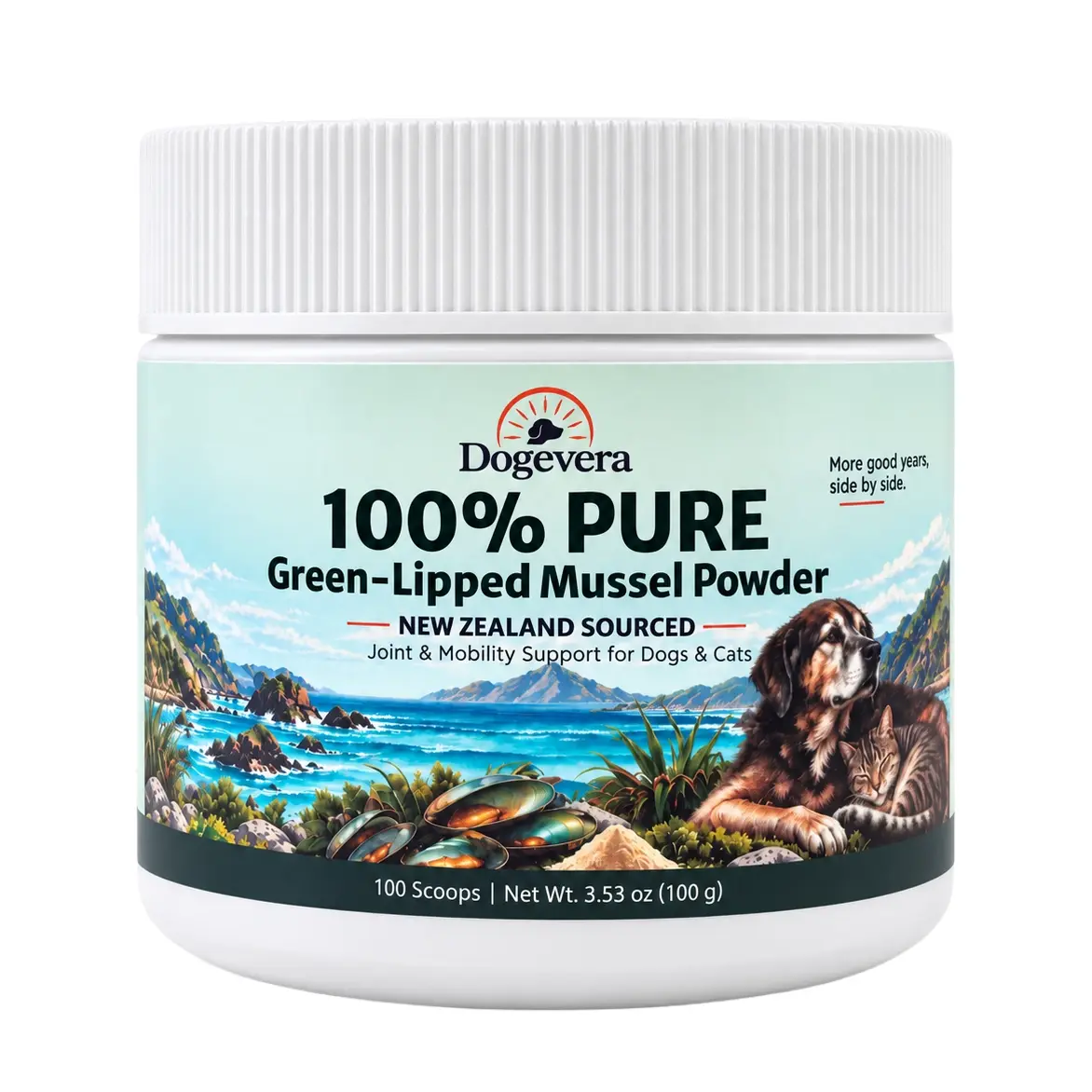
100% New Zealand Green-Lipped Mussel Powder for Dogs4.5142 reviews
- 100% New Zealand green-lipped mussel. No fillers, no blends.
- Naturally rich in ETA omega-3s and GAGs for hips and joints
- One scoop on food, dosed by your dog’s weight
Black Friday40% off your first subscription order
Free shipping · 100-day money-back guarantee