In this article
TL;DR
Separation anxiety is panic about being left alone. Signs show up only when the dog is alone or about to be: howling or barking, chewing and scratching at doors and windows, accidents in the house, pacing, drooling and trying to escape. The fix is a gradual training plan that builds alone time in steps the dog can handle, kept calm at departures and returns; vets add medication for moderate to severe cases, and two drugs, clomipramine and fluoxetine, are approved in the US for separation anxiety in dogs. In older dogs, new clinginess and night-time distress can be an early sign of cognitive decline: in a survey of 497 dogs aged 8 and over, 14.2% had signs of canine cognitive dysfunction, but only 1.9% had a diagnosis. In older dogs, ask your vet to check for cognitive changes too.
Signs of separation anxiety in dogs
| Sign | When it happens |
|---|---|
| Howling, whining or barking | Starts within minutes of you leaving |
| Destruction | Chewing or scratching at doors, door frames and windows, the exit points |
| House soiling | Accidents only when alone, in a dog that is otherwise house-trained |
| Pacing and panting | Restless, cannot settle |
| Drooling | Wet patches near the door or crate |
| Escape attempts | Breaking out of crates, digging under doors, sometimes with injuries |
| Pre-departure stress | Trembling, hiding or following you when you pick up keys or a coat |
| Over-the-top greetings | Frantic greeting when you come home |
The key is the pattern: the behaviour happens when the dog is alone and not when you are home. A phone or pet camera recording of the first 30 minutes after you leave is the most useful thing you can show a vet or behaviourist.
Clingy or anxious?
Morty's corgi is famously clingy: it follows Morty from room to room and lies quietly at Morty's feet on a bad day. That is attachment, not a disorder. Clinginess becomes separation anxiety when the dog panics once you are gone: the barking, the chewed door frame, the puddle by the door.
Other problems can look similar:
- Boredom: a young, under-exercised dog chews anything, not just exits, and is not distressed.
- House-training or medical problems: incontinence, a bladder infection or kidney disease cause accidents whether you are home or not.
- Noise fear: destruction that only happens during storms or fireworks.
- Pain: a sore dog may cope less well with any stress.
Separation anxiety in older dogs
Separation anxiety often starts in young dogs, but new anxiety in an older dog has its own causes:
- Cognitive decline. Getting lost in familiar places, staring at walls, sleeping by day and pacing at night, forgetting house training and changed greetings are recognised signs of canine cognitive dysfunction. In the survey above, the condition was present in about 1 in 7 dogs over 8, and prevalence rose steeply with age. See senior dog cognitive changes and senior dog pacing at night.
- Hearing and sight loss. A dog that cannot see or hear you well relies more on being close to you.
- Pain. Arthritis makes a dog less able to settle, especially at night.
- Changes in the household. A move, a new schedule, or the loss of another pet.
A vet check comes first, because treating pain, sight or hearing problems often eases the anxiety.
A step-by-step training plan
The goal is to teach your dog that being alone is safe, in steps small enough that panic never starts.
- Find the threshold. Watch the recording and note how long your dog stays calm after you leave. That might be 30 minutes or 30 seconds.
- Work below it. Practise absences shorter than the threshold: step outside, wait, come back before any distress. Repeat several times a day.
- Stretch slowly. Add time in small steps only when the current step is easy. Go back a step after a bad session.
- Defuse departure cues. Pick up keys, put on shoes or a coat at random times, then sit down again, so these cues stop predicting a long absence.
- Keep departures and returns low-key. Calm, short goodbyes and a quiet hello once your dog is settled. A 2024 study of puppies found that dogs whose owners made a big fuss over them after unwanted behaviour on returning home were six times as likely to show separation-related behaviour.
- Give a job. A long-lasting food toy or lick mat given only when you leave, and a walk and sniff beforehand, help many dogs settle.
- Avoid real absences beyond the threshold while you train, if you can: daycare, a dog sitter, a friend or taking the dog with you.
- Never punish. Punishment adds fear and makes separation problems worse.
A crate helps dogs that already love their crate; for some dogs, confinement makes panic worse, so watch the recording.
Medication and supplements
Medication. For moderate to severe cases, vets often combine the training plan with medication. Clomipramine and fluoxetine are the two drugs approved by the US FDA for separation anxiety in dogs; both take a few weeks to work and are given daily. For short, predictable events, vets sometimes use situational medicines such as trazodone or gabapentin, which have trials in vet visits and travel.
Probiotics. In a 4-week placebo-controlled trial of 40 dogs, the probiotic Lactiplantibacillus plantarum LP815 improved anxiety scores, and treated dogs settled faster after their owners left. See probiotics for dogs.
Pressure wraps. A 2024 systematic review found only weak, limited evidence that anxiety wraps help.
Brain support for older dogs. When anxiety comes with signs of cognitive change, supporting the ageing brain is part of the plan, alongside routine, gentle exercise and mental games (mental stimulation for senior dogs). See dog dementia treatment for the diet and supplement options with evidence.
FAQ
How do you fix a dog with separation anxiety?
With a gradual desensitisation plan: practise absences shorter than your dog's panic threshold and lengthen them slowly, keep departures and returns calm, give a food toy, and avoid long absences while you train. Moderate to severe cases often need medication from your vet as well.
What are the signs of separation anxiety in dogs?
Howling, destruction at doors and windows, house soiling, pacing, drooling and escape attempts that happen only when the dog is alone, often starting within minutes of you leaving.
Can older dogs suddenly develop separation anxiety?
Yes. Cognitive decline, hearing or sight loss, pain and household changes can all trigger new separation distress in senior dogs. Have your vet check for these first.
Should I get a second dog for separation anxiety?
Usually it does not help, because most dogs with separation anxiety are attached to their person, not to company in general. Try a dog sitter for a few days first to see whether another dog's company calms yours.
What is the 3-3-3 rule for dogs?
It is a rule of thumb for newly adopted dogs: about 3 days to decompress, 3 weeks to learn the routine and 3 months to feel at home. Anxiety in the first weeks after adoption is common and often settles with routine.
References
- Salvin HE, et al. Under diagnosis of canine cognitive dysfunction: a cross-sectional survey of older companion dogs. The Veterinary Journal, 2010. https://pubmed.ncbi.nlm.nih.gov/20005753/
- Canine separation-related behaviour at six months of age: dog, owner and early-life risk factors identified using the Generation Pup longitudinal study. 2024. https://pubmed.ncbi.nlm.nih.gov/39703219/
- Efficacy of a novel Lactiplantibacillus plantarum strain (LP815) in reducing canine aggression and anxiety: a randomized placebo-controlled trial. 2025. https://pubmed.ncbi.nlm.nih.gov/40805070/
- A systematic review of the efficacy of compression wraps as an anxiolytic in domesticated dogs. 2024. https://pubmed.ncbi.nlm.nih.gov/39682410/
- 2023 AAHA Senior Care Guidelines for Dogs and Cats. https://www.aaha.org/resources/2023-aaha-senior-care-guidelines-for-dogs-and-cats/
Put this into practice
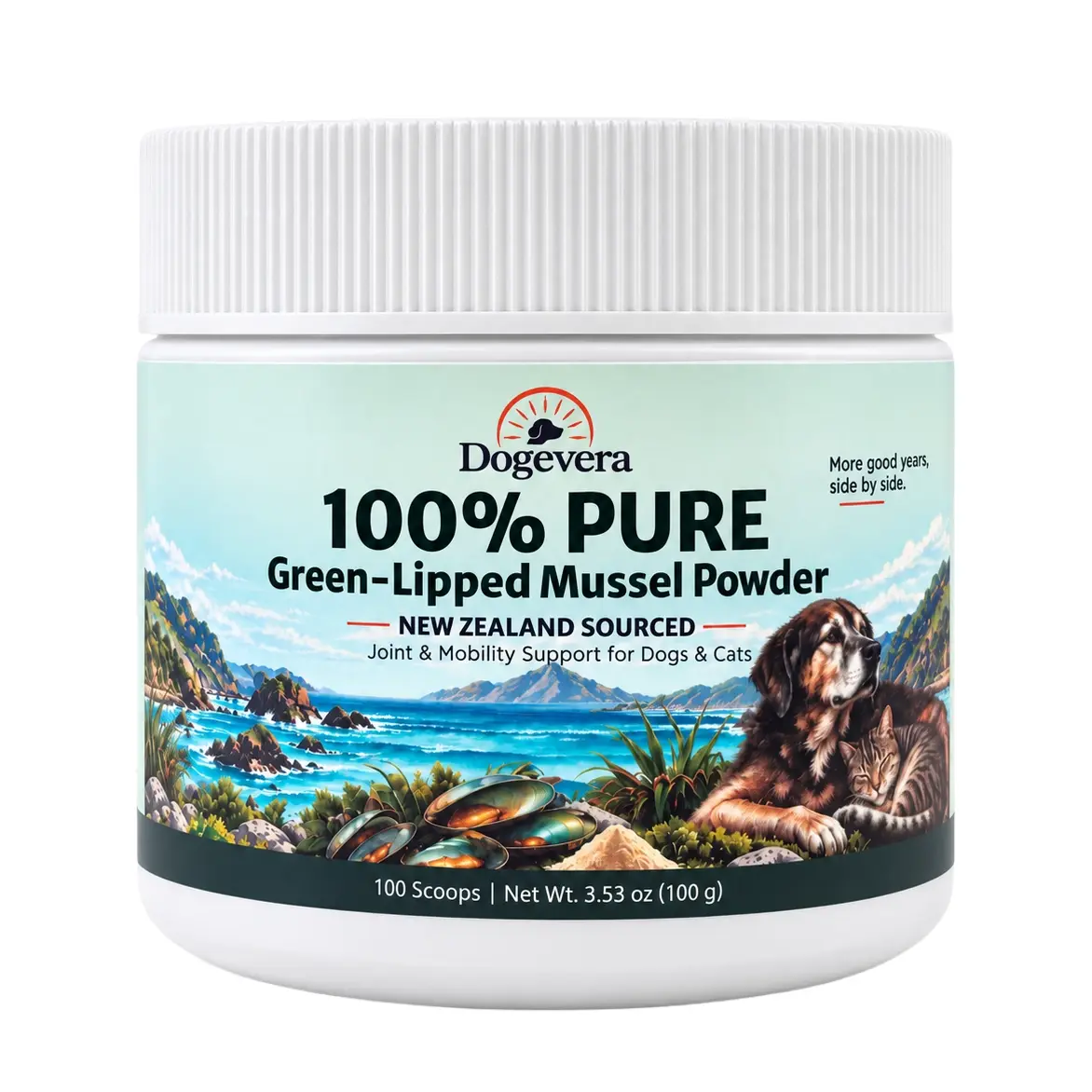
Daily joint support for senior dogs
100% New Zealand Green-Lipped Mussel Powder for Dogs4.5142 reviews
- 100% New Zealand green-lipped mussel. No fillers, no blends.
- Naturally rich in ETA omega-3s and GAGs for hips and joints
- One scoop on food, dosed by your dog’s weight
Black Friday40% off your first subscription order
Free shipping · 100-day money-back guarantee