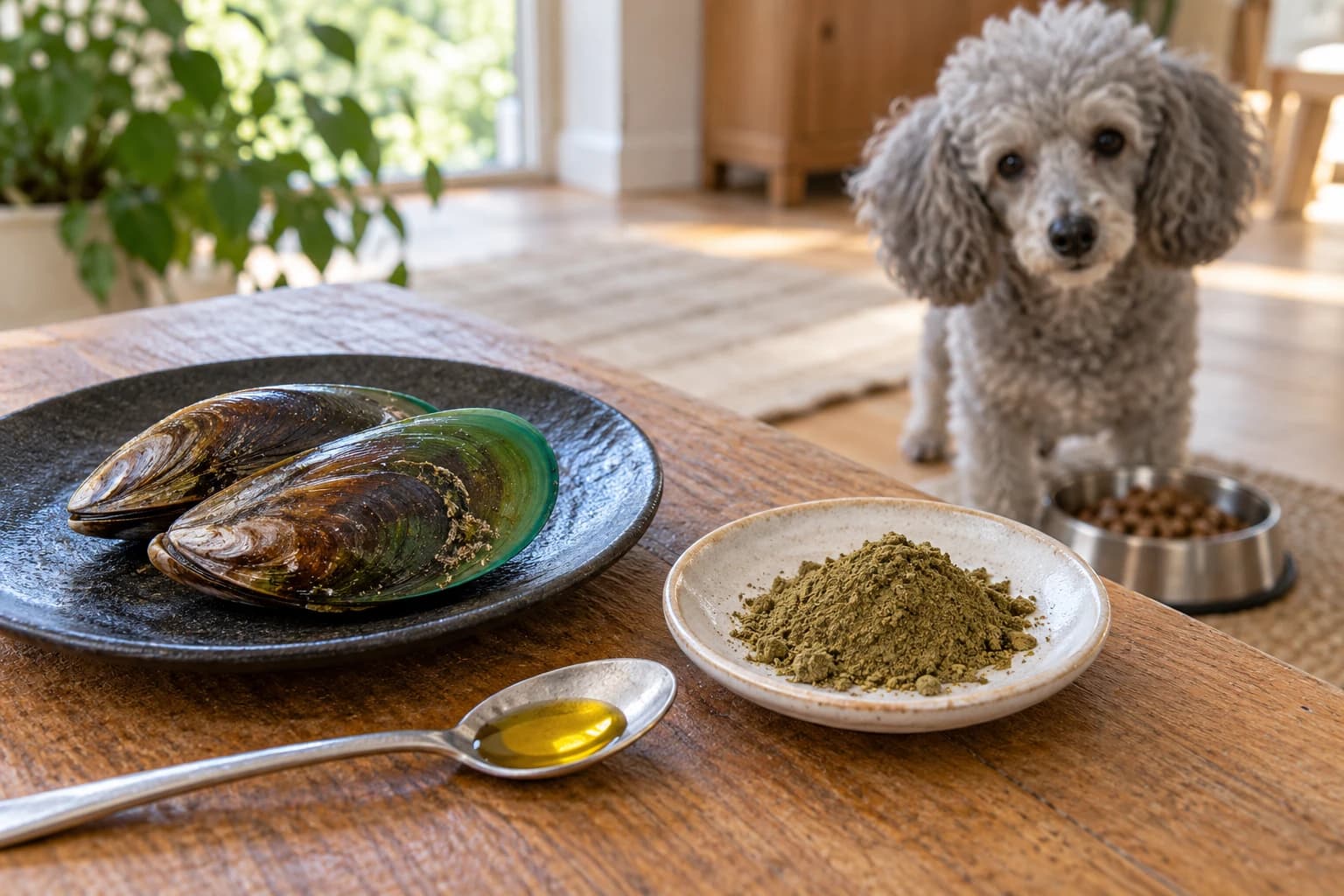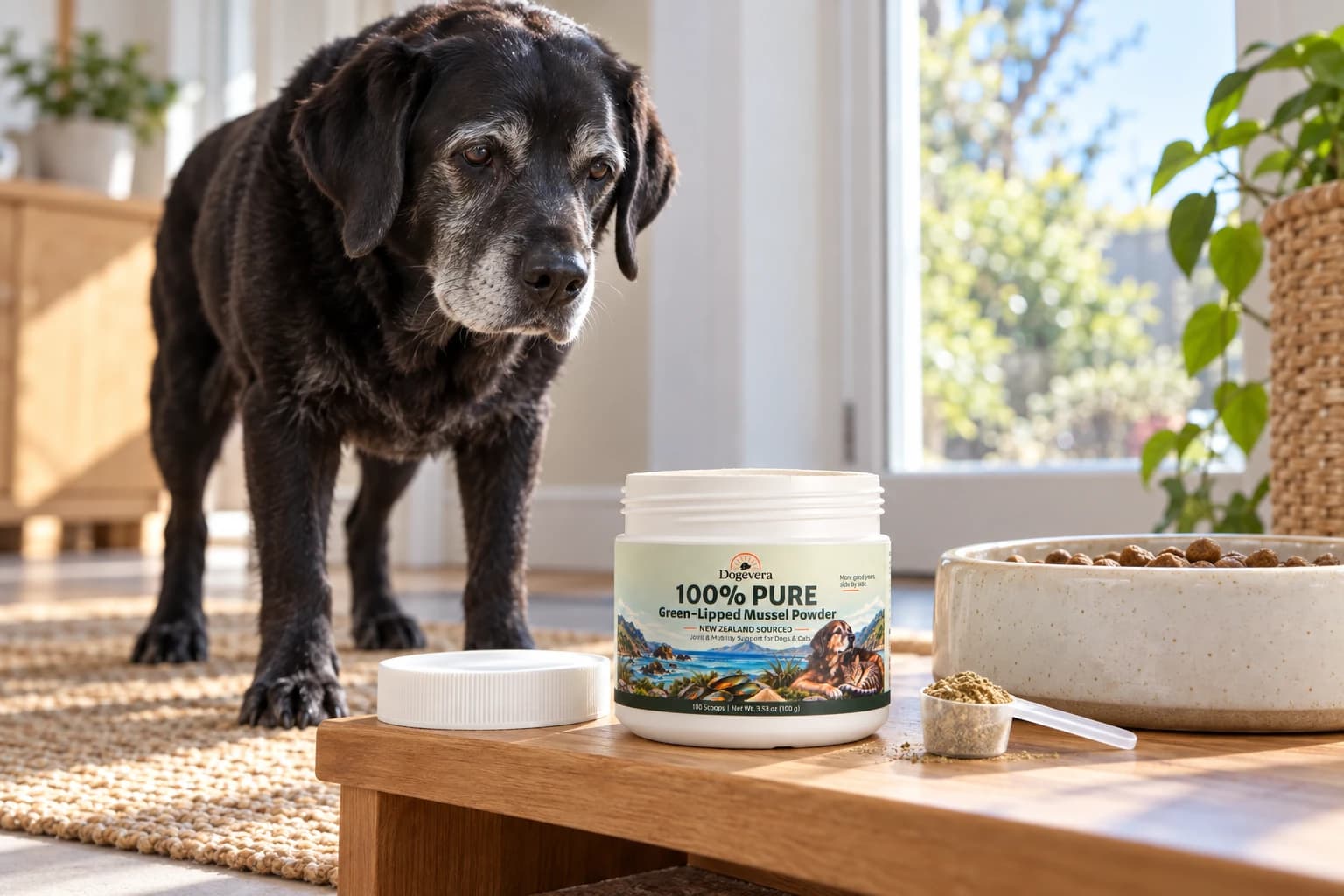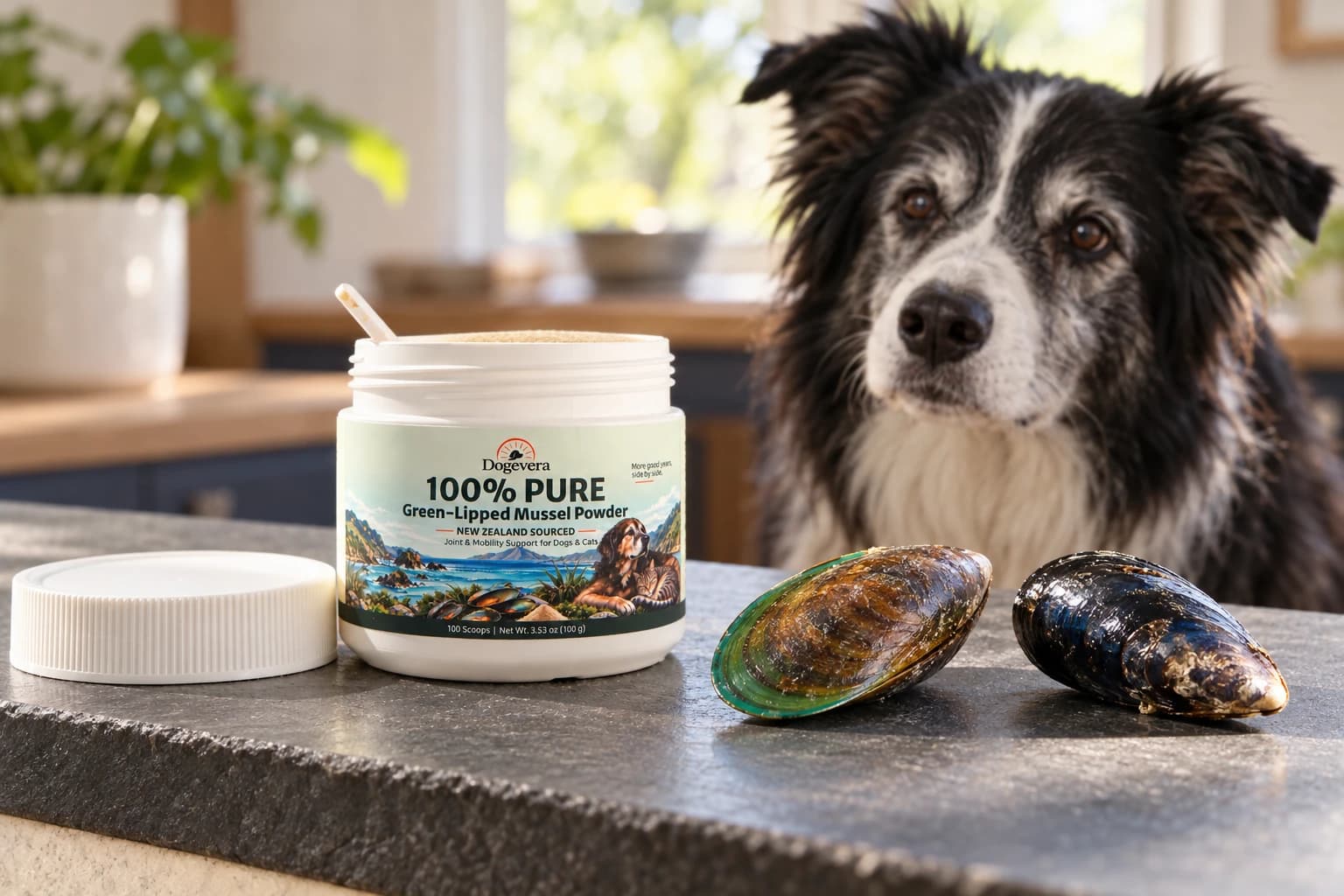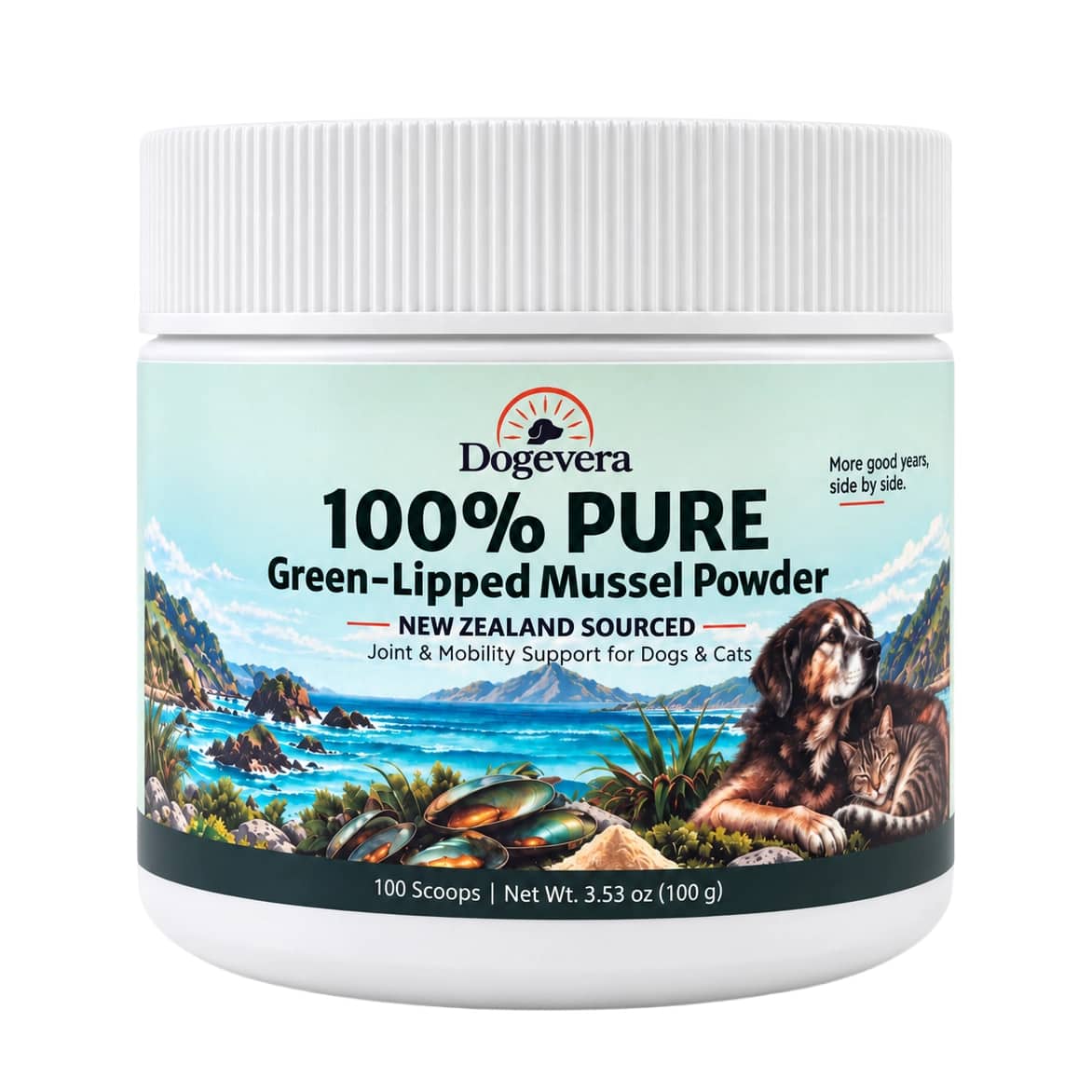
You open a capsule product and find the shell listed as an inactive ingredient. You read a tablet label and wonder whether the binder affects your dog's digestion. You compare two capsule brands and notice one lists powder weight while the other lists total capsule weight.
Capsules and tablets enclose the same dried mussel material as loose powder, but the container around that material adds cost, introduces new ingredients, and sometimes obscures how much mussel you are actually serving. If you ask your vet about contact details and a disclosure is available for review, if you check whether the label tells you how to open or serve the product for a dog who cannot swallow it whole, if you compare the active ingredient quantity rather than total capsule weight, you will narrow your choices to products that fit your dog's routine.
A supplement is not a treatment for diagnosed joint disease, and dosing decisions belong to your veterinarian when a health claim is involved.
What the capsule or tablet shell adds to the ingredient list
A capsule shell is typically gelatin, vegetable cellulose, or a pullulan material. A tablet binder might include cellulose, starch, or a flowing agent such as magnesium stearate. These inactive ingredients keep the product stable and manufacturable, but they also mean your dog ingests more than mussel powder.
- Gelatin capsules: usually bovine or porcine gelatin; check the label if your dog has a known beef or pork sensitivity.
- Vegetable or pullulan capsules: derived from plant cellulose or tapioca; lower allergen risk but sometimes higher cost.
- Tablet binders and fillers: cellulose, starch, silica, or magnesium stearate; generally recognized as safe in small quantities but rarely disclosed by weight.
- Coatings or flavorings: some tablets carry a palatability coating; check whether chicken, beef, or another common allergen appears in the inactive list.
If a label lists only "capsule" without specifying the shell material, contact the brand for a full ingredient disclosure before purchase.
How to find the actual mussel content
Capsule and tablet labels express strength in different ways. Some state the net weight of powder inside each unit. Others state total capsule weight, which includes the shell. A few list an extract ratio or concentration without stating the final powder quantity.
- Net powder weight per capsule: the clearest format; multiply by the number of capsules in a daily serving to find total mussel intake.
- Total capsule weight: subtract an estimated shell weight (typically 50–100 mg for a size 0 or 00 gelatin capsule) to approximate powder content, but the label should state this directly.
- Extract ratio (e.g., 20:1): means twenty kilograms of fresh mussel yielded one kilogram of extract; without the final powder weight per capsule, you cannot calculate daily mussel intake.
- Proprietary blend: lists mussel alongside other ingredients with a combined weight; you cannot determine individual quantities.
When comparing products, match net mussel powder weights, not capsule counts or total package size. A bottle with twice the capsules may deliver half the mussel per serving.
For context on whole-powder versus concentrated extracts, see green lipped mussel oil for dogs.
Opening instructions and divided servings
Some dogs cannot or will not swallow a capsule whole. If you plan to open the capsule and mix the contents into food, check whether the label provides instructions and whether the shell material is safe for your dog to ingest if it accidentally ends up in the bowl.
- Twist-apart capsules: easiest to open by hand; both gelatin and vegetable shells usually separate with gentle pressure.
- Sealed or coated capsules: designed for intact swallowing; opening may be difficult or messy, and coatings may affect palatability.
- Tablets: scored tablets can be split along the line; unscored tablets may crumble unevenly, making accurate half-servings difficult.
- Stability after opening: most mussel powders remain stable for the day after a capsule is opened and mixed into food, but prolonged exposure to air and moisture degrades omega-3 content; do not pre-open capsules for the week.
If the product label says "give capsule whole" and your dog consistently refuses it, the format does not fit your routine, regardless of ingredient quality.
Weight-band clarity and daily serving logic
A well-written capsule or tablet label provides a weight-based serving table that states capsules or tablets per day for defined weight ranges. Without that table, you are left guessing how many units match research-based intake levels.
- Clear weight bands: "Dogs 20–40 lb: 1 capsule daily; 41–60 lb: 2 capsules daily."
- Vague guidance: "Give 1 capsule per 25 lb body weight" without stating whether to round up, round down, or split capsules.
- Missing weight bands: "Consult your veterinarian for appropriate serving" shifts all dosing responsibility to the clinic without giving them product-specific guidance.
Research protocols in dogs with joint discomfort used whole green-lipped mussel extract at levels that improved mobility and pain scores over placebo in controlled trials lasting eight weeks (Europe PMC 18955269). Another study found that dogs receiving green-lipped mussel extract showed improvement by day 56, with 91% of dogs in a former placebo group improving after 56 days of treatment in an open-label extension (Europe PMC 16751841). These numbers reflect specific trial formulations and veterinary oversight; you cannot convert them into a home capsule count for a different product without knowing the exact powder weight and extract type in your capsule.
For practical guidance on matching a label to your dog's size and estimating ongoing cost, see green lipped mussel powder serving guide and jar life.
Powder, capsule, or soft chew: choosing by daily practicality
Capsules offer portion control and travel convenience. Loose powder offers flexibility for partial servings and lower per-serving cost. Soft chews add palatability but introduce more inactive ingredients and usually cost more per gram of mussel.
- Capsules: best when your dog swallows pills reliably or when you need pre-measured units for multi-dog households.
- Loose powder: best when you mix supplements into wet food daily and want to adjust serving size without splitting capsules.
- Tablets: similar portion control to capsules but harder to open; choose only if your dog accepts them whole.
- Soft chews: easiest acceptance but check for allergens in the chew base (chicken, beef, glycerin source) and compare mussel content per chew to powder equivalents.
If you are comparing capsules to loose powder for the first time, read ingredient labels and serving tables for both formats before deciding. The choice depends on your dog's acceptance, your daily routine, and ongoing cost, not on which format is universally superior. For a structured comparison of powder and soft-chew formats, see dog supplement powder vs soft chews.
When to contact the brand before buying
If the label leaves you uncertain about any of the following, contact the brand and ask for written clarification before purchase:
- Shell or binder material when "capsule" or "tablet" is the only disclosure.
- Net mussel powder weight per capsule when only total weight appears.
- Extract type (whole powder, lipid extract, freeze-dried) and concentration ratio.
- Country of mussel harvest and processing location.
- Third-party testing scope (heavy metals, microbial, omega-3 verification) and how to request certificates of analysis.
- Shelf life after opening and recommended storage conditions.
A brand that responds with specific, verifiable details demonstrates transparency. A brand that replies with marketing language or defers all questions to a veterinarian may lack the documentation you need for an informed choice.
Frequently asked questions
Can I open a capsule and mix the powder into my dog's food? Most gelatin and vegetable capsules can be twisted apart. If the label does not mention opening instructions, contact the brand to confirm the powder remains stable and palatable when exposed to air and food moisture.
How do I compare capsule strength between two brands? Find the net mussel powder weight per capsule on each label, then multiply by the daily serving quantity. Compare those totals, not capsule counts or bottle sizes.
Are vegetable capsules better than gelatin for dogs? Vegetable capsules avoid bovine and porcine ingredients, which matters for dogs with beef or pork sensitivities. For dogs without those concerns, gelatin and vegetable shells are both safe inactive ingredients.
Why does one brand list 500 mg and another lists 20:1 extract? The 500 mg is a powder weight. The 20:1 ratio describes concentration during extraction. Without both pieces of information, you cannot calculate actual mussel intake. Ask the brand for the final powder weight per capsule.
Can I split a tablet in half for a smaller dog? Scored tablets are designed to split evenly. Unscored tablets may crumble or divide unevenly, making accurate partial servings difficult. If the label does not show a scored line, contact the brand before attempting to split.
Choosing a capsule product that fits your routine
Read the ingredient list for shell material and any allergens. Find the net mussel powder weight per capsule and compare it to the daily serving table. Check whether opening instructions appear if your dog cannot swallow pills whole. Contact the brand if any of those details are missing. Match the format to your dog's acceptance and your daily feeding routine, and estimate ongoing cost using the actual mussel quantity per serving, not the capsule count on the front of the bottle.
For a comparison of loose-powder brands by label transparency and sourcing, see green lipped mussel powder for dogs: five brands compared.
For individual health questions, your veterinarian remains the best partner.