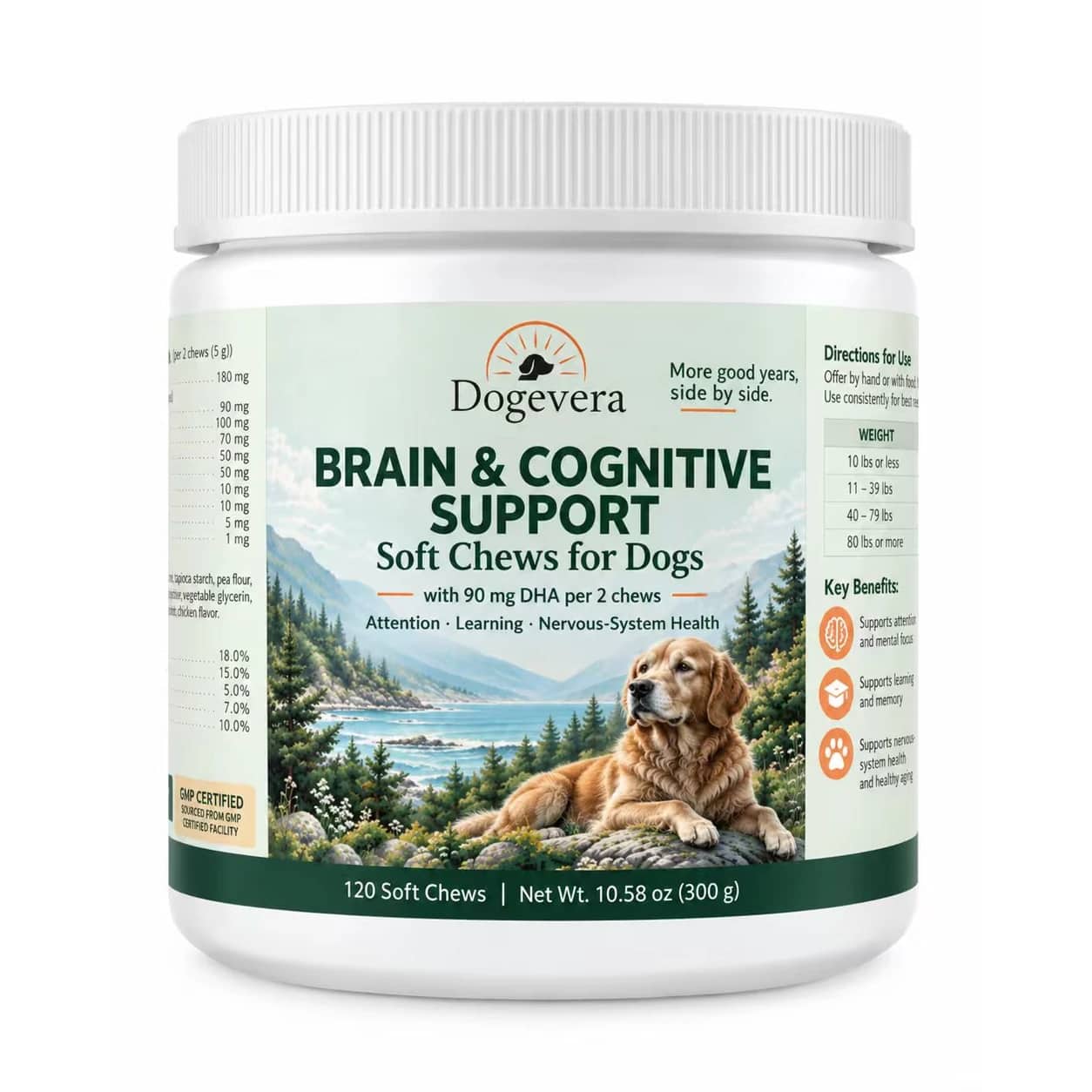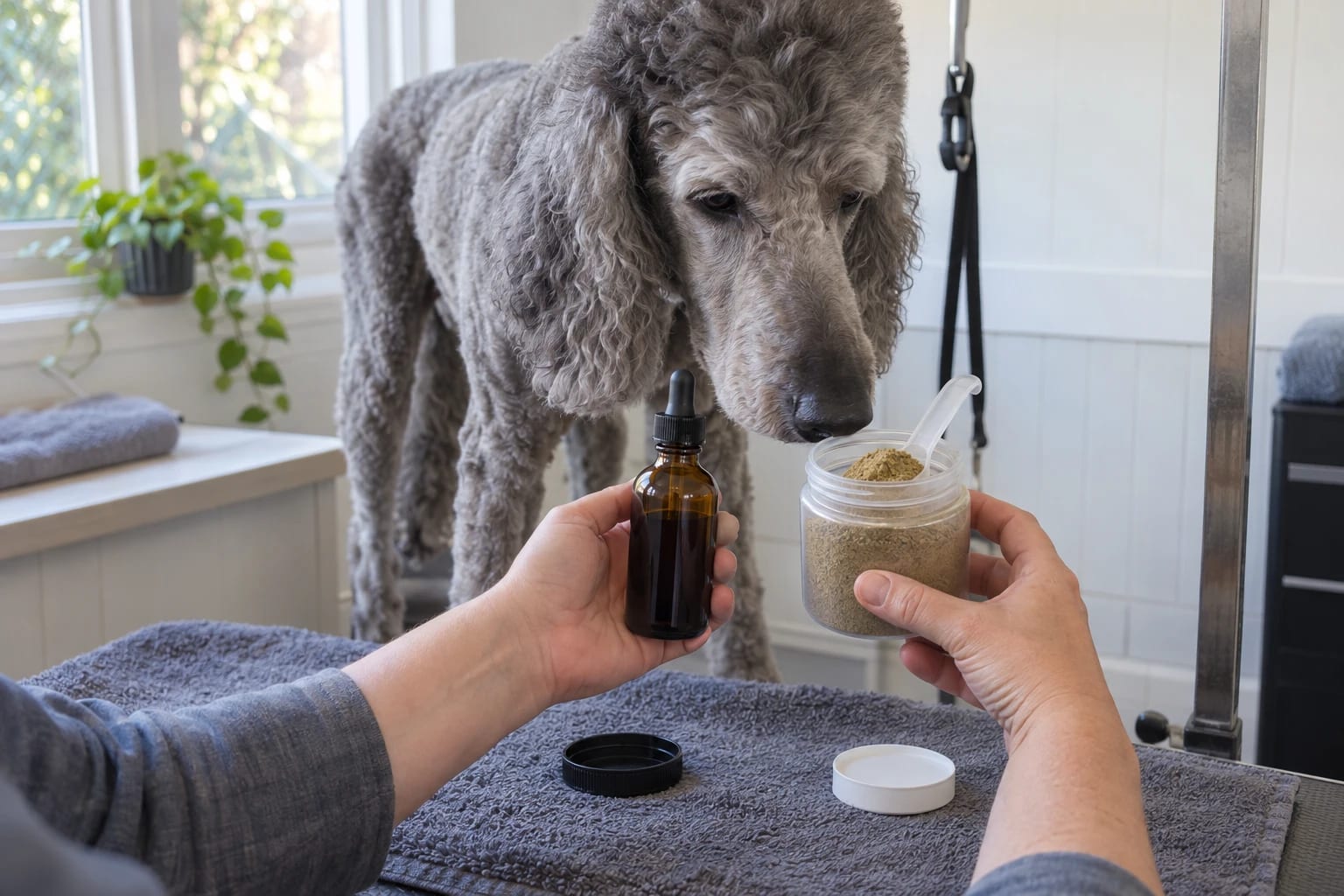
You're standing in the supplement aisle comparing two jars. One says "green lipped mussel," the other says simply "mussel" or "blue mussel." They sound close enough. They aren't the same ingredient, and the difference matters when you're trying to figure out what the research actually covers.
This article compares the two by species, product format and evidence, so you can decide which jar, if either, belongs in your dog's routine. A quick note: if your dog has a health condition, your veterinarian is the right person to involve in this decision.
The species question: what each name means
The names on the label are species names, and they point to different animals:
- Green lipped mussel (Perna canaliculus): A specific mussel species farmed in New Zealand, named for the green edge of its shell.
- Blue mussel (Mytilus edulis and related species): A different genus, common in cooler Atlantic and Northern Hemisphere waters.
Because these are different species, their compositions differ. Studies performed on one species do not automatically certify products made from the other. That's the core of the green lipped mussel vs blue mussel comparison: it's less about one being "better" in the abstract and more about which one the published canine research was actually conducted on.
What the canine studies actually used
The published dog research you may have seen referenced concerns green lipped mussel, specifically preparations of Perna canaliculus.
In one placebo-controlled study, 81 dogs presumptively diagnosed with degenerative joint disease were treated daily with either green lipped mussel extract or a placebo for 56 days, followed by an open-label extension on Days 57–112 in which all dogs received the extract. By Day 112, 29 of 32 dogs (91%) in the former placebo group had improved, and the researchers noted that long-term therapy may be required before improvement is apparent. No signs of toxicity were apparent in that study.
In a separate study, 23 client-owned dogs with osteoarthritis were fed a balanced control diet for 30 days and then a green lipped mussel-enriched diet for 60 days. The enriched-diet period was associated with improvements in peak vertical force and owner-reported pain measures, though the researchers noted the balanced control diet itself may have contributed to the initial reduction in symptoms.
The key point for this comparison: these studies tested green lipped mussel preparations, not blue mussel products. A blue mussel supplement cannot inherit those results by association. If you want a fuller walkthrough of what canine studies can and cannot establish for a finished product, our article on green lipped mussel for dogs and the evidence covers the formulation limits in more detail.
Format matters as much as species
Even within green lipped mussel products, the format varies, and format affects what a product is:
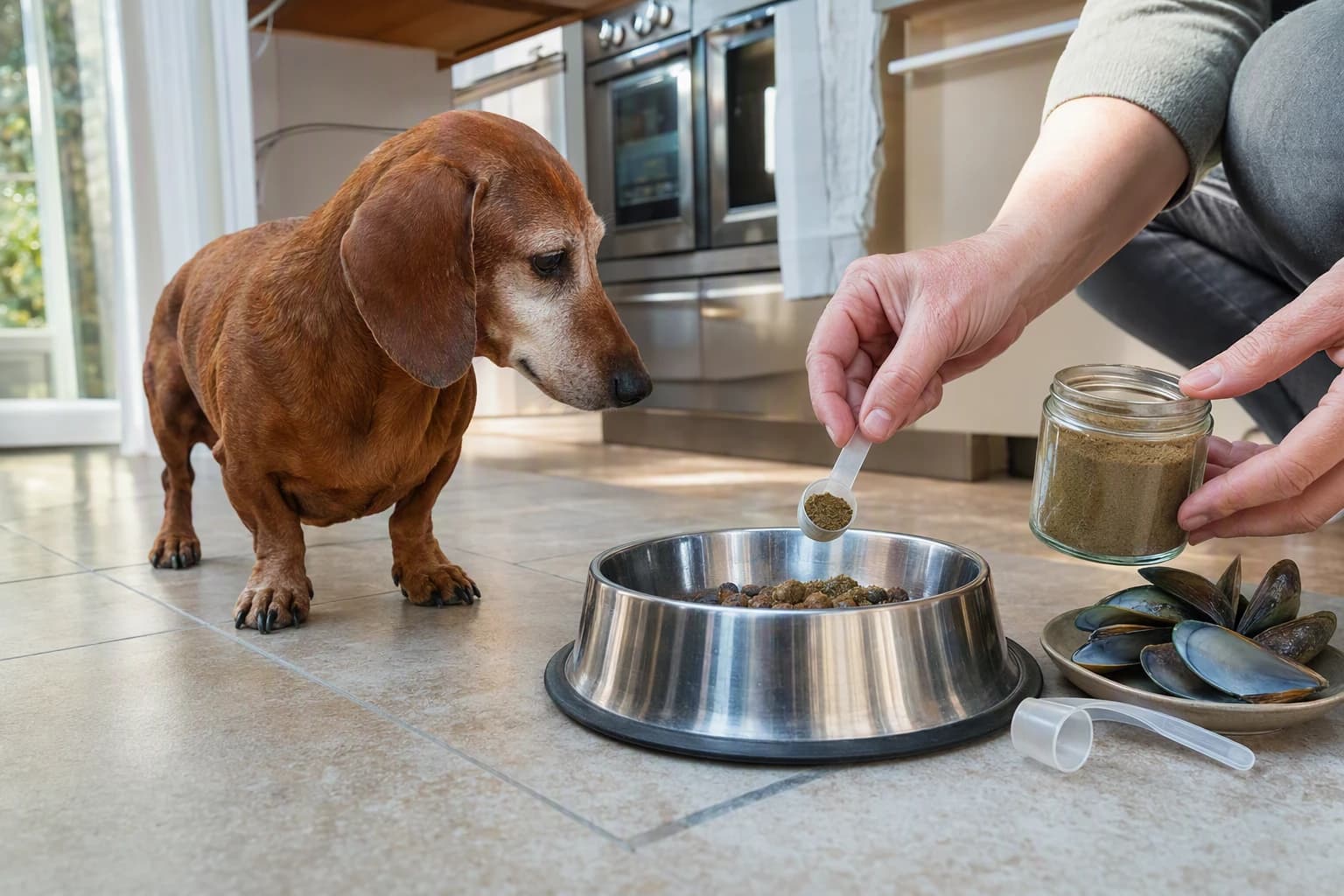
- Whole-mussel powder: Dried whole Perna canaliculus tissue. This is the closest format to several study preparations.
- Lipid (oil) extract: A concentrated marine lipid fraction, not the whole mussel.
- Blends: Mussel combined with glucosamine, chondroitin or other joint ingredients, where the mussel content per serving may be smaller.
Blue mussel products add a further layer: they may be sold as powders, oils or blends too, and none of those formats has the same body of canine study behind it.
If you're weighing a mussel product against other joint-ingredient options, our comparisons of green lipped mussel vs glucosamine for dogs and green lipped mussel vs fish oil for dogs walk through how to compare formats and declared ingredients side by side.
Label checklist for choosing between the two
Use this when two products are in front of you:
- Species named: Does the label state Perna canaliculus or Mytilus edulis? "Mussel" alone tells you very little.
- Origin claim: Green lipped mussel should credibly trace to New Zealand. Our guide to New Zealand green lipped mussel authenticity explains how to read origin claims and their limits.
- Format: Whole powder, oil extract or blend? Look for the amount of the named ingredient per serving.
- Evidence mapping: If a product cites studies, check whether the studies used the same species and format as the jar in your hand.
- Other ingredients: Allergens, fillers and flavorings belong in the same read-through, especially if your dog has known food sensitivities.
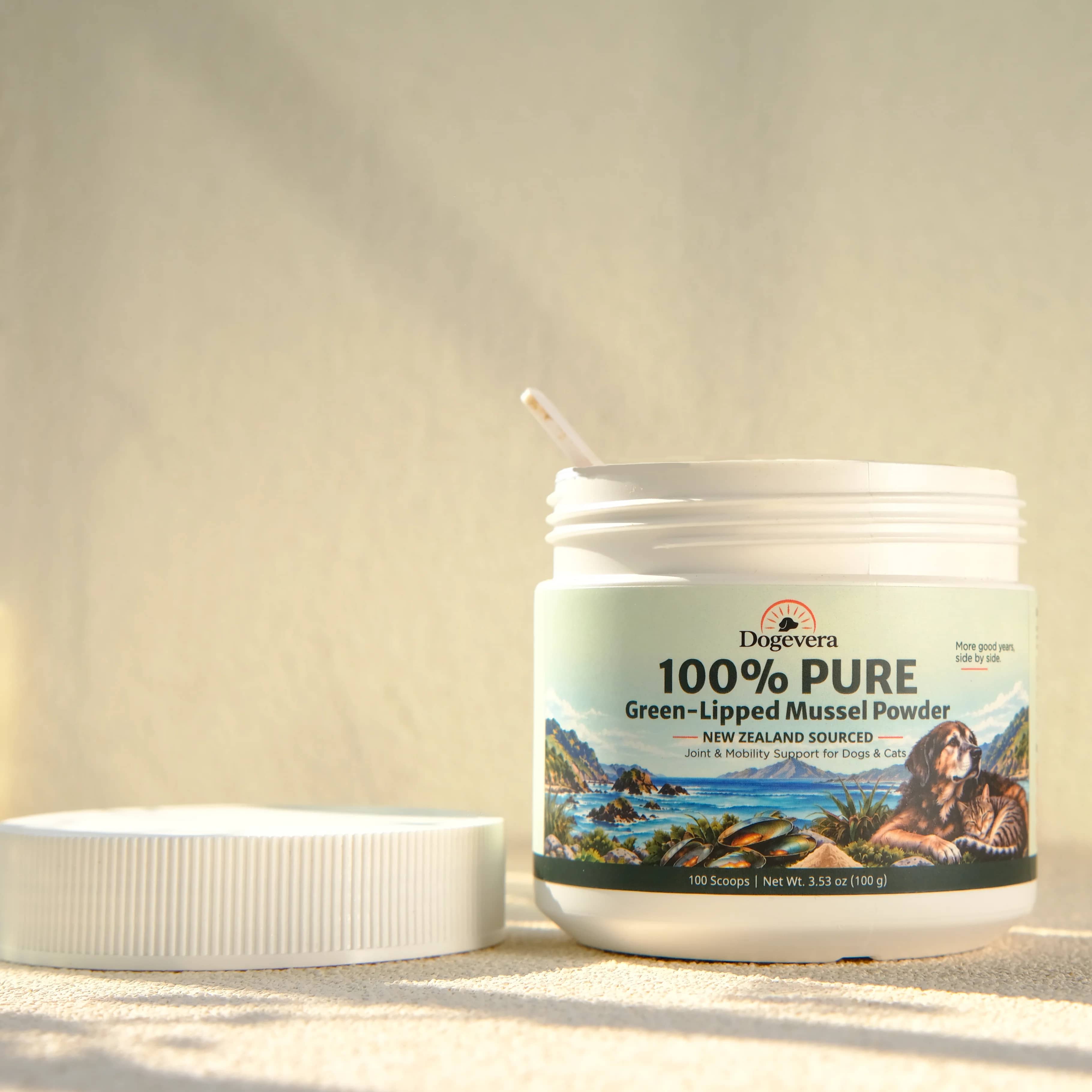
If your comparison ends at a green lipped mussel powder, our New Zealand green lipped mussel powder for dogs is a whole-mussel powder with species, origin and serving information on the label.
A repeatable way to observe your dog afterward
Whichever product you choose, home observation is what turns a purchase into a routine you can evaluate:
1. Pick one or two baselines first, such as how quickly your dog rises from lying down, or comfort on one familiar walking route. 2. Record for three days before starting so you have a comparison point. 3. Follow the product's labeled serving rather than borrowing doses from studies. 4. Recheck the same notes weekly and give any reasonable evaluation window before judging, since the research on green lipped mussel suggests longer periods may matter. 5. Pause and call your vet if you see a reaction or a sudden change in mobility, appetite or behavior.
FAQ
Is blue mussel bad for dogs? There's no basis in this comparison to call it bad. The point is narrower: the canine research you'll see cited concerns green lipped mussel, so blue mussel products can't claim that evidence as their own.
Can I substitute one for the other at the same serving? No. They're different species with different compositions, so a labeled serving of one doesn't translate to the other. Follow each product's own label.
How do I know which species is in a product? Look for the Latin name, Perna canaliculus or Mytilus edulis, in the ingredient panel. If it's absent, ask the manufacturer before buying.
For individual health questions, your veterinarian remains the best partner.