The Short Version
Hydration for senior dogs starts with making sure clean water is always within easy reach and watching whether they're keeping up their usual habits, drinking, peeing, eating, and their general energy level. Don't rely only on how far the water level in the bowl has dropped: jot down the time of day, their activity, the weather, what kind of food they ate, and how they seemed overall. If you notice a clear change, bring those notes to your vet to talk through.
How Much Water Should a Senior Dog Drink Each Day?
There's no single number that fits every older dog. Age, size, activity level, weather, the moisture in their food, and the care they receive can all change how much they drink in a day. Rather than chasing a specific figure, start by making sure they can reach their water without effort, then watch whether they're keeping up their usual pattern.
Start with these details:
- Check whether the bowl is near the spots where they usually rest, eat, and hang out.
- Notice whether they can walk to the bowl steadily, and whether bending down, turning around, or stepping away is hard for them.
- Make sure the water is clean, the bowl doesn't tip over easily, and the floor around it isn't slippery.
- Watch for signs they want to drink but would have to travel a long way to reach the bowl.
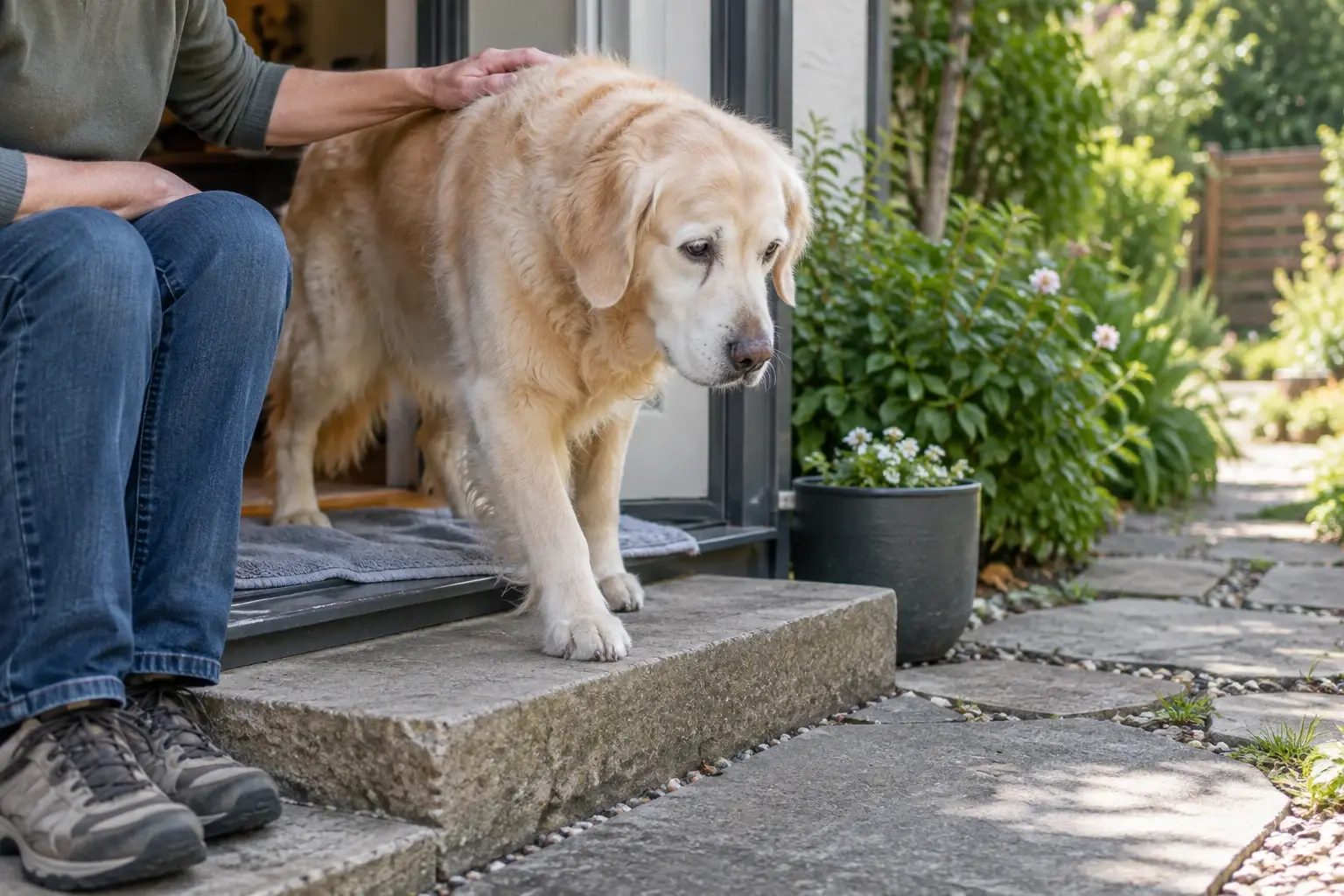
Sometimes older dogs slow down and stop venturing to a far-off water source on their own. Moving the bowl closer usually takes less effort than repeatedly walking them over to it, and it fits more naturally into the daily routine.
How Can You Make Water Easier to Access?
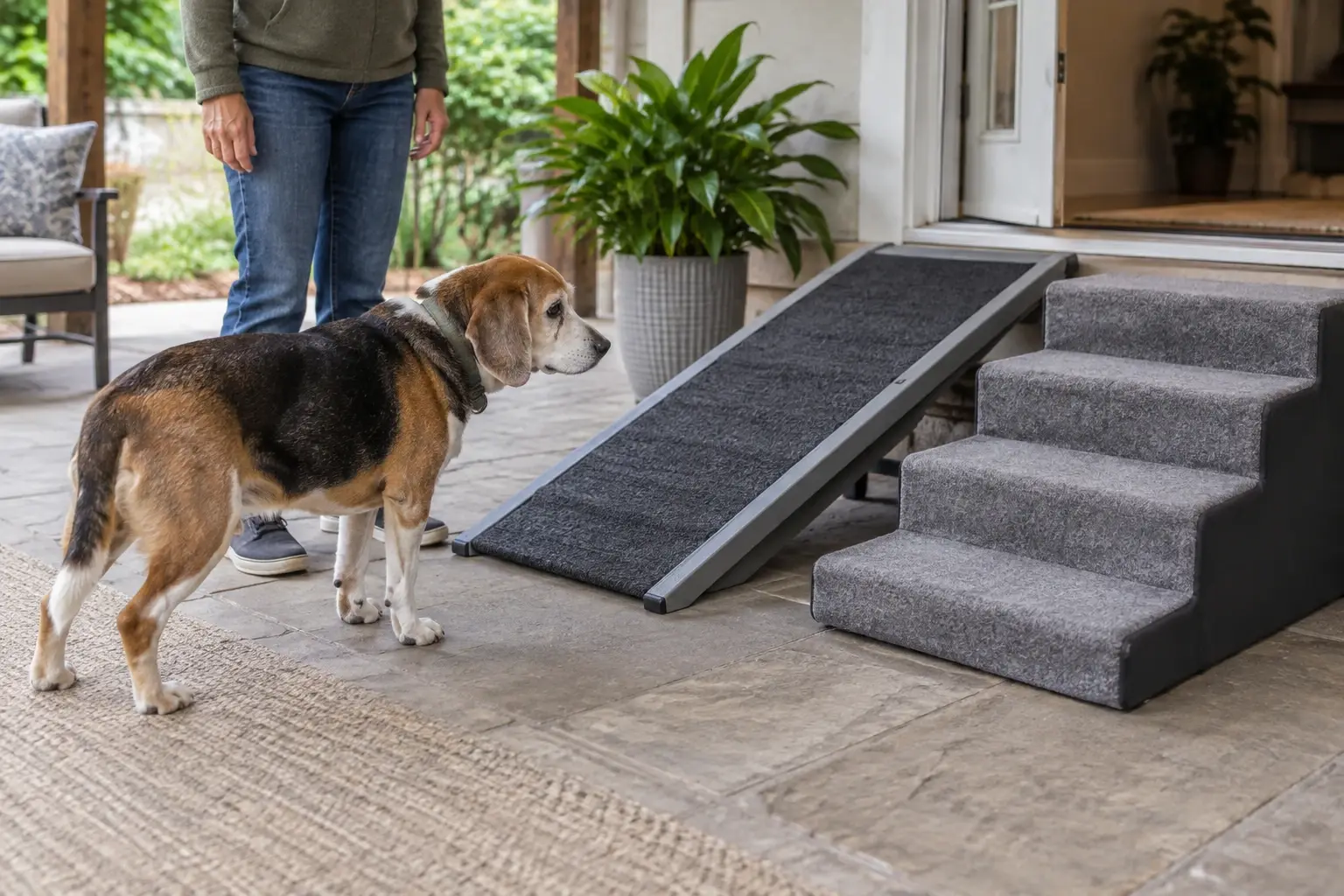
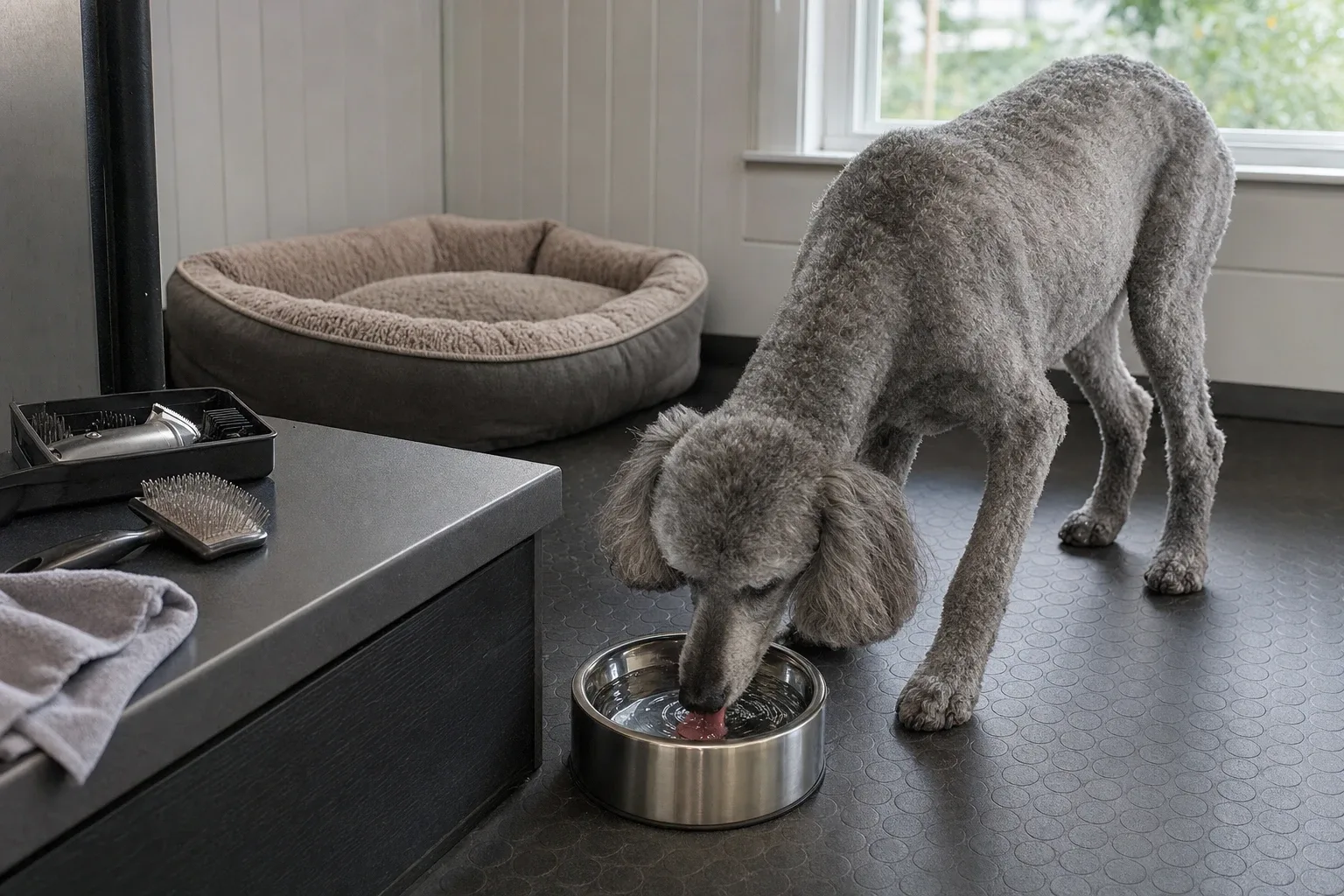
Start by reviewing the environment without making any risky changes. Pick a stable, non-slip bowl and place it in a familiar, well-lit spot. If there are several areas of the house your dog uses often, set out a bowl in each one so they don't have to cross long distances to drink. Don't pile objects near the bowl or make them cross thresholds, go up or down steps, or walk across a wet, slick floor.
Each day, check whether the bowl has picked up hair, food scraps, or dust, and refresh the water as part of your regular household cleaning routine. If they suddenly avoid a particular bowl, look first at its location, any smell, nearby noise, and the feel of the floor, rather than changing several things at once. Adjusting one factor at a time helps you figure out what actually helps.
If their hearing or vision has changed, keeping the bowl in the same spot matters even more. When you do need to move it, calmly walk them over to it so they can relearn the route.
What Should You Do If a Senior Dog Drinks Too Little?
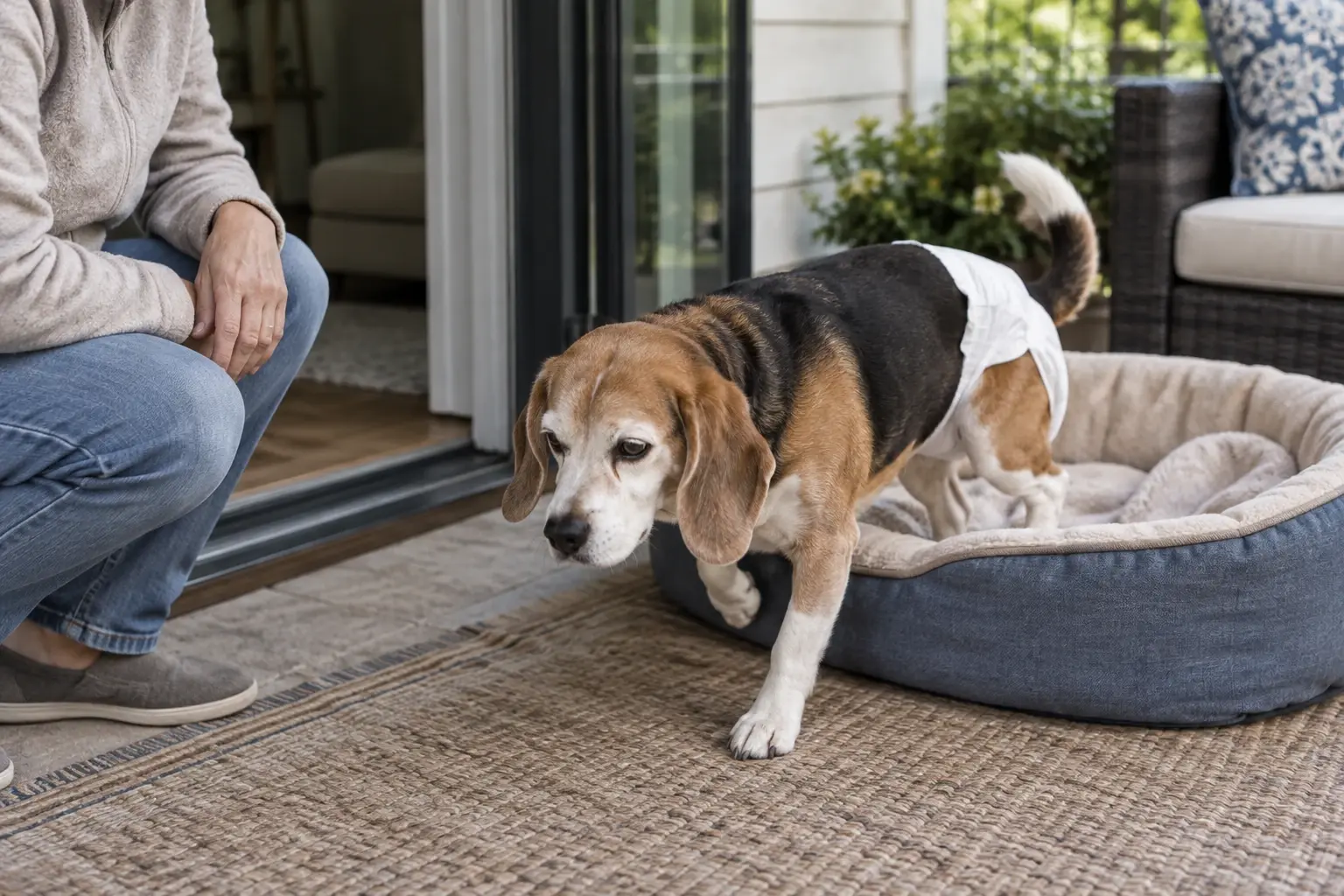
First, figure out whether they don't want to drink or whether getting to the water is the problem. If they approach the bowl and immediately walk away, check how clean the water is and the bowl's height and placement. If they're barely getting up from their bed, bring the bowl closer and keep the path to it clear and flat. Don't force water into their mouth, and don't add medications, supplements, or large amounts of new foods on your own without knowing the cause.
It's also worth noting what kind of food they eat. Wet food and dry food can go along with different drinking patterns, but don't abruptly overhaul their entire diet just to boost water intake. Keep one running note of what they ate that day, whether their drinking changed, and whether they're peeing differently than usual. You can then decide whether you need professional advice.
If their appetite is fine, ask your vet whether it would make sense to swap part of their regular food for an option with more moisture, without disrupting the overall structure of their diet. The priority is a stable diet they eat well, not using any particular food as a substitute for water.
Track Changes Over Three Days Instead of Trusting Your Memory
Set up a simple chart and note what you observe over three days. If the change is very obvious, start the same day. You don't need to write much each time; just capture these basics:
1. Water: when you refill the bowl or notice the level has clearly dropped, and whether they're drinking more, less, or about the same as usual. 2. Food: whether they're eating normally and whether the food is dry, wet, or was changed briefly. 3. Urination: how many times, at what times of day, and whether anything unusual happens on walks or while relieving themselves. 4. Overall condition: any new changes in activity, rest, how they walk, or how they interact with the family. 5. Environment: whether it's been hot and muggy, their activity has increased, or the bowl was moved.
Don't try to get an "exact total" by making them drink a lot at once, and don't restrict their access to water. Snapping a photo of where the bowl sits and the label on their food can also help you explain the context at the appointment. To get organized, check out the checklist of observations and questions to bring to the vet and gather your notes on drinking changes and other everyday details there.
Which Changes Mean You Should Call the Vet Soon?
If their drinking or urination changes clearly and persistently, or if it comes with loss of appetite, repeated vomiting, diarrhea, unusual tiredness, or an obvious decline in mobility, don't try to fix it just by setting out more bowls. Note when it started, whether it's getting worse, what they ate that day, and what care they've been receiving. Then contact your vet and walk them through it.
If they can't drink at all, seem very weak, or their condition clearly deteriorates in a short time, seek professional care right away. Don't assume it's simply old age, don't set a fixed water amount, and don't use products on your own based on internet advice. Daily care and observation provide useful clues, but they don't replace an individual evaluation.
Frequently Asked Questions
Can I put the water bowl next to their bed?
Yes, it's worth considering for convenience and cleanliness. As long as the bowl is stable, the floor around it doesn't get wet or slippery, and it doesn't interfere with their rest, keeping water where they spend a lot of time usually makes access easier.
If a senior dog drinks more, does that mean they weren't drinking enough?
Not necessarily. Drinking more can line up with the weather, more activity, food changes, or other circumstances. Track drinking, urination, appetite, and overall condition first; don't draw conclusions from a single sign.
Can I offer broth to encourage them to drink?
Don't just grab any broth that contains salt, seasonings, or ingredients that aren't safe for dogs. If you want to change how you offer liquids, keep clean water available and talk to your vet, bringing the specific ingredient list and notes on their routine.
Do I need to measure exactly how much they drink each day?
In most households, you can start by noting the difference from their routine, when they drink, and any signs that come with it. If your vet asks you to measure, follow the method they recommend. To find more content on caring for senior dogs day to day, browse Dogevera's daily care articles and pick what best fits what you're seeing at home.
Keep water access separate from nighttime training
Do not reduce water simply to avoid nighttime waking or accidents. Unless the veterinary team has provided an individual restriction, keep water accessible. Report new changes in thirst or urination and use the notes to support an assessment.
Related reading
- How to Choose Senior Dog Food: A Practical Guide from Nutrition to Feeding
- How to Help Your Senior Dog Sleep Through the Night
References
- AAHA Senior Care Guidelines for Dogs and Cats — Journal of the American Animal Hospital Association (2023). DOI: 10.5326/JAAHA-MS-7343.
- Veterinary Pet Supplements and Nutraceuticals. Nutrition today. 2020. PMID: 33446942. DOI: 10.1097/nt.0000000000000399.
- AAHA: evaluating the unhealthy senior pet.
For individual health questions, your veterinarian remains the best partner.