TL;DR
Almost every homemade dog food recipe needs supplements, and most recipes found online or in books are unbalanced. When the University of California, Davis analyzed 200 home-prepared dog food recipes, 95% were short of at least one essential nutrient and more than 83% had several shortfalls; the most concerning were choline, vitamin D, zinc and vitamin E. Only the four recipes written by board-certified veterinary nutritionists were nutritionally adequate. For a senior dog, the safest route is a recipe written for your dog by a veterinary nutritionist, with the specific vitamin and mineral supplement it calls for, usually including calcium. Adding a random multivitamin to an online recipe does not fix the gaps: a 2021 study that chemically analyzed 75 homemade dog diets found the presence of a supplement did not guarantee a balanced diet.
Why homemade diets fall short
- The UC Davis study (2013): 200 recipes from 34 sources, including veterinary textbooks, pet care books and websites. 95% had at least one deficiency; only 9 met AAFCO minimums for adult dogs and only 5 met National Research Council minimums. Recipes written by vets did better, and all 4 from board-certified veterinary nutritionists were adequate.
- A Brazilian recipe analysis (2017): every one of 106 published recipes had at least one nutrient below recommendations. Among dog recipes, vitamin E was short in 82.9%, zinc in 75.6%, iron in 68.3% and vitamin B12 in 61%.
- A chemical analysis of 75 cooked dog diets (2021): diets without a supplement were low in calcium, zinc was low across the board, and neither more ingredients nor the presence of a supplement guaranteed a balanced diet.
The pattern is consistent: meat, rice and vegetables alone are short of calcium, several trace minerals and some vitamins, and the gaps are not obvious until a dog becomes ill.
Supplements a homemade senior diet usually needs
A balanced recipe will specify exact products and amounts. These are the nutrients most often missing:
| Nutrient | Why it is short in homemade food | How recipes usually supply it |
|---|---|---|
| Calcium | Meat is high in phosphorus and low in calcium unless bones are included | Calcium carbonate or a calcium-phosphorus supplement, by weight |
| Zinc, iron, copper, manganese, iodine | Hard to meet from ordinary ingredients | A canine vitamin-mineral premix made for homemade diets |
| Vitamin D | Few foods contain enough | Included in a canine premix; too much is toxic |
| Vitamin E | Low in most recipes; needs rise with added oils | Premix, or vitamin E in measured amounts |
| Choline | Often overlooked | Premix, or ingredients such as egg as the recipe directs |
| Essential fatty acids | Depends on the oils used | A specified oil, sometimes fish oil |
Vitamin D is the clearest example of why amounts matter: it is essential, but the FDA has documented dog foods recalled for toxic vitamin D levels, with signs such as vomiting, increased thirst and urination, drooling and weight loss. Do not add vitamin D or calcium on top of a premix unless the recipe says so.
Why a human multivitamin is not the answer
- Doses are wrong for dogs, and some human vitamins contain ingredients that are dangerous for dogs. The FDA warns that xylitol, found in some chewable vitamins and supplements, can cause a dangerous drop in blood sugar in dogs.
- A general multivitamin does not supply calcium in the amounts a meat-based diet needs.
- The 2021 analysis found that simply adding a supplement did not make diets balanced.
Extra considerations for older dogs
- Protein: a 2008 review concluded that restricting protein in healthy older dogs can worsen age-related muscle loss, and suggested at least 25% of calories from protein. A homemade diet makes it easy to under- or overshoot.
- Kidney disease: dogs with kidney disease need controlled phosphorus and protein levels; a homemade diet must be designed for this, not adapted from a healthy-dog recipe.
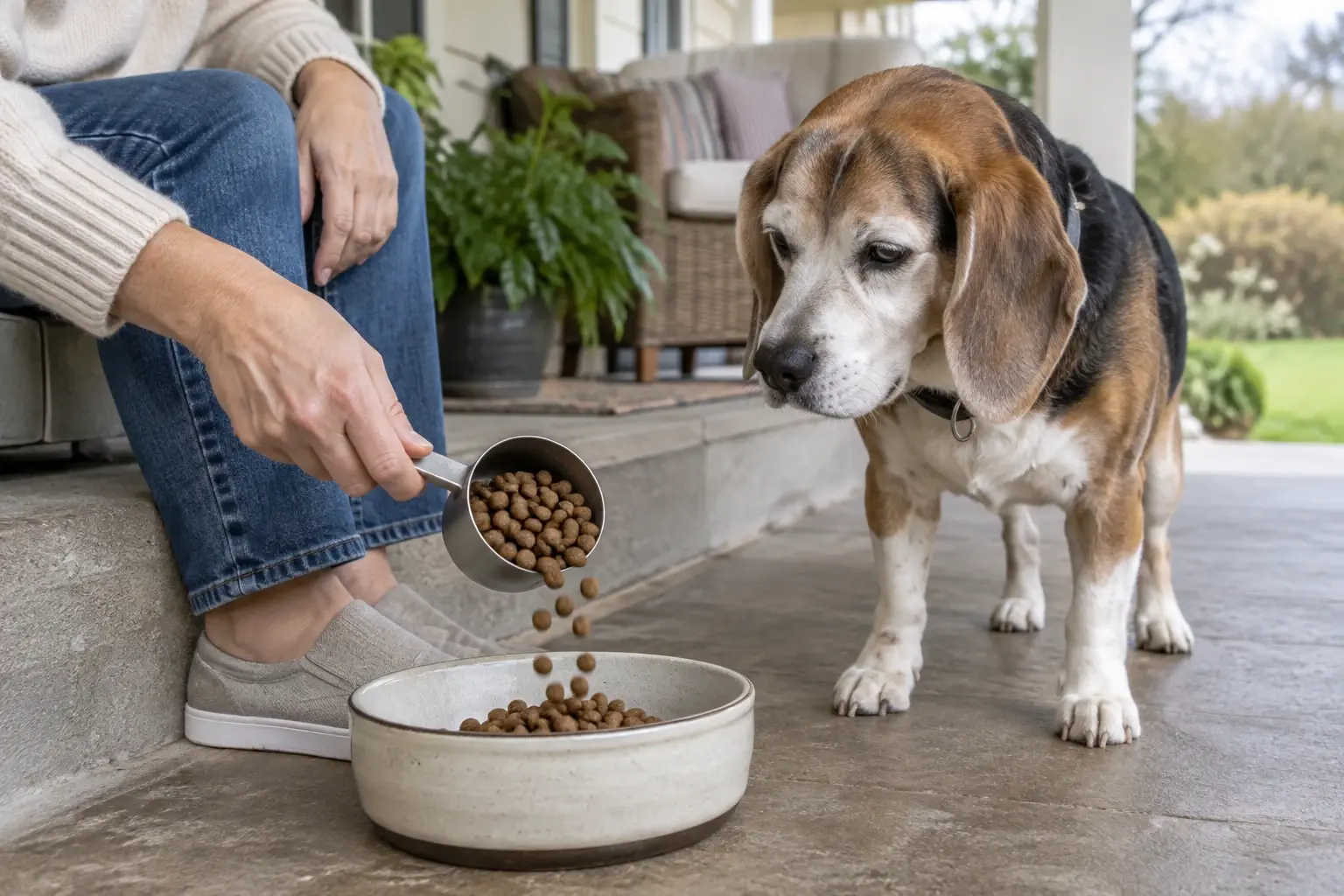
- Weight: homemade diets are easy to overfeed. Weigh ingredients and weigh your dog monthly.
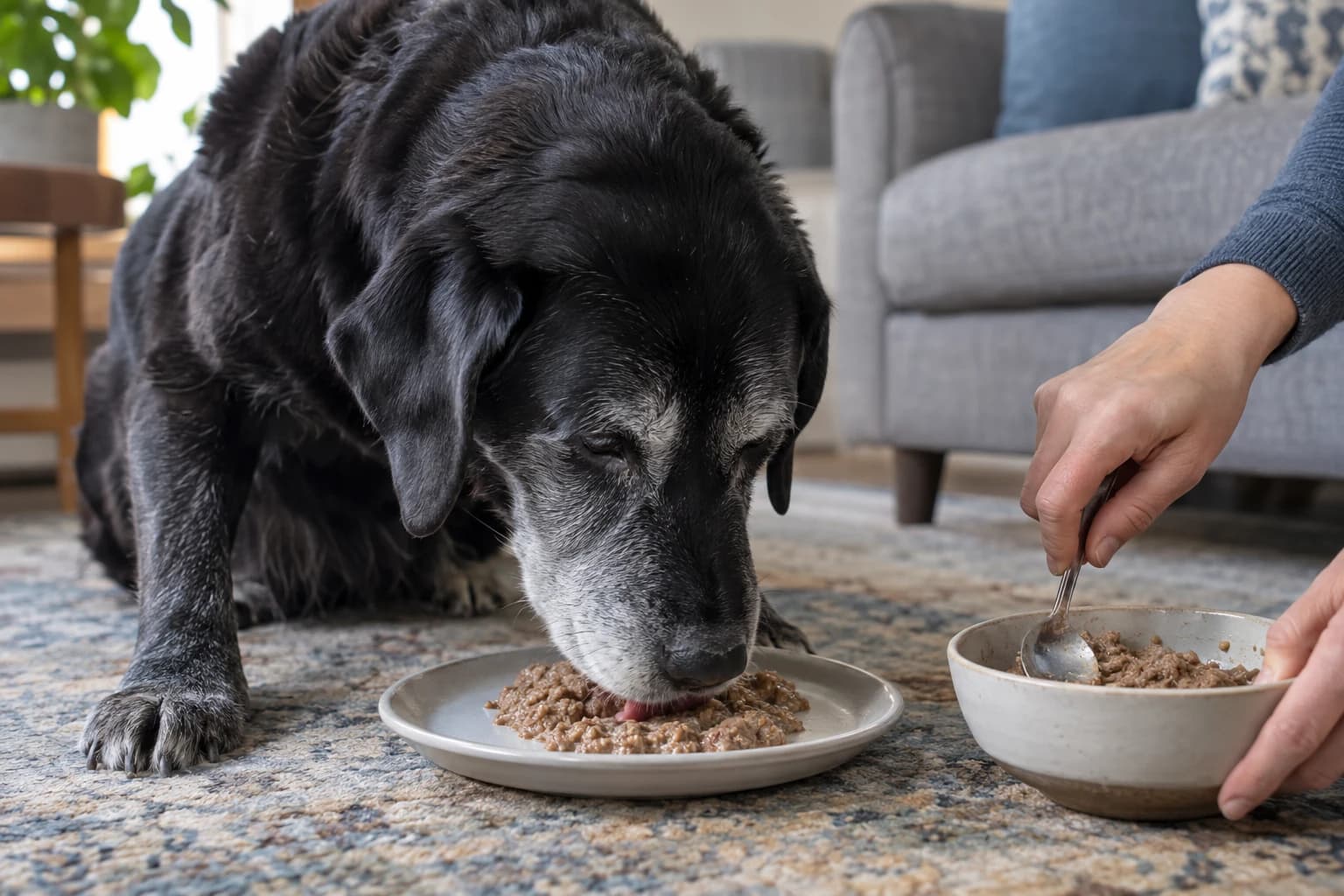
- Teeth: soft homemade food suits dogs with dental problems, but daily dental care still matters. See senior dog dental care.
- Regular checks: your vet may suggest blood tests after a few months on a new homemade diet.
How to make homemade food safely
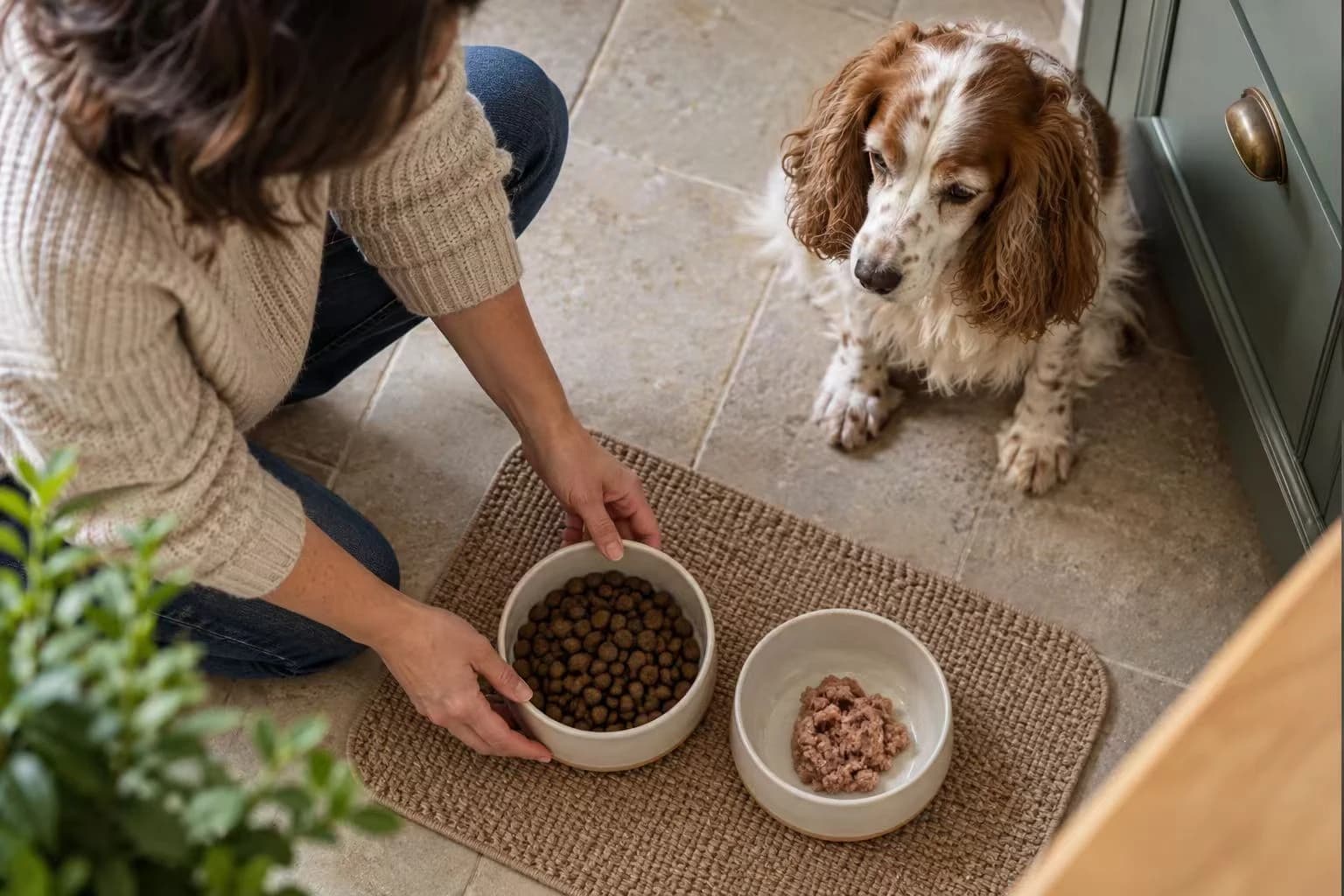
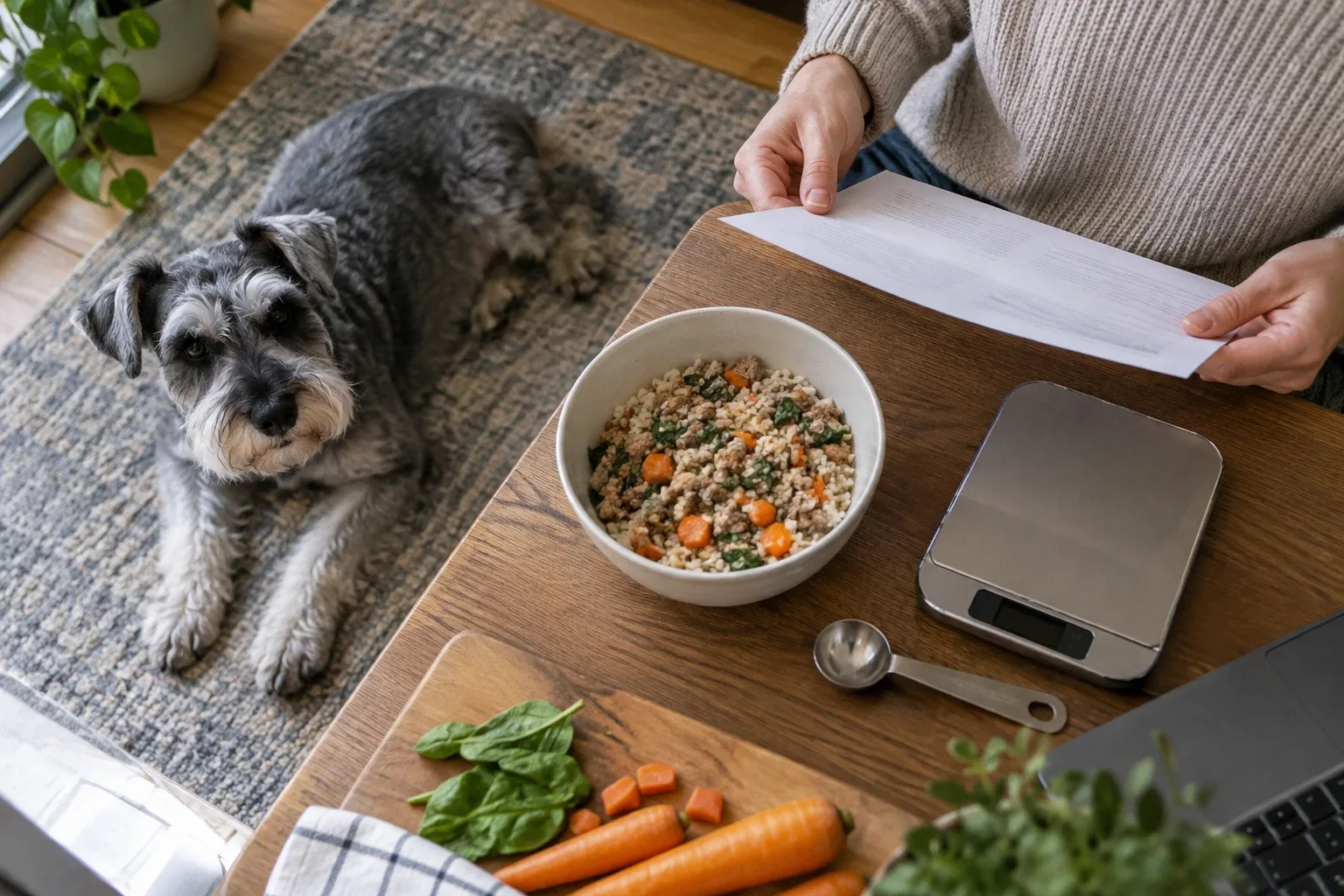
- Get a recipe for your dog from a board-certified veterinary nutritionist (ACVN in the US, ECVCN in Europe), or a recipe service run by one. Tell them your dog's age, weight, health conditions and medicines.
- Follow it exactly. Swapping ingredients or "eyeballing" amounts changes the nutrients.
- Use the supplement the recipe names, at the stated amount.
- Weigh ingredients on a kitchen scale.
- Recheck the recipe if your dog's weight or health changes.
- Switch gradually over about a week. VCA Animal Hospitals notes diet changes are a common cause of diarrhea.
Adding targeted supplements to a homemade diet
Once the base diet is balanced, targeted supplements for specific problems can be added like with any diet. Count them in the plan so nothing is doubled:
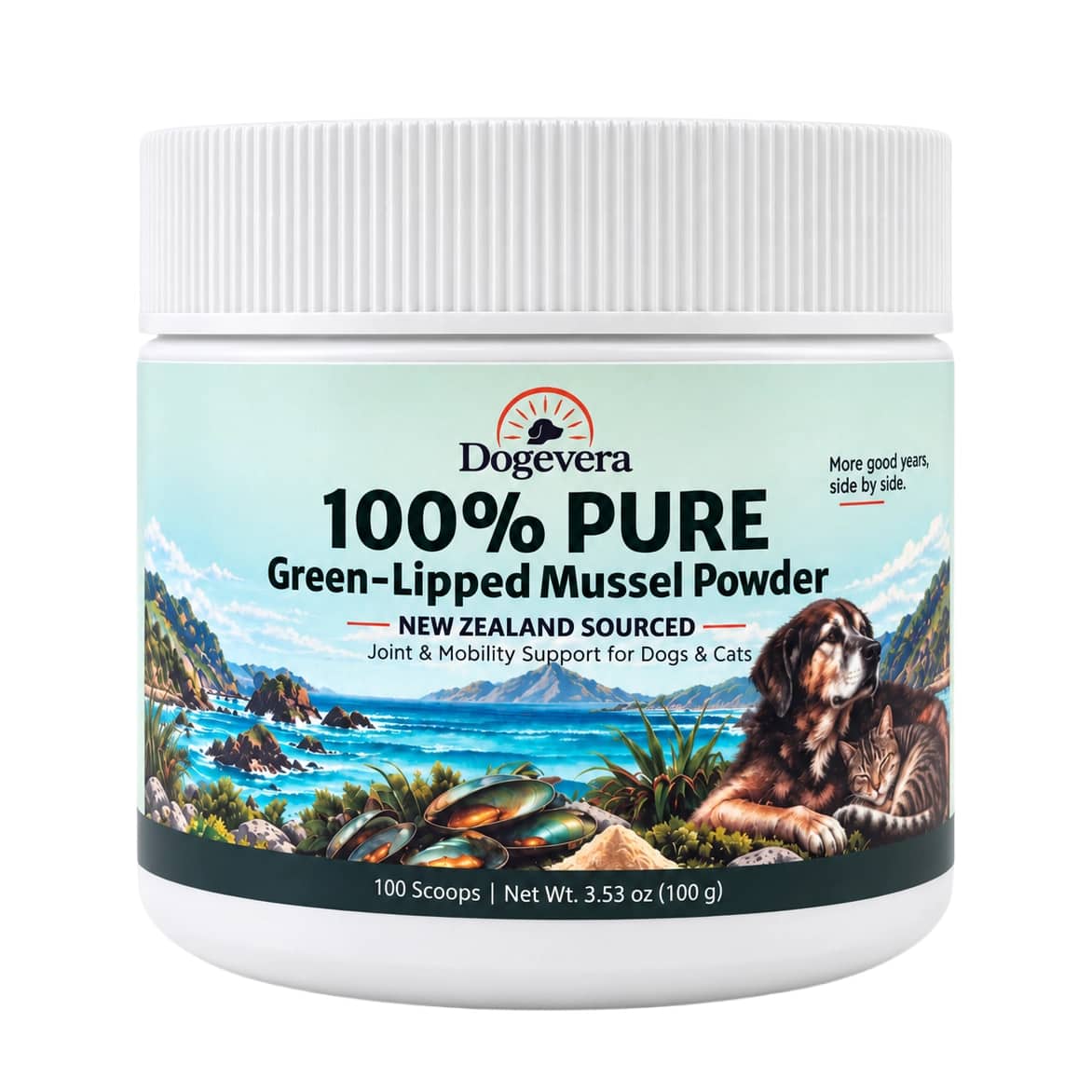
- Joints: our green-lipped mussel powder is a single-ingredient topper. In a 2002 study, 83% of dogs with arthritis given mussel powder on their food improved their arthritis score by 30% or more in 6 weeks, against 7% without it.
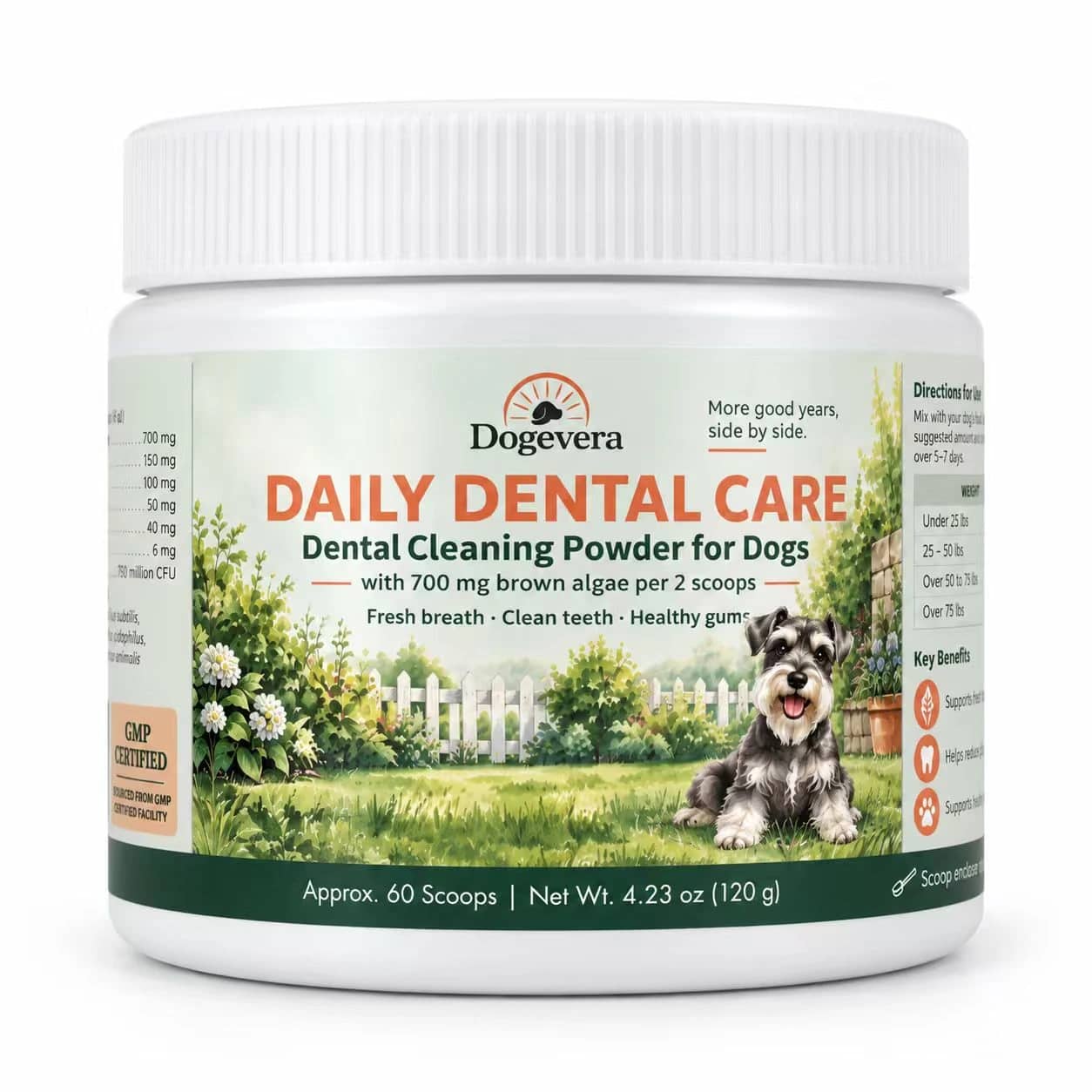
- Teeth: our Daily Dental Cleaning Powder mixes into food. Its seaweed contains iodine naturally, so tell the nutritionist designing the recipe.
- Fish oil: if the recipe already includes it, count it toward the total. See the fish oil dosage chart.
See also dog multivitamins: does your dog need one?
FAQ
What supplements should I add to homemade dog food?
The ones your recipe specifies, usually a canine vitamin-mineral premix and a calcium source. Recipes from books and websites are often unbalanced, so a veterinary nutritionist should write or check yours.
Is homemade dog food good for senior dogs?
It can be, if the recipe is balanced for your dog by a veterinary nutritionist. Unbalanced homemade diets risk deficiencies, which can be harder for older dogs to cope with.
Can I use a human multivitamin for my dog's homemade food?
No. Doses are wrong for dogs, some contain xylitol, and a multivitamin does not supply the calcium a meat-based diet needs.
How much calcium should I add to homemade dog food?
It depends on the recipe's ingredients and your dog's size and health. Follow the amount in a nutritionist-designed recipe; too much and too little both cause problems.
References
- Stockman J, et al. Evaluation of recipes of home-prepared maintenance diets for dogs. Journal of the American Veterinary Medical Association. 2013. PMID: 23683013
- University of California, Davis. Homemade dog food recipes can be risky business, study finds.
- Pedrinelli V, Gomes MOS, Carciofi AC. Analysis of recipes of home-prepared diets for dogs and cats published in Portuguese. Journal of Nutritional Science. 2017. PMID: 29152237
- Pedrinelli V, et al. Influence of number of ingredients, use of supplement and vegetarian or vegan preparation on the composition of homemade diets for dogs and cats. BMC Veterinary Research. 2021. PMID: 34798889
- U.S. Food and Drug Administration. FDA alerts pet owners about potentially toxic levels of vitamin D in several dry pet foods, Paws Off Xylitol; It's Dangerous for Dogs.
- Laflamme DP. Pet food safety: dietary protein. Topics in Companion Animal Medicine. 2008. PMID: 18656844
- VCA Animal Hospitals. Diarrhea in Dogs.
- Bierer TL, Bui LM. Improvement of arthritic signs in dogs fed green-lipped mussel (Perna canaliculus). Journal of Nutrition. 2002.
For individual health questions, your veterinarian remains the best partner.