
In this article
TL;DR
Yes, dogs can have turmeric in small amounts, and its active compound curcumin is being studied for arthritis. The catch is the evidence: the dog studies so far are small or uncontrolled, usually mix curcumin with other ingredients, and curcumin is poorly absorbed unless it is specially formulated. In an uncontrolled 18-week study of 58 arthritic dogs on meloxicam, owners reported most dogs could lower their meloxicam dose and stay comfortable while taking a palmitoyl-glucosamine and curcumin supplement. If joint support is the goal, green-lipped mussel has the stronger case: in a 2002 controlled study, 83% of dogs given green-lipped mussel powder with their food improved their arthritis score by 30% or more within 6 weeks, against 7% on the same food without it. Ask your vet before turmeric if your dog is a senior, takes blood thinners or has gallbladder disease.
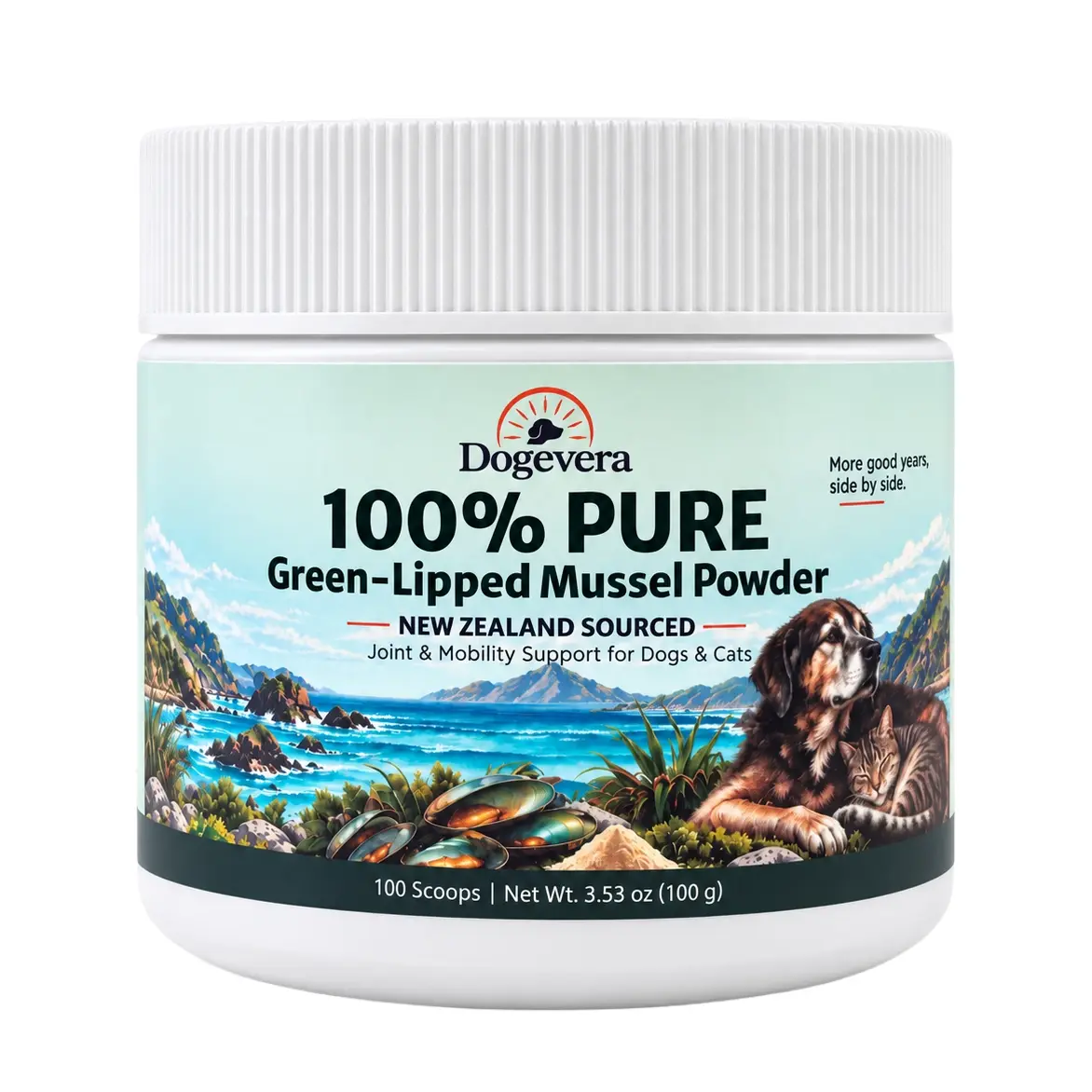
Daily joint support. Our joint supplement for dogs is 100% New Zealand green-lipped mussel with nothing added, dosed by weight and stirred into food. What the studies show.
What turmeric is
Turmeric is the yellow spice from the root of Curcuma longa. Its best-known active compounds are the curcuminoids, mainly curcumin, which have anti-inflammatory and antioxidant effects in the lab. Turmeric powder contains only a few percent curcumin; supplements use concentrated extracts.
What the dog studies show
| Study | Dogs | What was given | Result |
|---|---|---|---|
| Uncontrolled study, 18 weeks (2023) | 58 dogs with arthritis pain on meloxicam | Palmitoyl-glucosamine co-micronized with curcumin | Owners reported most dogs could taper meloxicam while staying comfortable; no comparison group |
| Small comparison, 30 days (2025) | 12 retired police dogs with arthritis | Curcumin C3 Complex with glucosamine and chondroitin vs conventional care | Pain scores and inflammation markers fell in the supplement group |
| Cats, 13 weeks (2024) | 30 cats with arthritis | Diet with fish oil omega-3, turmeric extract and collagen vs placebo diet | Better weight-bearing and mobility; turmeric was one of three active ingredients |
None of these tested turmeric on its own against a placebo in dogs. They are promising, but they cannot tell you how much of the benefit came from curcumin.
The absorption problem
Curcumin is poorly absorbed from the gut and quickly broken down, which is why researchers keep calling for better formulations. Supplement makers use extracts combined with fats, black pepper extract (piperine) or special carriers to raise absorption. Plain turmeric sprinkled on dinner adds colour and a little curcumin, but far less than the extracts used in studies.
Turmeric vs green-lipped mussel for joints
| Turmeric / curcumin | Green-lipped mussel | |
|---|---|---|
| Strongest dog evidence | Small or uncontrolled studies, mostly in combinations | Placebo-controlled trials |
| Example result | Owners lowered meloxicam doses (no control group) | 83% vs 7% improved by 30% or more in 6 weeks (2002) |
| Absorption | Poor without special formulation | Whole food, eaten as a powder |
| Main caution | Blood thinners, gallbladder disease | Shellfish allergy |
Both can be part of a joint routine, and green-lipped mussel is the one with controlled trials behind it. Compare more options in green-lipped mussel vs fish oil vs glucosamine and best joint supplements for senior dogs.
How to give turmeric to a dog
- Start small. There is no established dose for turmeric powder in dogs. A pinch mixed into food is a common starting point; supplements made for dogs state a dose on the label.
- Golden paste, a home mix of turmeric, water, oil and black pepper, is popular with owners because the fat and pepper help absorption. It has not been studied in dogs.
- Give it with food to avoid stomach upset.
- Watch the stool. Turmeric can cause loose stools or constipation at first, and it stains everything yellow.
Side effects and who should avoid it
Turmeric is generally well tolerated in food amounts. Check with your vet first if your dog:
- Takes blood thinners or is due for surgery, because curcumin may affect clotting
- Has gallbladder disease, because turmeric stimulates bile flow
- Has a history of oxalate bladder stones, because turmeric contains oxalates
- Takes diabetes medication or other daily drugs
Why one vet says no to turmeric for senior dogs
A small-animal vet Morty has known for years, who asked us not to use their name, treated a dog whose owner had been giving it turmeric every day. The dog vomited again and again, passed black stools and stopped eating. Black, tarry stool can mean bleeding in the stomach or upper gut, and it needs a vet the same day.
The vet agrees that curcumin is a genuine natural anti-inflammatory. The problem is how turmeric works in an older body:
- It is hard to absorb. Turmeric doesn't dissolve in water and needs fat and black pepper to be taken up, so owners tend to give more and more.
- It can irritate the stomach. An older dog's stomach lining is thinner and more easily damaged, and a daily dose can leave it sore.
- It loads the liver. Curcumin slows some of the liver enzymes the body uses to break down medicines and other substances. A young dog copes; an older liver works more slowly.
- The dose is guesswork. Most owners have no idea how much they are giving, and the gap between a helpful amount and a harmful one is smaller than people think.
The vet's verdict: turmeric is fine for a young, healthy dog, but not recommended for senior dogs. For an older dog with stiff joints, the two supplements the vet does recommend are omega-3 fish oil and green lipped mussel powder for dogs.
FAQ
Can dogs have turmeric?
Yes, in small amounts mixed with food. Dog supplements with curcumin are widely sold; human supplements may contain ingredients such as xylitol that are unsafe for dogs.
How much turmeric can I give my dog?
There is no established dose for plain turmeric. Start with a pinch in food, or follow the label of a dog supplement, and ask your vet if your dog takes medication.
Will turmeric help my dog stop itching?
There is little evidence that turmeric helps itchy skin in dogs. For itch, see dog itchy skin, where omega-3 and specific probiotics have better trials.
What are the side effects of turmeric in dogs?
Mostly stomach upset, loose stools or constipation, and yellow staining. Use caution with blood thinners, gallbladder disease and oxalate stones.
Is turmeric or green-lipped mussel better for dog joints?
Green-lipped mussel has placebo-controlled dog trials; turmeric's dog evidence comes from small or uncontrolled studies of combination products.
References
- Palmitoyl-glucosamine co-micronized with curcumin for maintenance of meloxicam-induced pain relief in dogs with osteoarthritis pain. 2023. https://pubmed.ncbi.nlm.nih.gov/36747264/
- A nutritional supplement containing Curcumin C3 Complex, glucosamine, and chondroitin alleviates osteoarthritis in mice and canines. 2025. https://pubmed.ncbi.nlm.nih.gov/40431555/
- Efficacy and safety of a diet enriched with EPA and DHA, turmeric extract and hydrolysed collagen in management of naturally occurring osteoarthritis in cats. 2024. https://pubmed.ncbi.nlm.nih.gov/39595350/
- Efficacy and mechanisms of curcumin in the treatment of osteoarthritis: a scoping review. 2025. https://pubmed.ncbi.nlm.nih.gov/39720988/
Joint & Mobility Supplements for Senior Dogs
Put this into practice
Daily joint support for senior dogs
100% New Zealand Green-Lipped Mussel Powder for Dogs4.5142 reviews
- 100% New Zealand green-lipped mussel. No fillers, no blends.
- Naturally rich in ETA omega-3s and GAGs for hips and joints
- One scoop on food, dosed by your dog’s weight
Black Friday40% off your first subscription order
Free shipping · 100-day money-back guarantee