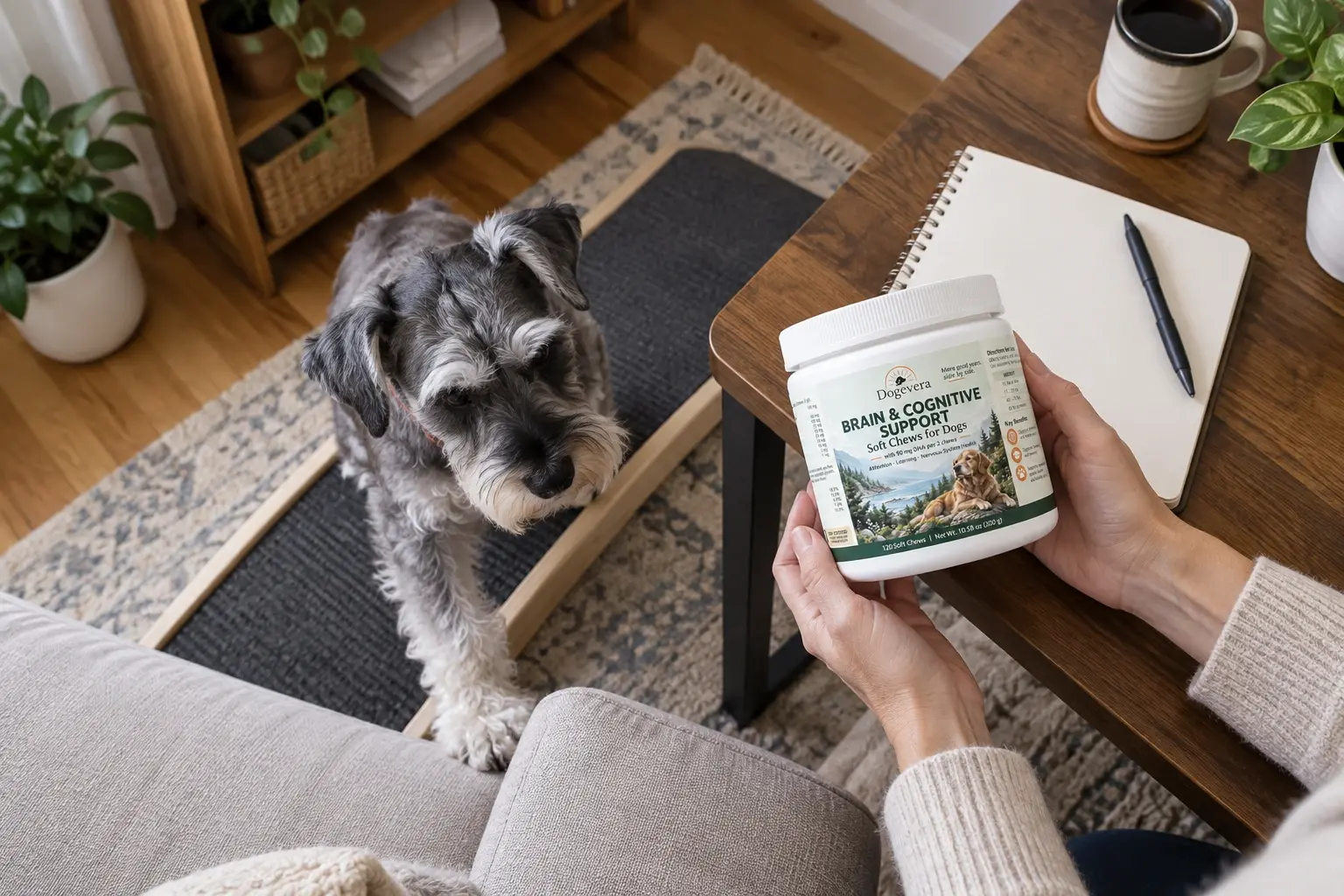

We sell this powder. It was not the product tested in the studies discussed here.
TL;DR
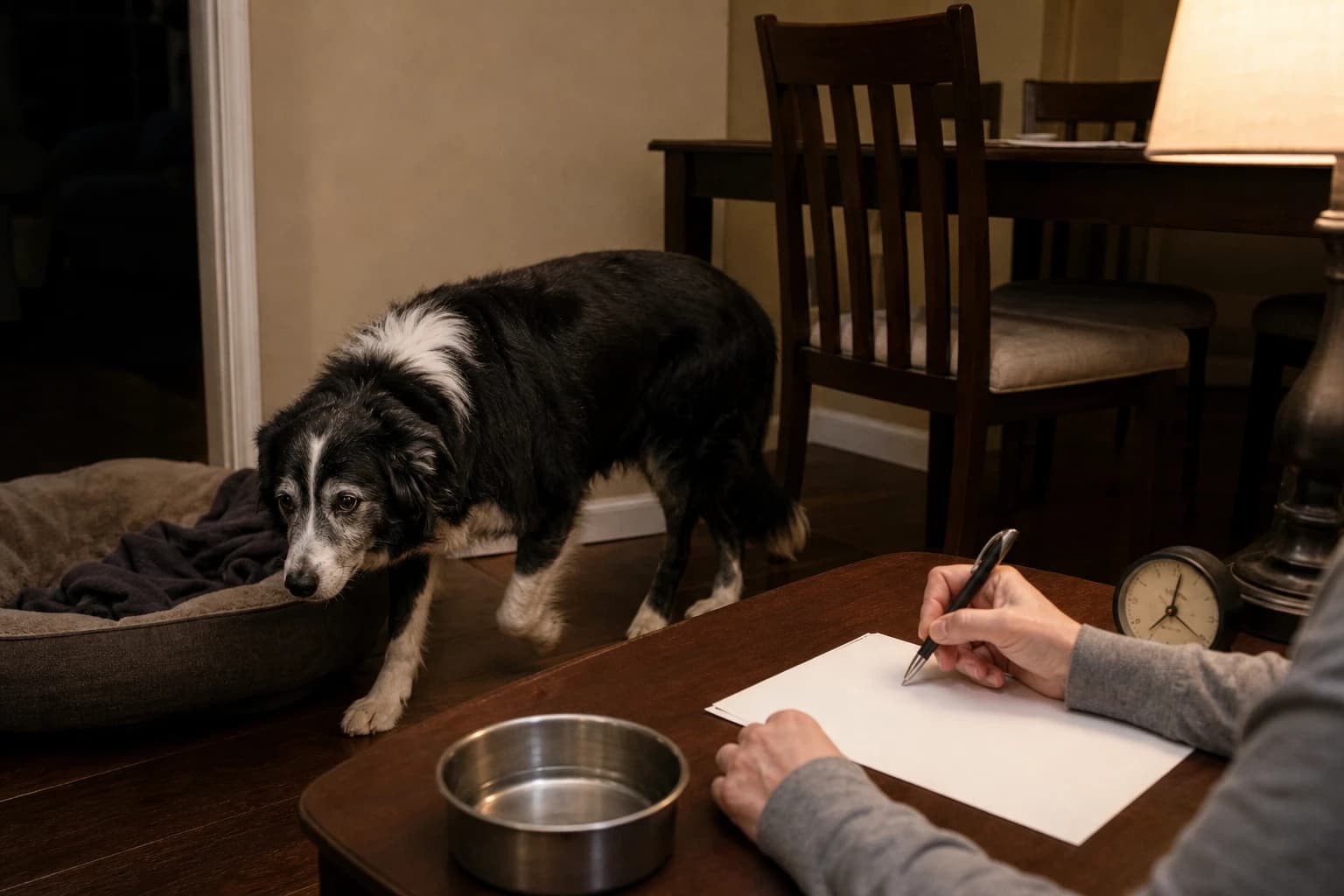
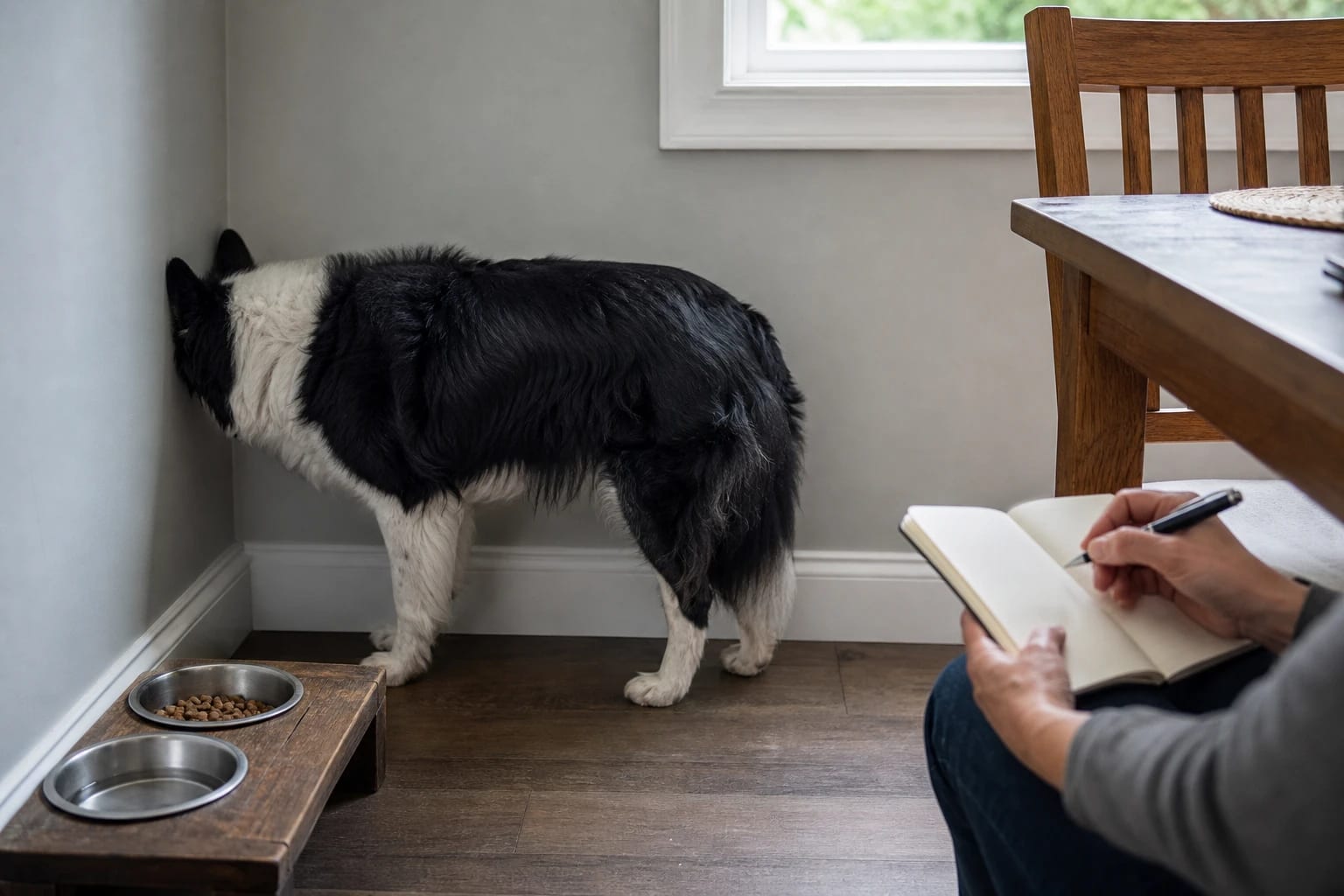
A dog staring at the wall now and then, while watching a bug or listening to a sound you cannot hear, is usually nothing. Repeated staring at walls, standing in corners or getting stuck behind furniture, especially in a dog over 8, is a recognized sign of canine cognitive dysfunction (dog dementia). Staring spells can also be focal seizures, and vision or hearing loss can make a dog freeze and look lost. Film an episode, note how long it lasts and whether your dog responds to you, and book a vet visit if it keeps happening.
Why is my dog staring at the wall?
1. Cognitive dysfunction (dog dementia)
This is the most common reason in older dogs.
- VCA Animal Hospitals' senior behavior guidance, written with veterinary behaviorists, lists repetitive or unusual activities such as staring, and getting stuck in corners, among the changes linked to cognitive decline.
- In a Danish study of 51 dogs over 8 years old, staring into space was one of the signs that characterized dogs with cognitive dysfunction, along with aimless wandering, anxiety, avoiding being petted and trouble finding dropped food.
- The 2023 AAHA senior care guidelines list staring at walls among recognized signs of cognitive decline.
Look for other signs of dementia alongside the staring:
- Sleeping more by day and pacing at night
- Going to the wrong side of a door, getting lost in the house
- Accidents indoors after years of house training
- Not responding to their name or to familiar cues
- Greeting less, or clinging more
- New anxiety
See dog dementia: signs, stages and life expectancy.
2. Focal seizures
VCA explains that seizures can be focal, affecting only part of the body, or generalized, affecting the whole body. A focal seizure does not look like the dramatic collapse most owners picture. Suspect a seizure if staring spells:
- Come with twitching of one part of the body, such as the face, an ear or a leg
- Start and stop suddenly
- Happen in a younger dog with no other signs of aging
Film it. A video is the most useful thing you can bring to the vet.
3. Vision loss
A dog that cannot see well may stop, stare and seem unsure where to go, especially in dim light or a new room. VCA notes that older pets with reduced vision or hearing may startle more easily and scan their surroundings more often. Cloudy eyes, bumping into things or hesitating on stairs point this way.
4. Hearing loss
Dogs that cannot hear may freeze when they lose track of you, and stop responding to their name. In a study of 39 older dogs whose hearing was tested, the dogs with the worst hearing all scored as cognitively abnormal on a dementia scale. See dog hearing loss.
5. Something you cannot sense
Dogs hear higher-pitched sounds than people and may stare at a wall where there is a mouse, insects or a noise in the pipes. This kind of staring is alert: ears forward, head tilting, easy to call away.
6. Pain or feeling unwell
VCA lists restlessness and repeatedly getting up and lying down among signs of pain, and a sore dog may stand still rather than settle. Veterinary behaviorists estimate that around a third of dogs referred for behavior problems have a painful condition.
Dog standing in the corner
Standing in a corner is often part of the same picture:
- Cognitive dysfunction: VCA lists getting stuck in corners and having trouble navigating around obstacles as signs of disorientation. The dog walks in and does not seem to know how to turn around and walk out.
- Vision loss: the dog follows a wall and ends up in a corner.
- Anxiety or pain: a dog may choose a corner to feel protected.
Gently guide your dog out, and block off tight corners and gaps behind furniture where they get stuck.
When to worry
Book a vet visit soon if:
- The staring is new and happens more than occasionally
- It comes with other changes: night pacing, accidents, confusion, anxiety
- Your dog does not respond to your voice or touch during an episode
- There is any twitching or collapse
Go to the vet the same day if your dog seems disoriented and wobbly, tilts their head, has a seizure lasting more than a few minutes, or has several seizures in a row.
What the vet will do
- Ask about the episodes and watch your video
- Examine eyes, ears, joints and the nervous system
- Run blood and urine tests to rule out other illness
- Use a questionnaire to score signs of cognitive dysfunction
- Refer for brain imaging or a neurology consult if seizures or another brain problem are suspected
How to help a dog that stares at walls
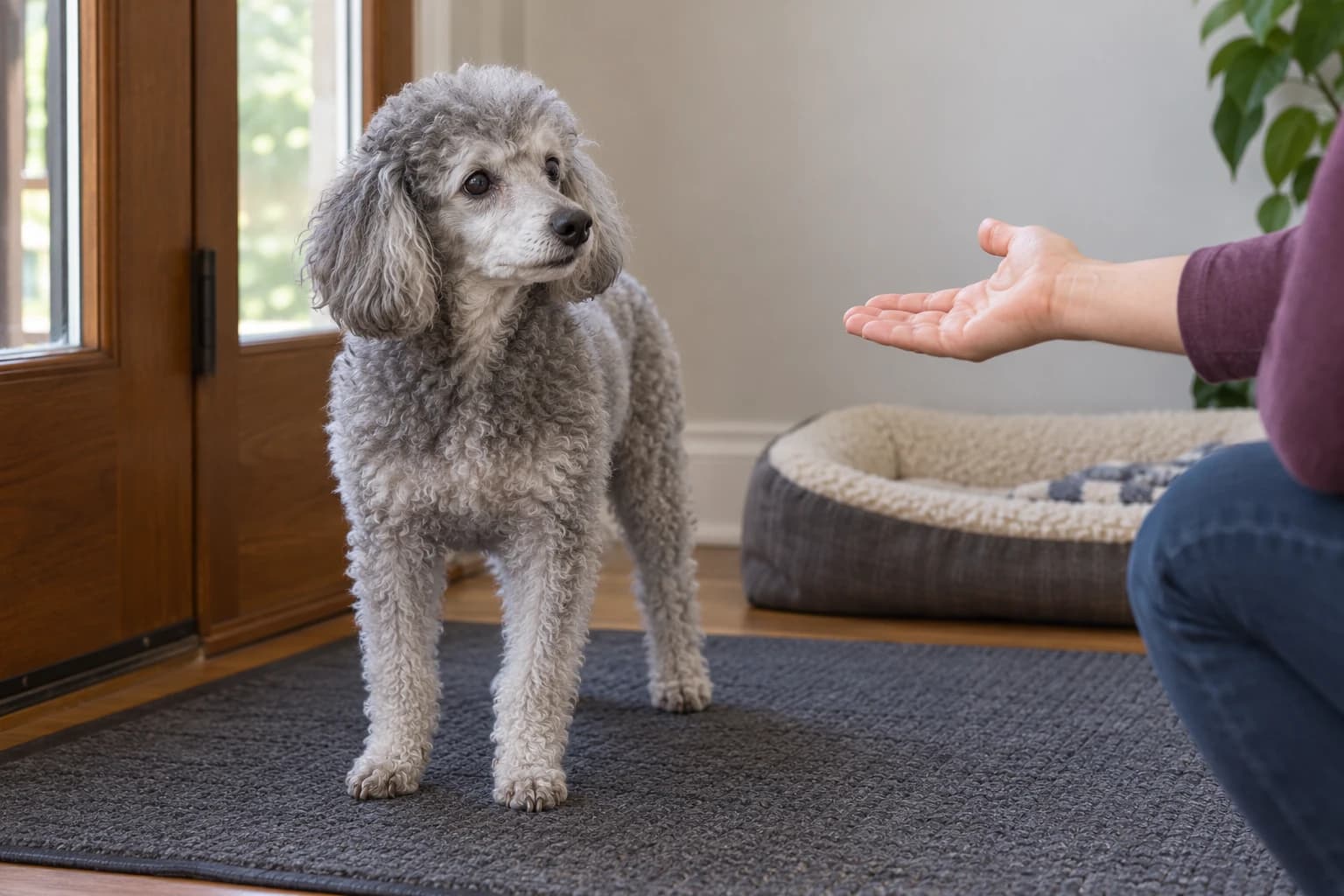
- Interrupt gently. Call your dog's name, touch their shoulder, or toss a treat, and guide them somewhere else.
- Do not startle them. Approach from the front so they see you, especially if sight or hearing is fading.
- Keep the house predictable. Leave furniture where it is and block corners and gaps.
- Add light. Night lights help a dog with fading eyesight.
- Keep the mind busy. Daily walks with time to sniff, food puzzles and short training sessions. In the Dog Aging Project, more active dogs had milder signs of cognitive dysfunction. See mental stimulation for dogs.
- Ask about treatment. Medication, brain-support diets and supplements can improve signs of cognitive dysfunction. See dog dementia treatment.
Our Brain & Cognitive Support Soft Chews provide 90 mg of algal DHA in 180 mg of total omega-3 per 2-chew serving, with ginkgo and antioxidants, for daily support of the aging brain.
FAQ
Why does my old dog stare at the wall?
In older dogs the most common reason is cognitive dysfunction, which also causes standing in corners, night pacing and confusion. Vision loss, hearing loss, focal seizures and pain are the other main causes.
Is a dog staring at the wall a sign of dementia?
It can be, especially if your dog is over 8 and shows other signs such as night waking, accidents or getting lost at home. Your vet will rule out other causes first.
Can a dog staring at the wall be a seizure?
Yes. Focal seizures affect only part of the body and can look like a staring spell, sometimes with twitching. Film an episode for your vet.
Why does my dog stand in the corner?
Getting stuck in corners is a sign of disorientation in dogs with cognitive dysfunction. Vision loss and anxiety can also cause it.
Can dogs see ghosts?
There is no evidence for that. Dogs hear higher sounds and smell things we cannot, which is the usual explanation for a dog alertly watching an empty wall.
References
- VCA Animal Hospitals. Behavior Counseling: Senior Pet Behavior Problems; How Do I Know if My Dog Is in Pain?; Epilepsy in Dogs.
- American Animal Hospital Association. 2023 AAHA Senior Care Guidelines for Dogs and Cats.
- Schütt T, Toft N, Berendt M. Cognitive function, progression of age-related behavioral changes, biomarkers, and survival in dogs more than 8 years old. Journal of Veterinary Internal Medicine. 2015. PMID: 26463980
- Fefer G, et al. Relationship between hearing, cognitive function, and quality of life in aging companion dogs. Journal of Veterinary Internal Medicine. 2022. PMID: 35932193
- Mills DS, et al. Pain and problem behavior in cats and dogs. Animals. 2020. PMID: 32085528
- Bray EE, et al. Associations between physical activity and cognitive dysfunction in older companion dogs: results from the Dog Aging Project. GeroScience. 2023. PMID: 36129565
For individual health questions, your veterinarian remains the best partner.