
We sell this powder. It was not the product tested in the studies discussed here.
TL;DR
If your old dog no longer responds to its name, sleeps through you coming home, or startles when touched, it may be going deaf. VCA Animal Hospitals explains that dogs can lose their hearing with age, much like people: the eardrums become less flexible and sound is passed on less well. Because the change is gradual, owners often notice late. Chronic ear infections and injuries are other causes, and some causes are treatable, so start with a vet check. Deaf dogs learn hand signals quickly and can live long, full lives.
Signs your senior dog is going deaf
- No longer comes when called, or responds only when it can see you
- Sleeps through the doorbell, other dogs barking or you arriving home
- Startles when touched from behind or woken up
- Seems to "ignore" familiar cues, but responds to hand gestures
VCA notes that older dogs with acquired deafness may sleep through your arrival home from work.
Is it deafness or something else?
Not responding to the name can have other causes:
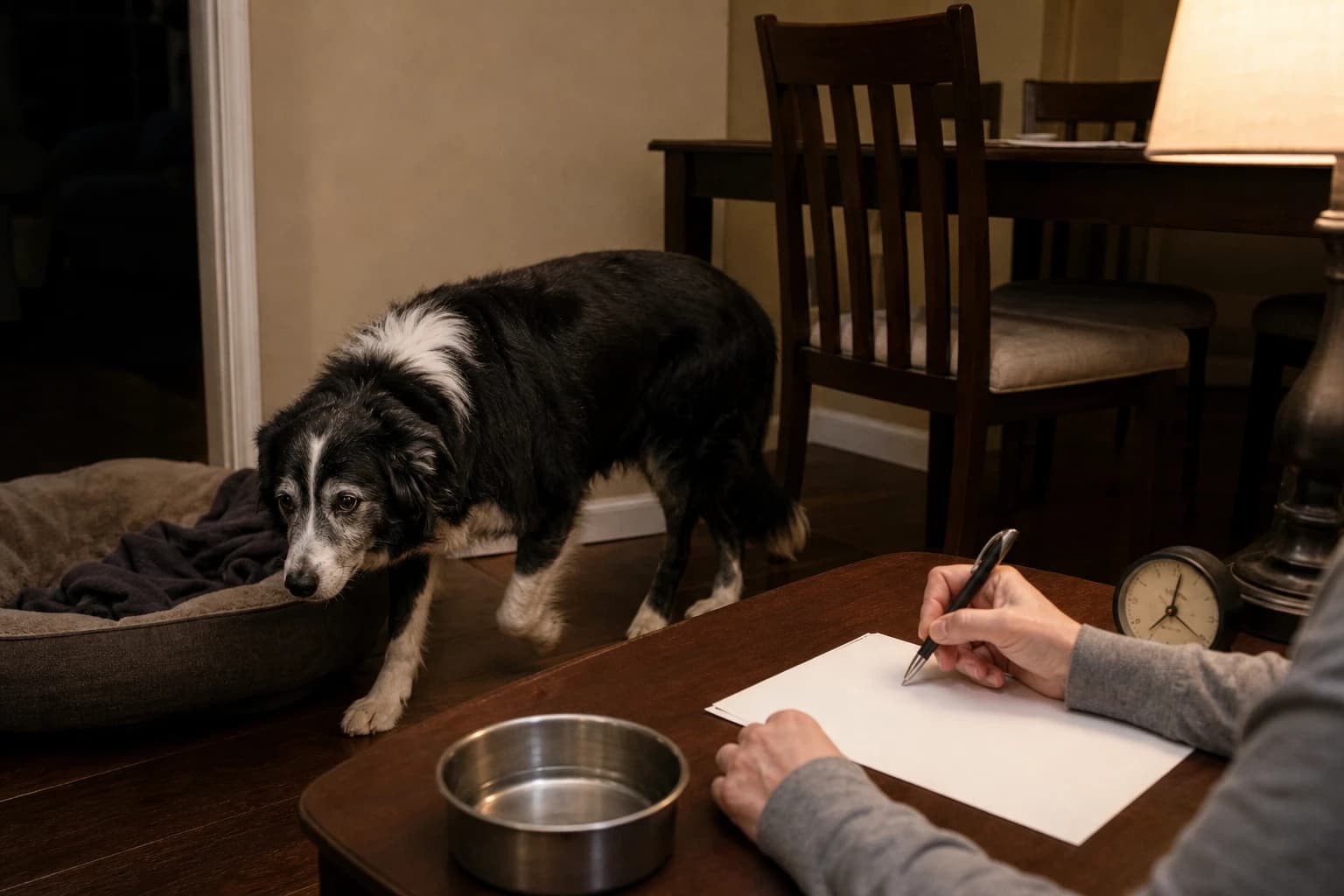
- Cognitive decline: VCA lists "no longer responds to name" among the signs of cognitive dysfunction in older pets, along with getting lost in familiar places, night-time pacing and forgetting house training.
- Ear infection: a sore, smelly or itchy ear can muffle hearing and is treatable.
- Pain or illness: a dog that hurts may simply not want to get up.
A vet exam looks into the ear canals and checks for these. Your vet can refer you for a formal hearing test if needed.
A quick check at home
VCA suggests simple tests: clap your hands, squeak a toy, or call your dog from behind, making sure the dog cannot see you or feel you move. If there is no response, there is a good chance your dog cannot hear. Do it gently and only a couple of times; repeatedly startling an older dog is stressful.
Living with a deaf senior dog
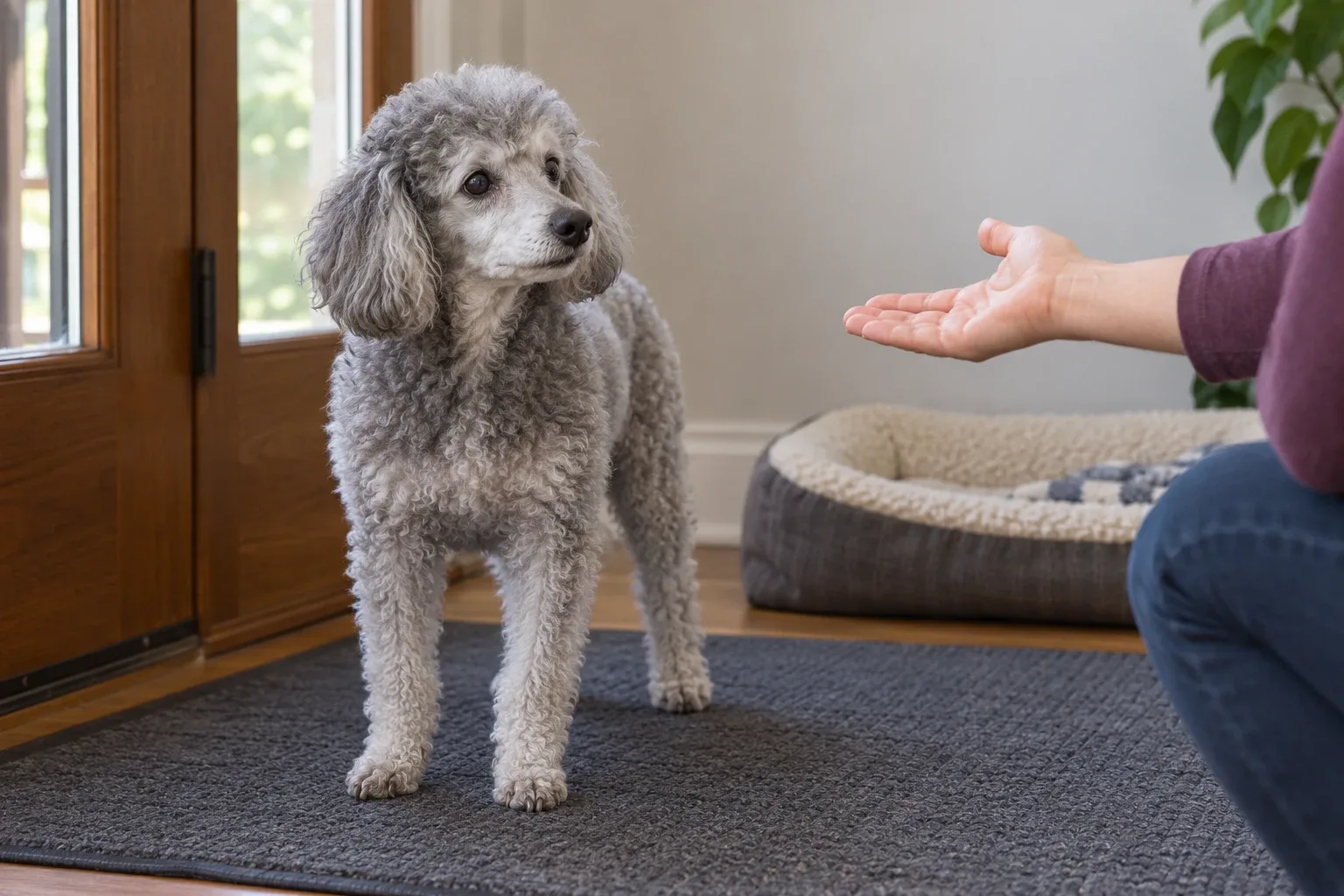
- Use hand signals. VCA's training guidance explains that deaf dogs learn the same skills as hearing dogs, using sight, smell and touch instead. Many hearing dogs already respond better to hand signals than to words.
- Teach a "good job" signal. VCA suggests a thumbs-up paired with a treat, so your dog learns that the signal means a reward is coming.
- Wake your dog gently. VCA advises not sneaking up; firmly tapping a foot nearby is often enough. Let your dog smell your hand before touching.
- Keep your dog on a leash near roads. A deaf dog cannot hear traffic or come when called.
- Use a light. Flicking a porch light can call a dog in from the yard at night.
- Stick to a routine for meals, walks and bedtime.
- Tell visitors and children so they approach from the front.
Deaf and blind senior dogs
Some older dogs lose both hearing and sight. These dogs rely on smell, touch and routine:
- Keep furniture and bowls in the same places
- Use textured rugs or mats to mark doorways and stairs
- Block stairs and pools with gates
- Use touch cues, such as a tap on the shoulder for "come"
See creating a senior dog-friendly home.
Keeping the mind sharp
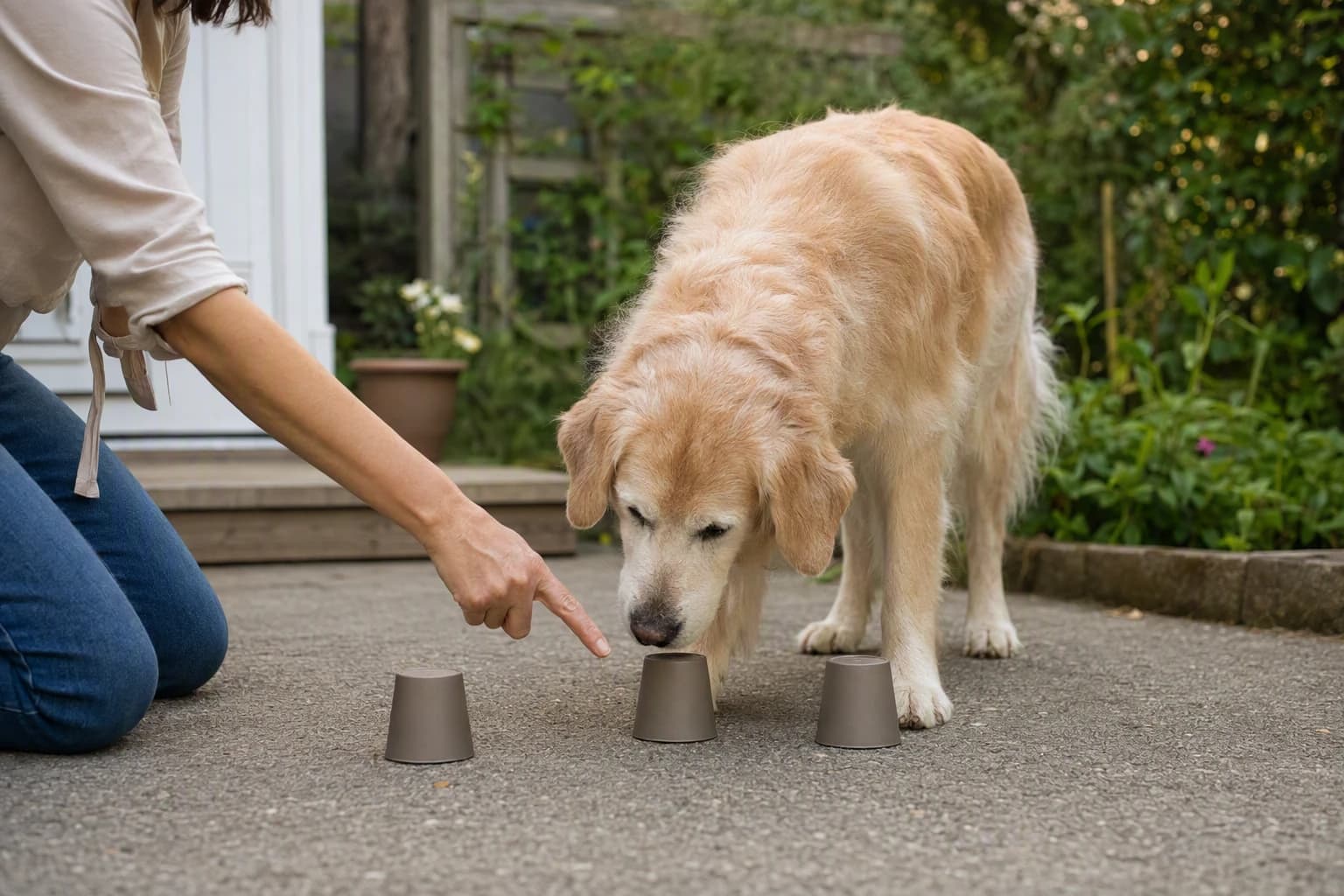
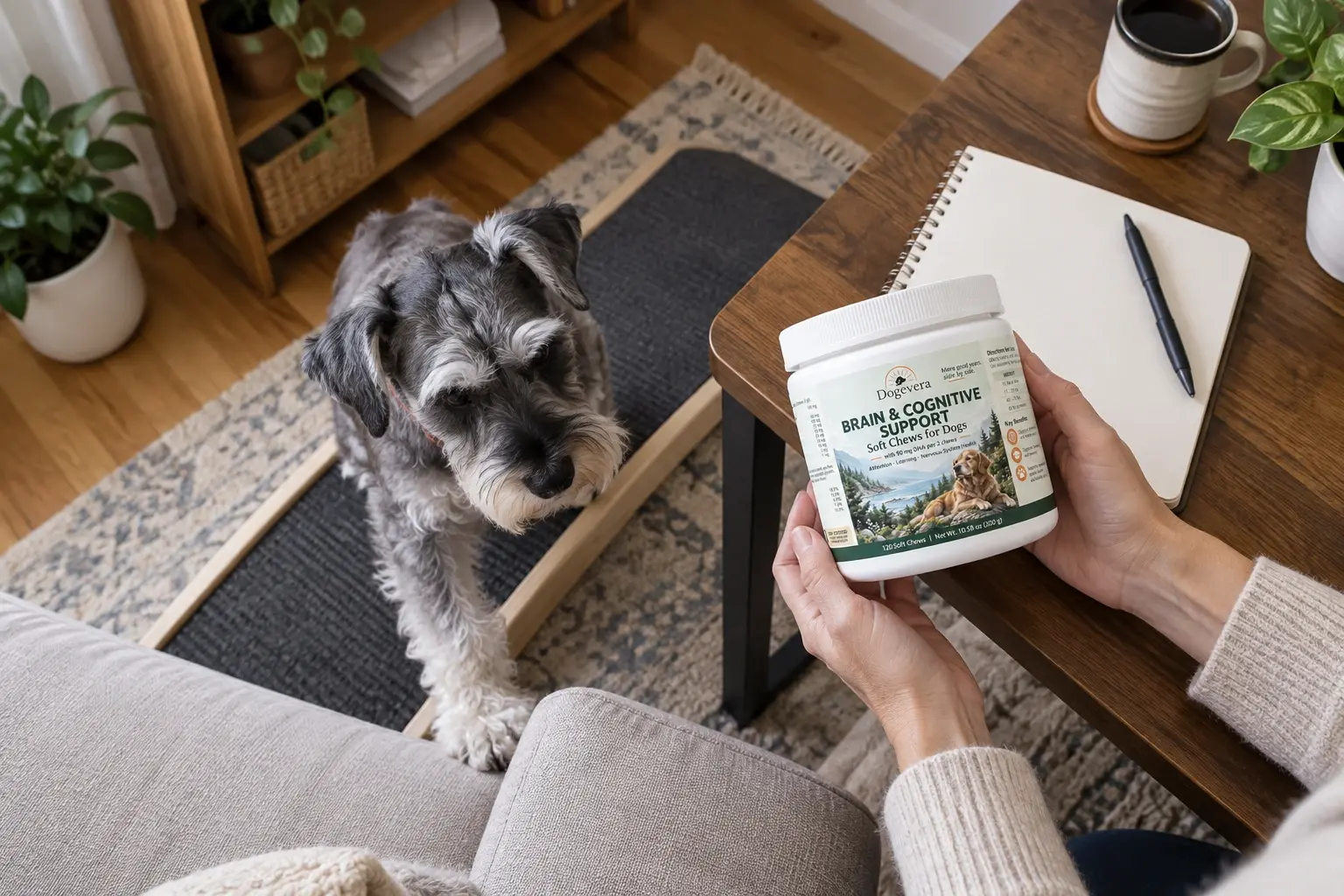
Hearing loss often comes at the same age as cognitive changes. VCA encourages daily play and mental games for senior dogs, such as puzzle toys and scent games, and notes that senior dogs can still learn new tricks. For nutrition aimed at the aging brain, our Brain & Cognitive Support Soft Chews provide 90 mg of algal DHA per 2-chew serving. See also training an older dog.
FAQ
At what age do dogs go deaf?
There is no fixed age. VCA describes age-related hearing loss as gradual, and it usually becomes noticeable in the senior years.
Can hearing loss in old dogs be reversed?
Age-related hearing loss is generally permanent. Hearing loss from an ear infection or wax blockage may improve with treatment, which is why a vet check comes first.
Is my deaf dog in pain?
VCA notes deafness itself is not linked to special health concerns. If the ears smell, itch or look red, an infection may be causing pain and needs treatment.
How do I call a deaf dog?
Use a hand signal when your dog can see you, a light at night, or a floor tap it can feel. Reward every time it comes.
References
For individual health questions, your veterinarian remains the best partner.