
We sell this powder. It was not the product tested in the studies discussed here.
TL;DR
Probiotics for dog bad breath are a promising idea with very little evidence so far. The best data come from two small, company-funded trials of a postbiotic (heat-treated bacteria), each with 24 dogs over 14 days, which lowered breath sulfur compounds compared with a placebo. A 2026 pilot of a live probiotic in 12 dogs found less plaque and gum bleeding, but the scorers knew which dogs got it. No probiotic is on the Veterinary Oral Health Council (VOHC) list. Brushing and VOHC-accepted products remain the proven options, and persistent bad breath needs a vet exam.
Why probiotics are being tried for breath
Bad breath in dogs comes mostly from volatile sulfur compounds, made when oral bacteria break down proteins. The idea behind oral probiotics is to shift the mix of bacteria in the mouth toward species that produce less of these gases, or that crowd out the ones that do.
It is a reasonable idea. It is also different from what most dog probiotics are made for. A gut probiotic is chosen for the intestines. Whether it does anything in the mouth depends on the strain and whether it spends any time there, and that has to be tested separately.
What the dog studies show
Postbiotic, 2025. A double-blind, placebo-controlled trial randomized 24 dogs to a canine oral health postbiotic or a placebo, given as a powder topper for 14 days. Breath sulfur compounds fell 22% from baseline by day 7 and were 27% lower than placebo over the study, while the placebo group's levels rose. Twice as many dogs in the postbiotic group had noticeably better breath on day 7. The research was funded by the company that makes the product, Kingdom Supercultures, and the authors note they did not measure plaque, tartar or gum inflammation.
Postbiotic validation, 2026. The same group repeated the trial in another 24 dogs at a lower dose for 14 days. Breath sulfur compounds were 26% lower than placebo on day 14, and the trend in owner-perceived breath did not reach statistical significance.
Live probiotic pilot, 2026. Twelve dogs had a professional cleaning, then 6 received a probiotic preparation twice daily for 56 days and 6 received nothing. The probiotic group had lower plaque, tartar and gum bleeding scores. The authors call it a pilot, note that there was no placebo, and acknowledge that the people scoring the teeth were not blinded, which risks bias.
Lab studies. Several studies have tested probiotic strains against dog oral bacteria in the lab. Those are useful for choosing strains to test, but they do not show an effect in a dog's mouth.
What CFU counts do and do not tell you
Labels often lead with a large number of colony-forming units (CFU). The CFU count tells you how many live bacteria are in a serving. It does not tell you whether those strains have any effect on breath or plaque. The two postbiotic trials above used heat-treated bacteria, which have no live CFU at all. A strain with dog oral data matters more than a big number.
How to choose, if you want to try one
- Look for named strains, not just "probiotic blend."
- Ask whether that product was tested in dogs for breath or plaque, and how many dogs, for how long, against what.
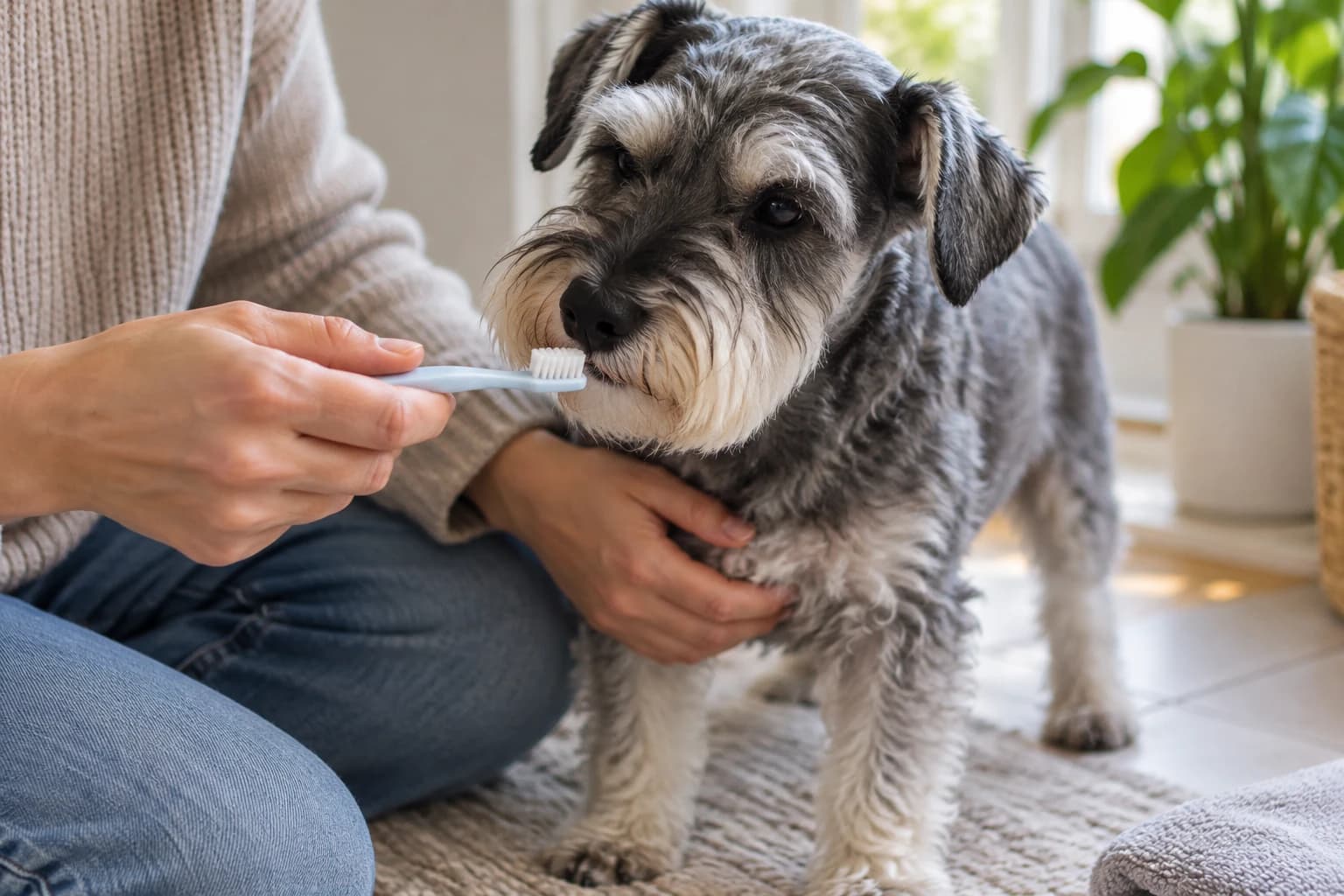
- Keep the basics going. Daily brushing remains the most effective home care. In a 2019 trial, daily brushing controlled plaque more than three times as well as a daily dental chew or dental diet.
- Give it a fair, defined trial. The studies above measured results at 7 to 56 days. If nothing has changed after that, it is not working for your dog.
Our dental powder and probiotics
Our Daily Dental Cleaning Powder contains a probiotic blend of 750 million CFU per 4 g reference serving, alongside Ascophyllum nodosum seaweed and sodium hexametaphosphate. The finished product has not been tested in a trial, and the studies above did not use its strains. We include probiotics as part of the formula, not as a proven breath treatment on their own.
When it is not a probiotic problem
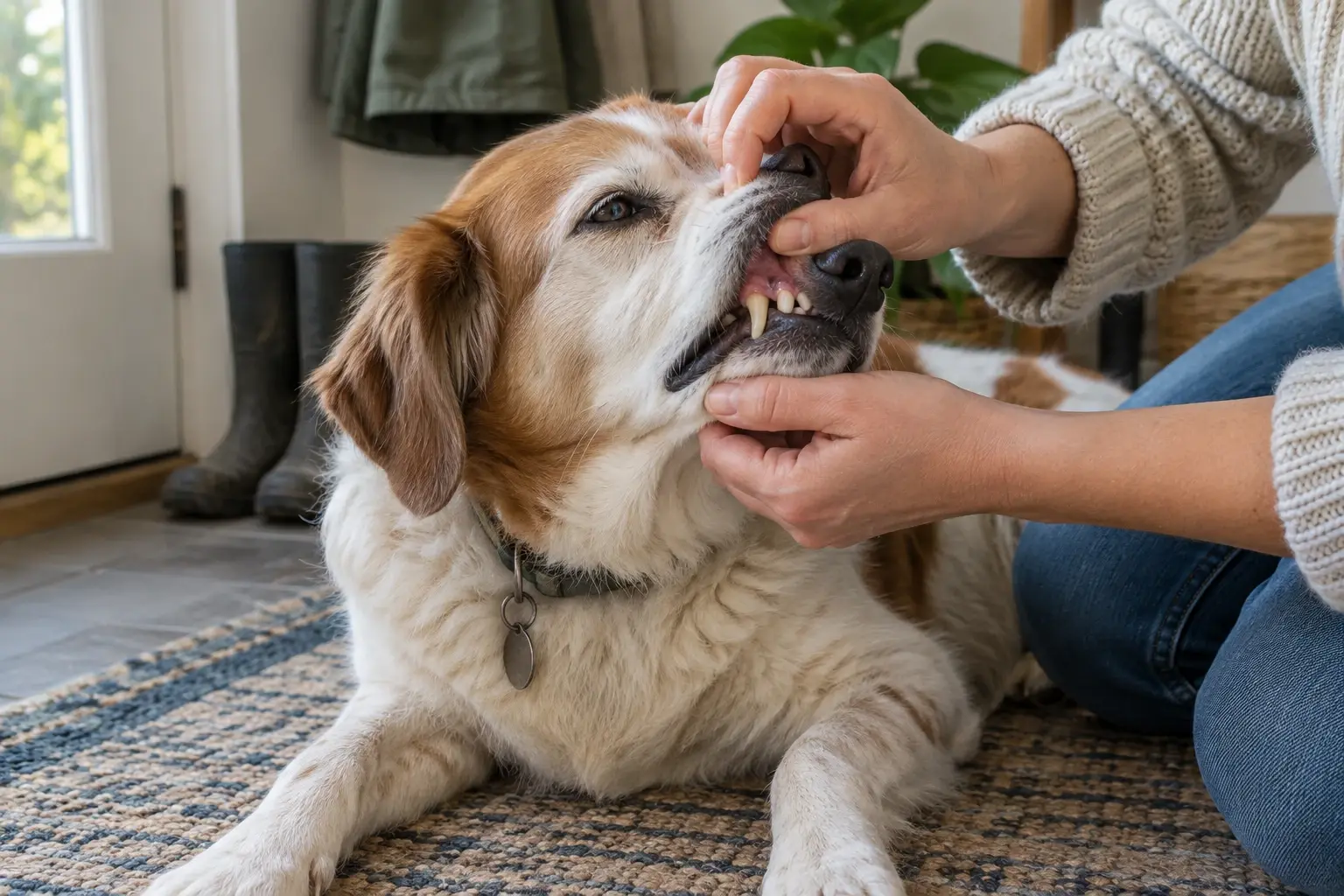
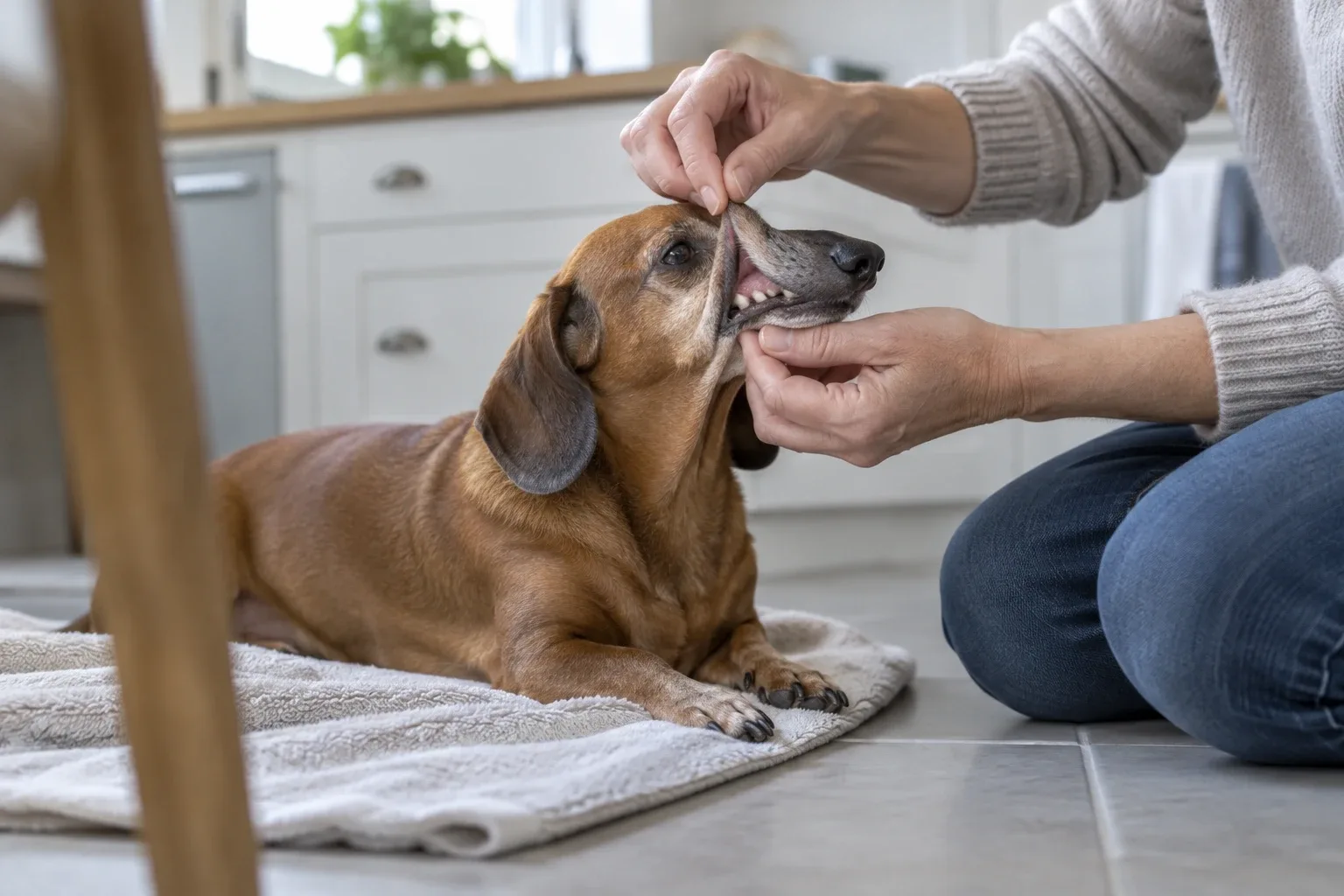
Bad breath that persists usually means tartar, gum disease or a problem tooth. VCA calls periodontal disease the number one cause of bad breath in dogs and notes that kidney disease can also cause it. See a vet if you notice tartar, red gums, dropped food, chewing on one side, facial swelling or a sudden change in smell. Hardened tartar only comes off with professional scaling.
FAQ
Do dog probiotics help bad breath?
One specific postbiotic reduced breath sulfur compounds in two small 14-day trials. For other products, there is little or no published evidence in dogs.
Can a gut probiotic fix my dog's breath?
Not reliably. Breath odor is mostly made in the mouth, and gut probiotics are not chosen or tested for that.
What works better than probiotics?
Daily brushing, then VOHC-accepted chews, diets, water additives and powders. See home remedies for dog bad breath.
References
- Sordillo A, Casella L, Turcotte R, Sheth RU. A novel postbiotic reduces canine halitosis. Animals. 2025. PMID: 40509062
- Sordillo A, Turcotte R, Sheth RU. Canine halitosis improved with a postbiotic: a validation study. Journal of Veterinary Dentistry. 2026. PMID: 42095656
- Misztal-Kunecka A, Podgórska A. Innovative application of probiotic bacteria to reduce dental plaque in dogs: a pilot study. Life. 2026. PMID: 42795366
- Allan RM, Adams VJ, Johnston NW. Prospective randomised blinded clinical trial assessing effectiveness of three dental plaque control methods in dogs. Journal of Small Animal Practice. 2019. PMID: 30575038
- Veterinary Oral Health Council. VOHC Accepted Products for Dogs. List updated August 2026.
- VCA Animal Hospitals. Causes of bad breath in puppies and Dental Disease in Dogs.
For individual health questions, your veterinarian remains the best partner.