TL;DR
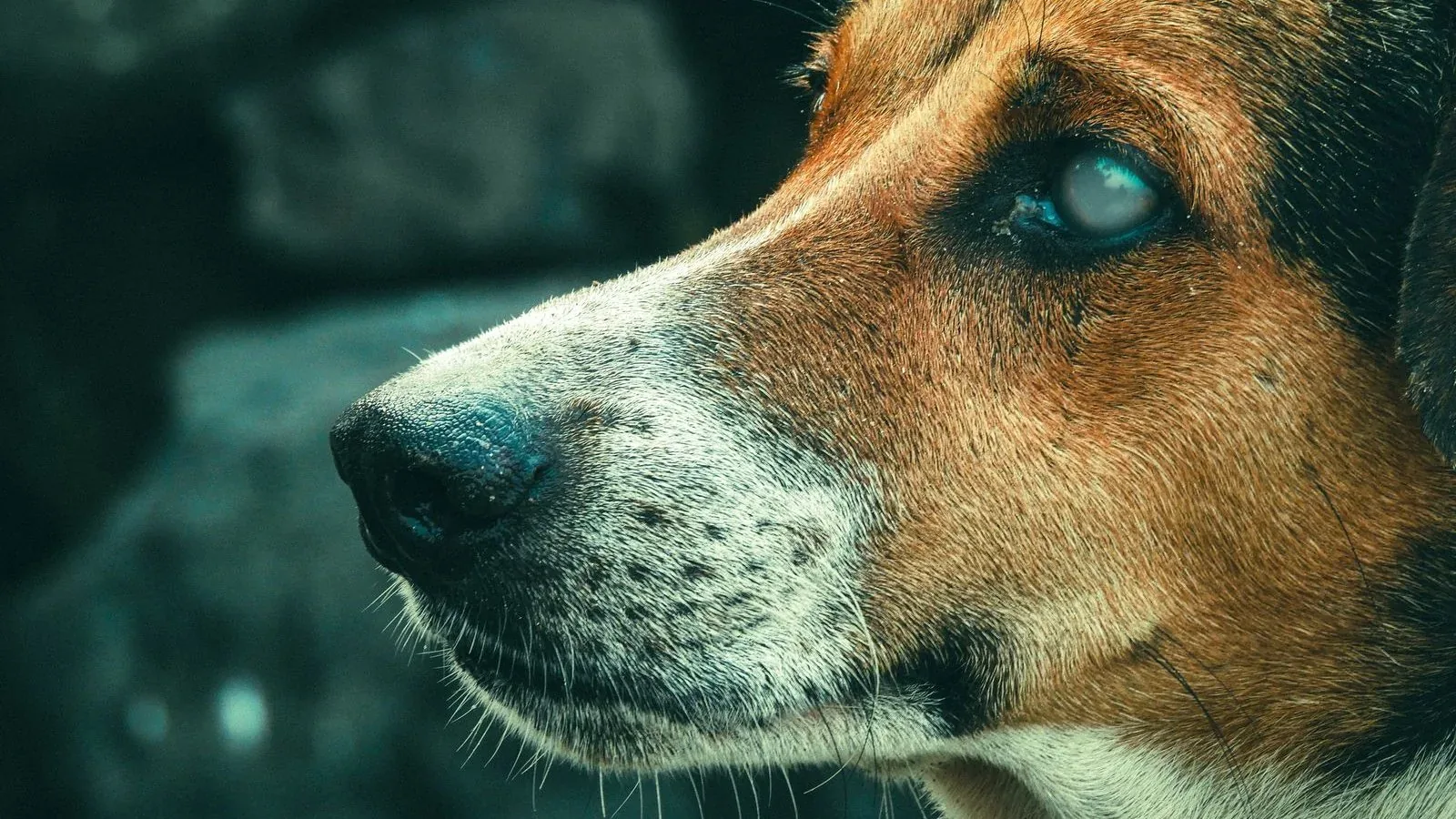
A cataract is a cloudiness inside the lens of the eye that blocks light and can lead to blindness. Signs are a white or blue-white cloudy pupil, bumping into things, hesitating on stairs or in dim light, and reluctance to jump. Cataracts are among the most common eye diseases in dogs: in North American teaching hospitals, 16.8% of mixed-breed dogs aged 7 and older had them, and in some breeds, including the Bichon Frise, Boston Terrier and Miniature and Toy Poodles, over 10% of all dogs seen were affected. Diabetes is a major cause: 80% of diabetic dogs developed cataracts within about 16 months. No eye drop or supplement has been shown to dissolve cataracts; surgery (phacoemulsification) is the only treatment that restores vision. Not every cloudy eye is a cataract: most older dogs develop harmless lens sclerosis.
Signs of cataracts in dogs
| Sign | What you might notice |
|---|---|
| Cloudy pupil | White, grey or blue-white center of the eye |
| Bumping into things | Especially in new places or when furniture moves |
| Trouble in dim light | Hesitating at dusk or in dark rooms |
| Stairs and jumping | Reluctance to use stairs or jump on furniture |
| Missing thrown toys | Losing track of moving objects |
| Clinginess or anxiety | Staying close, startling easily |
| Red, sore eye | A sign of inflammation or glaucoma, which needs urgent care |
A cataract that develops quickly, or comes with a red, painful or squinting eye, needs a vet within a day or two: cataracts can cause inflammation inside the eye (uveitis) and glaucoma.
Cataract or lens sclerosis?
Almost every older dog develops nuclear (lenticular) sclerosis: the lens hardens and takes on a soft blue-grey haze from about middle age. It is a normal ageing change and dogs can still see well through it.
| Lens sclerosis | Cataract | |
|---|---|---|
| Look | Even, bluish-grey haze | White, patchy or crystalline cloud |
| Vision | Little effect | Reduced, can lead to blindness |
| Treatment | None needed | Monitoring or surgery |
Your vet can tell them apart in minutes with a light and an ophthalmoscope.
What causes cataracts in dogs?
Inherited cataracts
Many breeds carry inherited cataracts. In a study of 40 years of dogs seen at North American veterinary teaching hospitals:
- The baseline in mixed-breed dogs was 1.61%.
- 59 breeds had higher rates than that.
- The highest rates were in the Smooth Fox Terrier (11.70%), Havanese (11.57%), Bichon Frise (11.45%), Boston Terrier (11.11%), Miniature Poodle (10.79%) and Toy Poodle (10.21%).
- The American Cocker Spaniel, Standard Poodle and Miniature Schnauzer also had many cases.
In Northern breeds, a 2025 genetic study found variants in the CPT1A gene associated with cataracts. A small-animal vet Morty has known for years, who asked us not to use their name, sees this pattern in clinic: "Huskies, Samoyeds and Malamutes are the breeds we see most with eye problems, mainly cataracts and dry eye. Check their eyes regularly." See Husky lifespan.
Age
Cataracts become more common with age. Among mixed-breed dogs aged 7 to 15 and older, 16.80% had cataracts.
Diabetes
High blood sugar draws water into the lens. In 200 diabetic dogs, 50% had cataracts by about 6 months after diagnosis, 75% by about a year and 80% by about 16 months. Diabetic cataracts can form within weeks and cause sudden blindness. See signs of diabetes in dogs.
Other causes
Eye injury, inflammation inside the eye, and other eye diseases such as progressive retinal atrophy can also cause cataracts.
Treatment
Surgery
Phacoemulsification breaks up and removes the cloudy lens through a tiny incision, usually with an artificial lens implant. It is done by veterinary ophthalmologists, who first check that the retina is healthy (an electroretinogram) and that the eye is a good candidate.
In a study comparing 126 eyes that had surgery with 72 eyes that did not, over a median follow-up of about 3 years for the surgical group:
- Long-term complication rates were similar: 18.3% after surgery and 20.8% without it.
- Eyes judged poor candidates by the ophthalmologist and left alone had the highest complication rate.
So surgery does not add long-term risk for good candidates, and it is the only way to restore sight. Surgery needs drops for weeks afterward and regular follow-up.
Without surgery
Many dogs adapt remarkably well to poor vision, especially when it comes on slowly. Even without surgery, eyes with cataracts need anti-inflammatory drops and check-ups, because untreated inflammation can lead to painful glaucoma.
Eye drops and supplements
No eye drop or supplement has been shown to dissolve cataracts in dogs. Be wary of products that claim to.
Helping a dog with poor vision
- Keep furniture and food bowls in the same places.
- Block stairs with gates and pad sharp corners.
- Use your voice and scent cues before touching your dog.
- Keep it on a lead in unfamiliar places.
- Use textured mats to mark doorways and the water bowl.
- See dog hearing loss for older dogs losing more than one sense.
FAQ
What do cataracts in dogs look like?
A white, grey or blue-white cloudiness in the pupil, often patchy or crystalline. A soft, even blue haze in an older dog is more likely normal lens sclerosis.
Can cataracts in dogs go away?
No. No eye drop or supplement has been shown to dissolve them. Surgery is the only treatment that restores vision.
Is cataract surgery worth it for dogs?
For good candidates, yes: it can restore sight, and long-term complication rates were similar to eyes left without surgery in one study.
Which dog breeds get cataracts?
Smooth Fox Terriers, Havanese, Bichon Frises, Boston Terriers and Miniature and Toy Poodles had the highest rates in a large North American study.
Do diabetic dogs get cataracts?
Most do: 80% developed cataracts within about 16 months of diagnosis in one study.
References
- Gelatt KN, Mackay EO. Prevalence of primary breed-related cataracts in the dog in North America. Veterinary Ophthalmology. 2005. PMID: 15762923
- Beam S, Correa MT, Davidson MG. A retrospective-cohort study on the development of cataracts in dogs with diabetes mellitus: 200 cases. Veterinary Ophthalmology. 1999. PMID: 11397260
- Krishnan H, et al. Comparison of outcomes in cataractous eyes of dogs undergoing phacoemulsification versus eyes not undergoing surgery. Veterinary Ophthalmology. 2020. PMID: 31746126
- Ricketts SL, et al. Common variants in the CPT1A gene are associated with cataracts in Northern breeds of domestic dog. PLOS ONE. 2025. PMID: 40184359
For individual health questions, your veterinarian remains the best partner.