TL;DR
To assess your dog’s digestion and whether a probiotic is worth considering, first record what they eat and what their stool looks like. If you compare products, look for the named strain, the amount per serving, evidence for that strain and product, and clear storage directions. A probiotic is not a guaranteed fix, and a new or sudden symptom needs prompt veterinary care.
Start with the routine, not the supplement
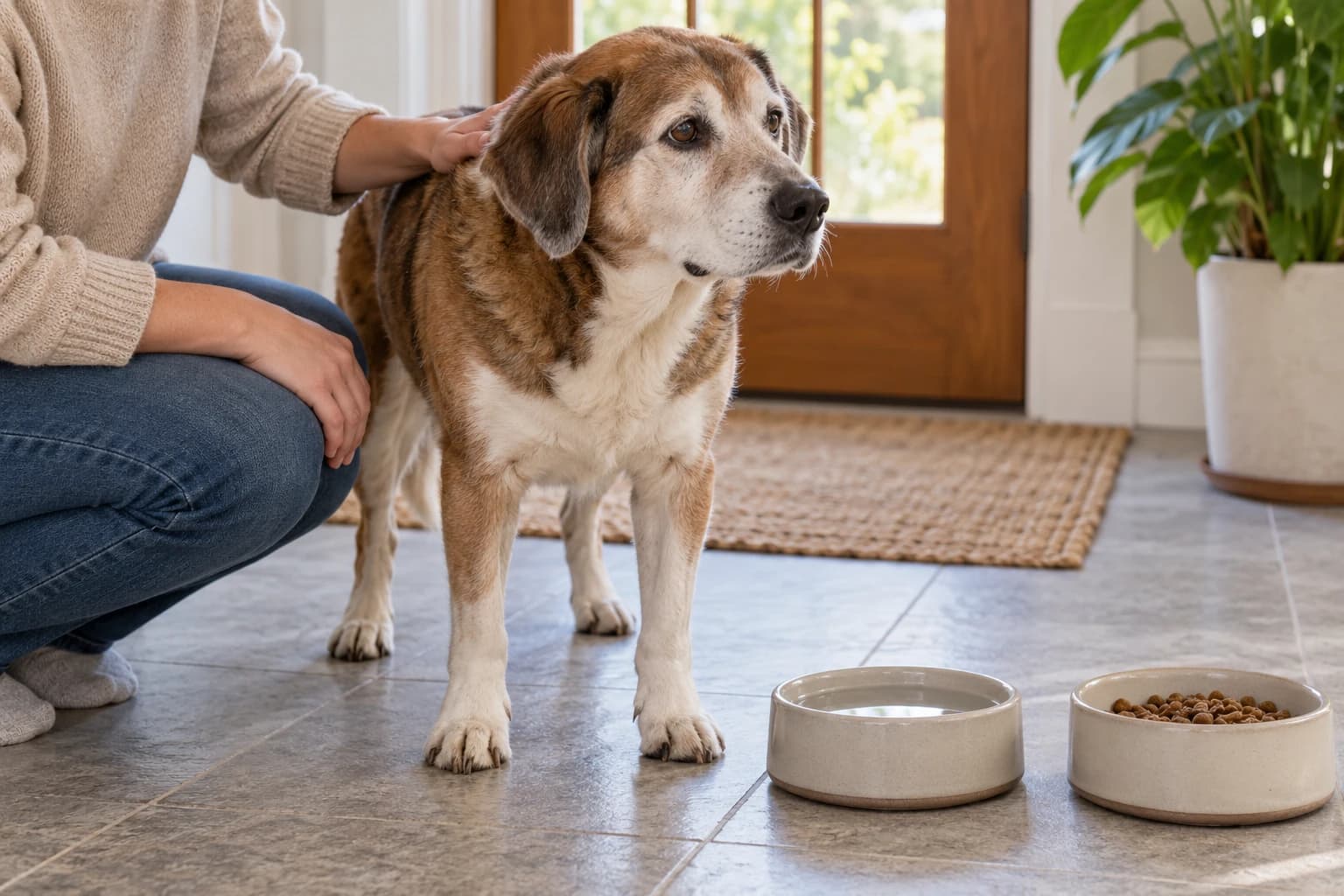
A change in stool can have more than one explanation. The meal, treats, food changes, and a new supplement are all useful context to record, but a home log cannot identify the cause on its own. Before adding anything, note what your dog eats and how their stool and appetite compare with their usual pattern.
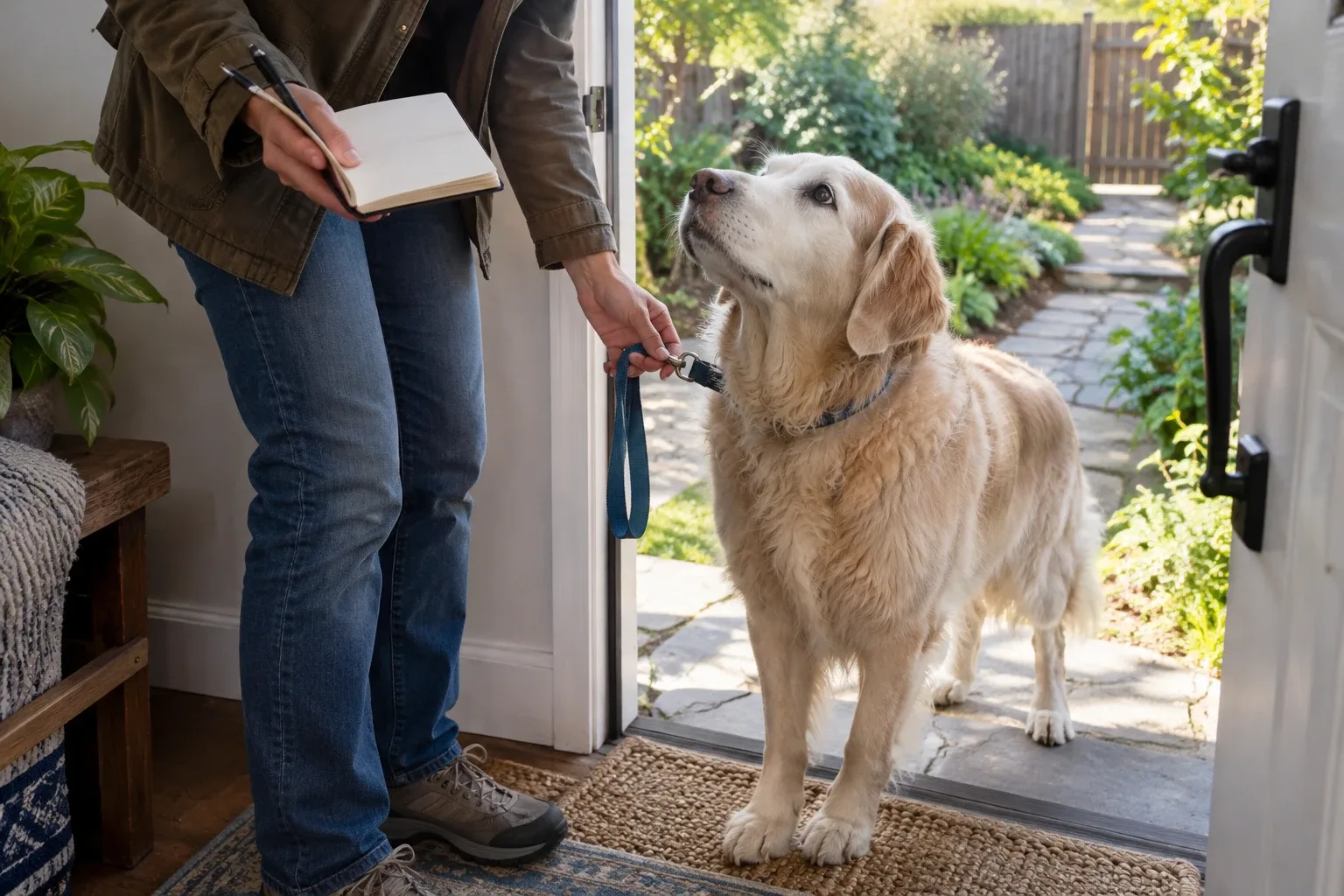
For three days, write down:
- The food, treats, and supplements given, including any recent changes.
- Whether your dog finished the meal and showed their usual interest in food.
- Stool consistency and frequency, plus anything visibly different from normal.
- Any new signs, and when they appeared relative to a food or supplement change.
Keep the record factual. “Skipped breakfast after a new topper” is more useful than guessing that a particular ingredient caused a problem. If you change several things at once, it becomes harder to tell what might be relevant. A simple log can help you explain the pattern when you discuss it with your dog’s care team.
What probiotics can and cannot tell you
Probiotics are living microorganisms intended to provide a benefit when given in sufficient quantities. A 2025 review in Veterinary Sciences discusses their use in canine diets and approaches to incorporating them into dog food, but a broad review does not establish that every product or strain will help every dog. Read the review.
That distinction matters when reading a product claim. Evidence for one strain or formulation does not automatically apply to another. Nor does the word “probiotic” promise a particular change in stool, appetite, or digestion. Set a practical expectation: you are evaluating a specific product for a specific purpose, not assuming that all probiotics work alike.
The dog gut-health supplement label guide explains how to compare strain identity, declared amounts, storage conditions, and evidence without treating a general gut-health claim as proof about a finished product.
Compare the strain and the product evidence
When comparing options, look for details that let you identify what is actually in the container:
- Named strain: A species name alone may not identify the specific strain discussed in research. Look for the full strain designation, if provided.
- Amount per serving: Check whether the label states the quantity for each strain or uses a combined total. A clear amount makes the product easier to assess; it does not prove effectiveness.
- Evidence that matches: Ask whether the evidence concerns the same strain and, ideally, the finished product and intended use. Do not transfer a finding from a different formulation just because both products are called probiotics.
- Plain ingredient disclosure: Prefer labels that state each active ingredient and amount per serving rather than hiding them in a proprietary blend. That makes overlap and product comparisons easier to assess.
- Directions and storage: Check how the product is meant to be given and stored. Follow its own package directions; do not borrow a serving amount or storage assumption from another product.
A large number on a label is not a shortcut to deciding that one product is better. The strain, amount, formulation, evidence, and storage instructions need to be considered together. If those details are missing, you have less information to compare, not a reason to assume the product is stronger.
Use one clear routine and track the result
If you choose a probiotic, use the serving and storage instructions on that product’s label. Keep your dog’s usual meals and other routines as consistent as practical while you observe what happens. Adding a probiotic alongside a new food, treats, and multiple supplements makes any change difficult to interpret.
Choose observations you can actually repeat: interest in meals, stool compared with your dog’s usual pattern, and whether the product is accepted. Record the start date and any change. Do not extend use simply because a label suggests a broad benefit; decide whether the product has a clear purpose and whether your notes show a meaningful pattern. The supplement tracking guide offers a simple way to record observations without mistaking them for a controlled test.
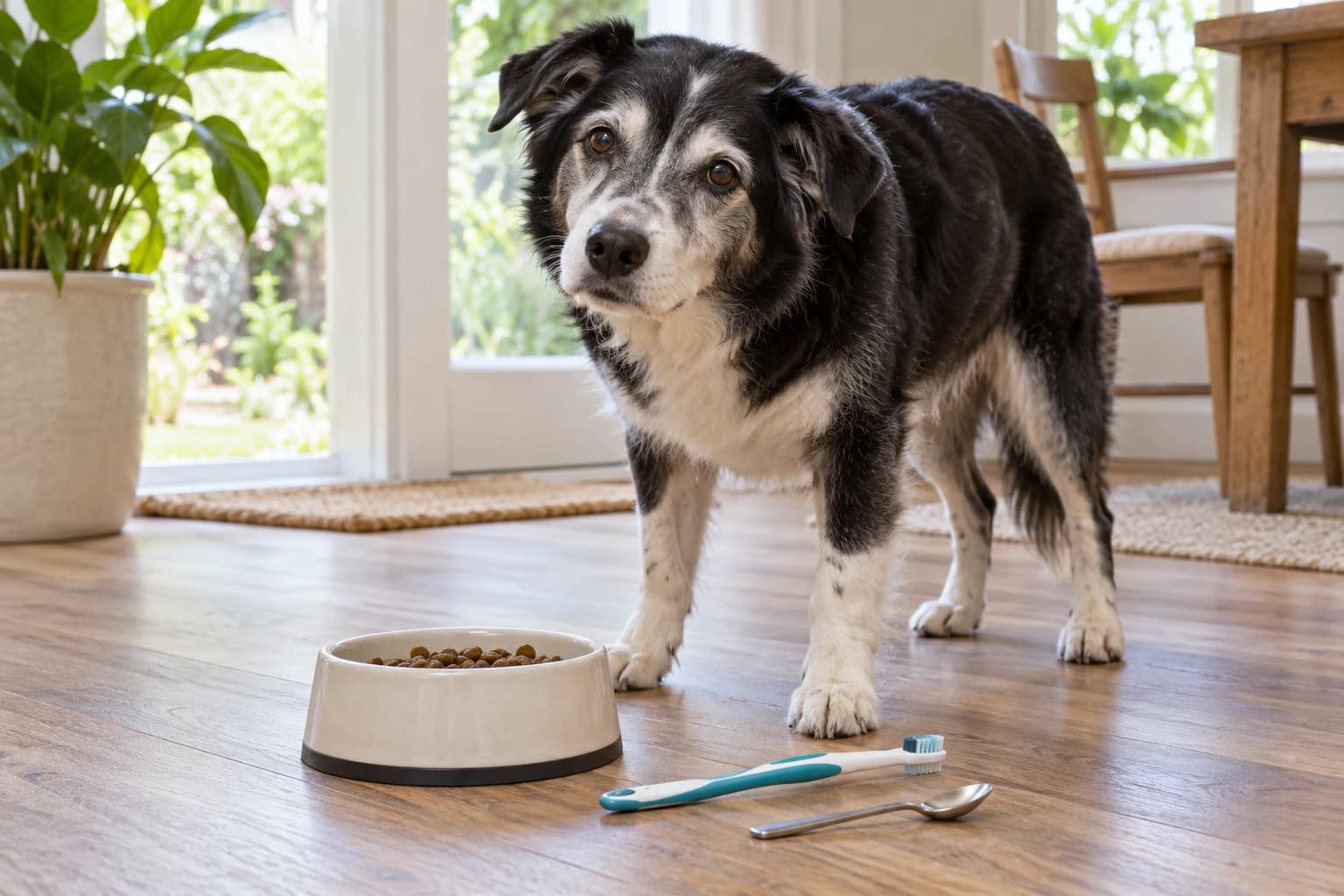
If your dog refuses food with a powder mixed in, do not keep making the meal harder to eat. Return to a familiar meal and check the product’s directions for mixing. A supplement should fit the routine, not displace food your dog would otherwise eat.
Storage and when to get help
Probiotics contain living microorganisms, so storage instructions are part of using the product as intended. Follow the package directions, close the container as directed, and keep it away from conditions the label says to avoid. Do not assume refrigeration is required or that it is unnecessary; products differ. Keep the container so you can refer to its ingredient list, lot details, and instructions if questions come up.
Supplements do not replace diagnosis or treatment. A new or sudden digestive change, or symptoms that concern you, should be discussed promptly with a veterinary professional rather than managed by experimenting with supplements.
FAQ
Should I give my dog a probiotic every day?
Follow the directions for the specific product you are considering. There is no universal serving schedule that can be applied across strains and products, and a probiotic is not automatically needed just because a dog is older or has an occasional change in stool.
Can I mix a probiotic into my dog’s food?
Check the product directions for whether and how it can be mixed with food. If your dog stops eating the meal, remove the added powder and return to a familiar routine rather than repeatedly changing the meal.
How do I know whether the probiotic is helping?
Write down the product, start date, meals, and the observations you chose to track. Look for a consistent change in the pattern you were monitoring, but do not treat a home log as proof of cause or as a substitute for care when symptoms are new or concerning.
References
- Influence of Probiotic Administration in Canine Feed: A Comprehensive Review. Veterinary sciences (2025). PMID: 40431542. DOI: 10.3390/vetsci12050449
Related reading
For individual health questions, your veterinarian remains the best partner.