
We sell this powder. It was not the product tested in the studies discussed here.
TL;DR
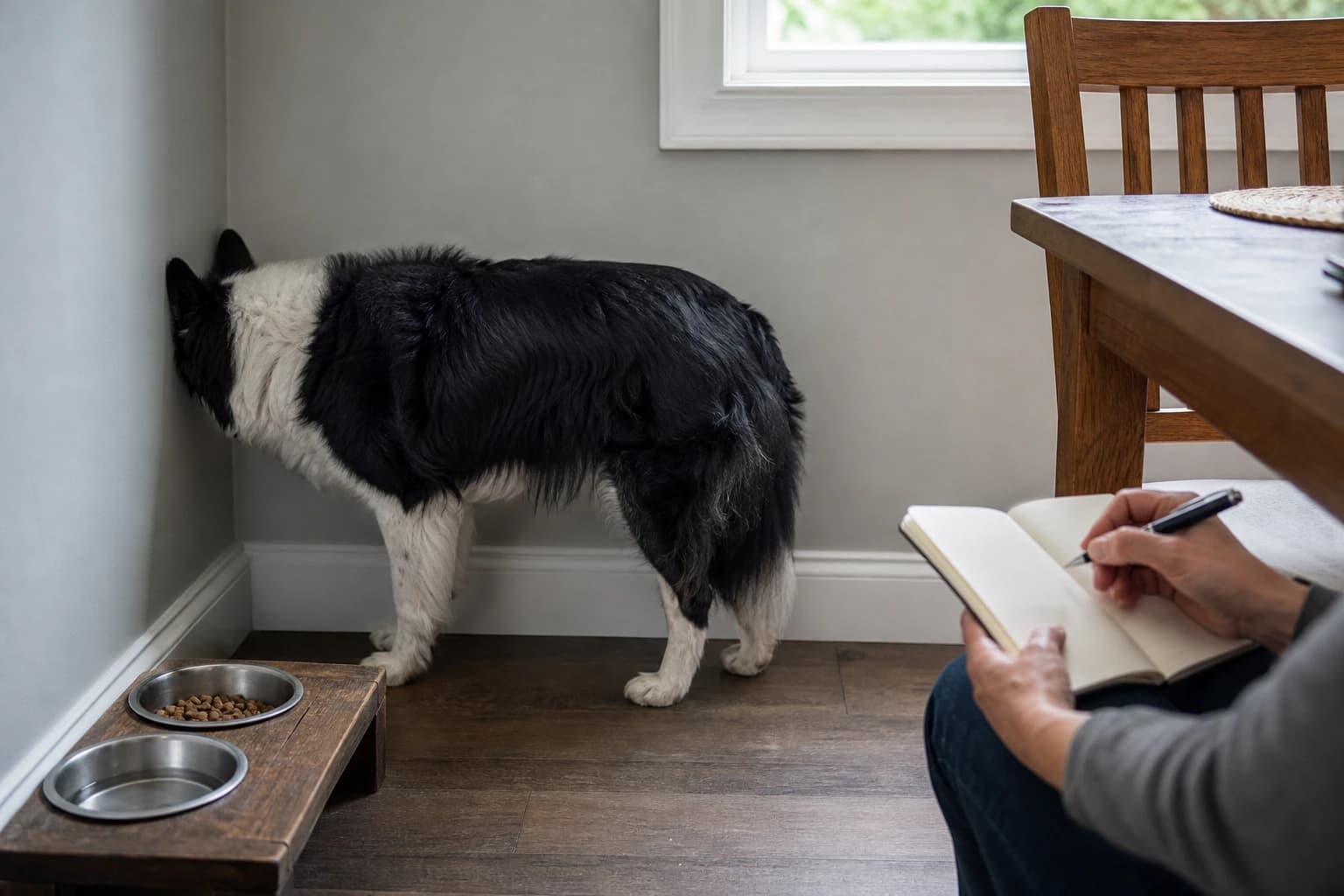
A dog pacing at night is restless for a reason. The most common causes are pain (often arthritis), needing to go out, canine cognitive dysfunction (dog dementia, which flips the sleep-wake cycle), anxiety, and illnesses that cause panting, such as Cushing's disease or heart problems. Pacing with retching and a swelling belly is an emergency. For a dog with dementia, a busy day, a fixed bedtime routine, a late toilet trip, a night light and treatment from your vet usually bring the nights back under control.
Why is my dog pacing at night?
Pain
VCA Animal Hospitals lists pacing or restlessness, repeatedly getting up and lying down, groaning when lying down and panting at rest among signs of pain in dogs. Arthritis pain is often worse after lying still, so the dog gets up, walks, and tries again. Veterinary behaviorists estimate around a third of dogs referred for behavior problems have a painful condition. See arthritis in dogs: treatment.
Needing to urinate or defecate
VCA notes that diseases that increase thirst, such as diabetes and kidney disease, mean more urination, and a dog that cannot get outside may pace, wake you or have accidents. If your dog is drinking noticeably more, tell your vet.
Dementia (canine cognitive dysfunction)
Changes in the sleep-wake cycle are a hallmark sign. VCA's senior behavior guidance lists sleeping more during the day, sleeping less at night, and pacing or vocalizing during the night. In a Danish study of 94 dogs over 8 years old, "sleeping during the day and restless at night" was one of the four signs that dominated in dogs with cognitive dysfunction. See dog dementia.
Anxiety
New fears, separation anxiety and night-time vocalizing are part of cognitive decline, but anxiety also has other causes: a house move, a new schedule, a loss in the family. VCA notes that older pets used to a predictable routine may struggle to adapt to changes, and that diseases of the thyroid and pituitary glands are often linked with anxiety.
Panting and pacing: medical causes
Panting and pacing together, when the room is not hot, point to a medical cause:
- Pain
- Cushing's disease, which VCA lists with panting, a pot-bellied appearance, thin skin, and increased drinking and urination
- Heart or breathing problems, where lying flat is uncomfortable
- Fever, nausea or stomach pain
Vision and hearing loss
VCA notes that older pets with reduced vision or hearing startle more easily and may scan their surroundings more. In the dark, with the house quiet, a dog that cannot see or hear well may feel lost and wander.
Young dogs
In young, healthy dogs, night pacing is more often boredom, too little exercise, needing to go out, or anxiety about being alone. A long walk, a sniffing game and a last toilet trip usually help.
When pacing at night is an emergency
Go to an emergency vet now if your dog:
- Paces and retches without bringing anything up, with a swelling belly (a sign of bloat, especially in large, deep-chested dogs)
- Has trouble breathing, breathes fast at rest, or has pale or blue gums
- Collapses, has a seizure, or cannot stand
- Seems in severe pain or cries when touched
How to calm a dog with dementia at night
- A full day. Keep your dog awake and busy by day: walks at their pace, sniffing, short training and food puzzles. In 11,574 dogs in the Dog Aging Project, more physical activity went with milder signs of cognitive dysfunction. See mental stimulation for dogs.
- A gentle evening walk an hour or two before bed.
- A late toilet trip right before lights out.
- The same bedtime every night, with the same sequence: walk, toilet, chew or small snack if your vet allows, bed.
- A comfortable, supportive bed in a quiet spot, ideally near you. Some anxious older dogs settle better near their people.
- A night light and non-slip rugs, so a dog that gets up can find its way.
- Block stairs and tight corners where your dog may get stuck.
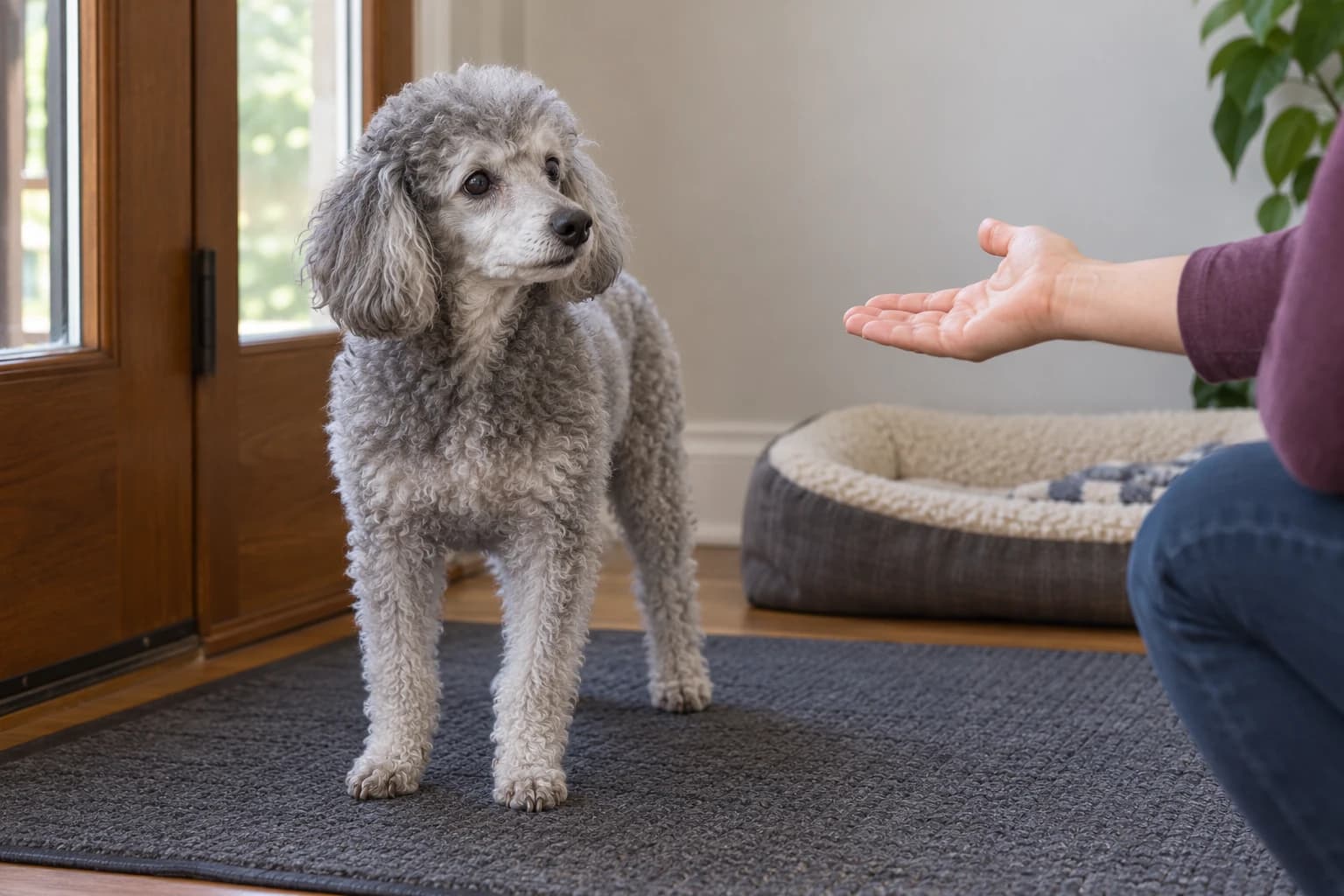
- Calm, quiet reassurance. Guide your dog back to bed without scolding; punishment adds anxiety.
Treatments your vet may suggest
- Pain relief if pain is part of the problem
- Selegiline, the drug used for cognitive dysfunction in dogs; VCA advises giving once-daily doses to dogs in the morning
- A brain-support diet or supplements such as SAMe, which in a placebo-controlled trial of 36 dogs improved activity and awareness scores within 8 weeks
- Melatonin: VCA describes off-label use for sleep problems under veterinary direction; it has not been tested in a controlled trial in senior dogs, and some human products contain xylitol, which is toxic to dogs
- Other prescription medicines for anxiety or severe night waking
See dog dementia treatment and old dog restless at night.
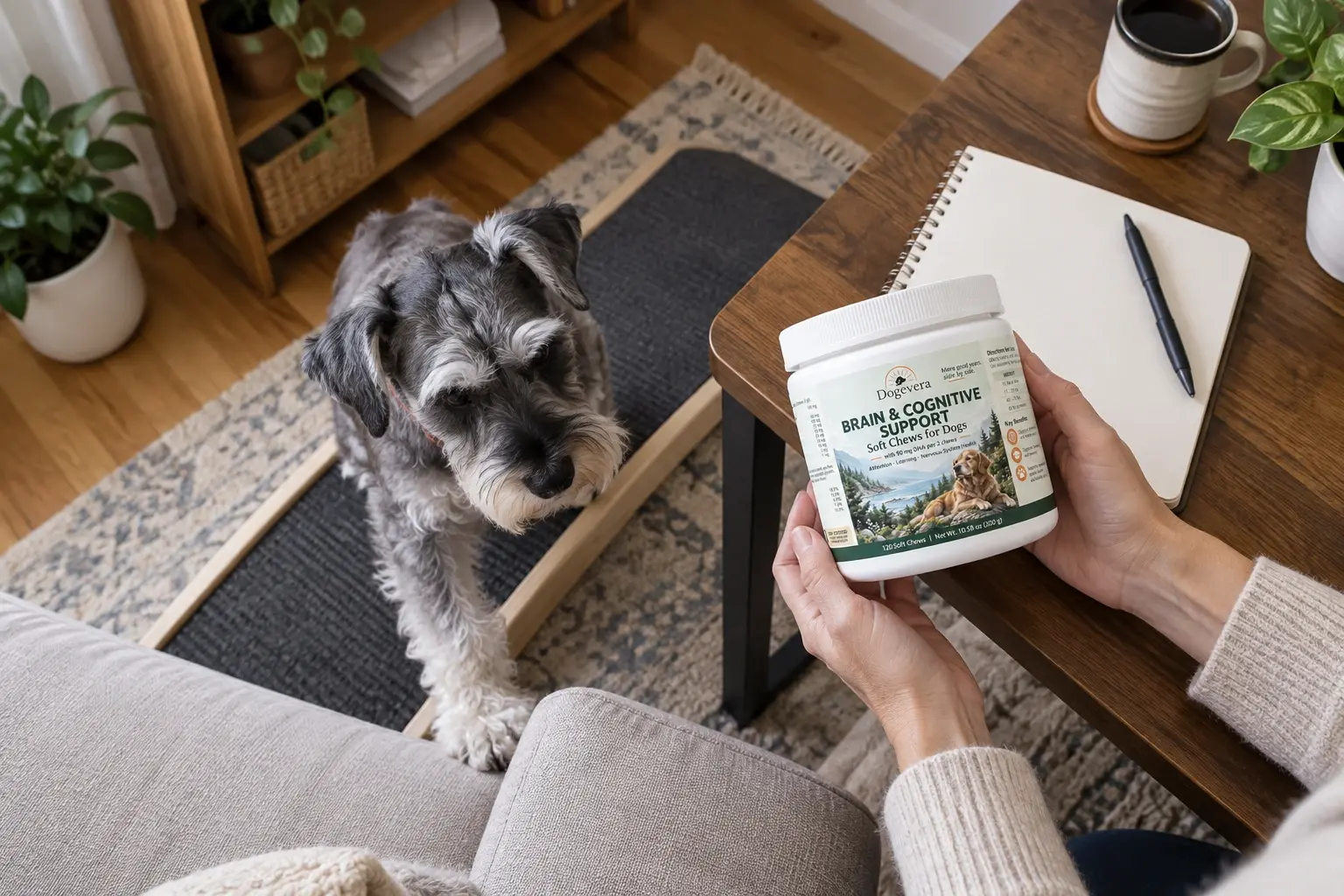
Our Brain & Cognitive Support Soft Chews provide 90 mg of algal DHA in 180 mg of total omega-3 per 2-chew serving, with ginkgo and antioxidants, as part of a daily routine for the aging brain.
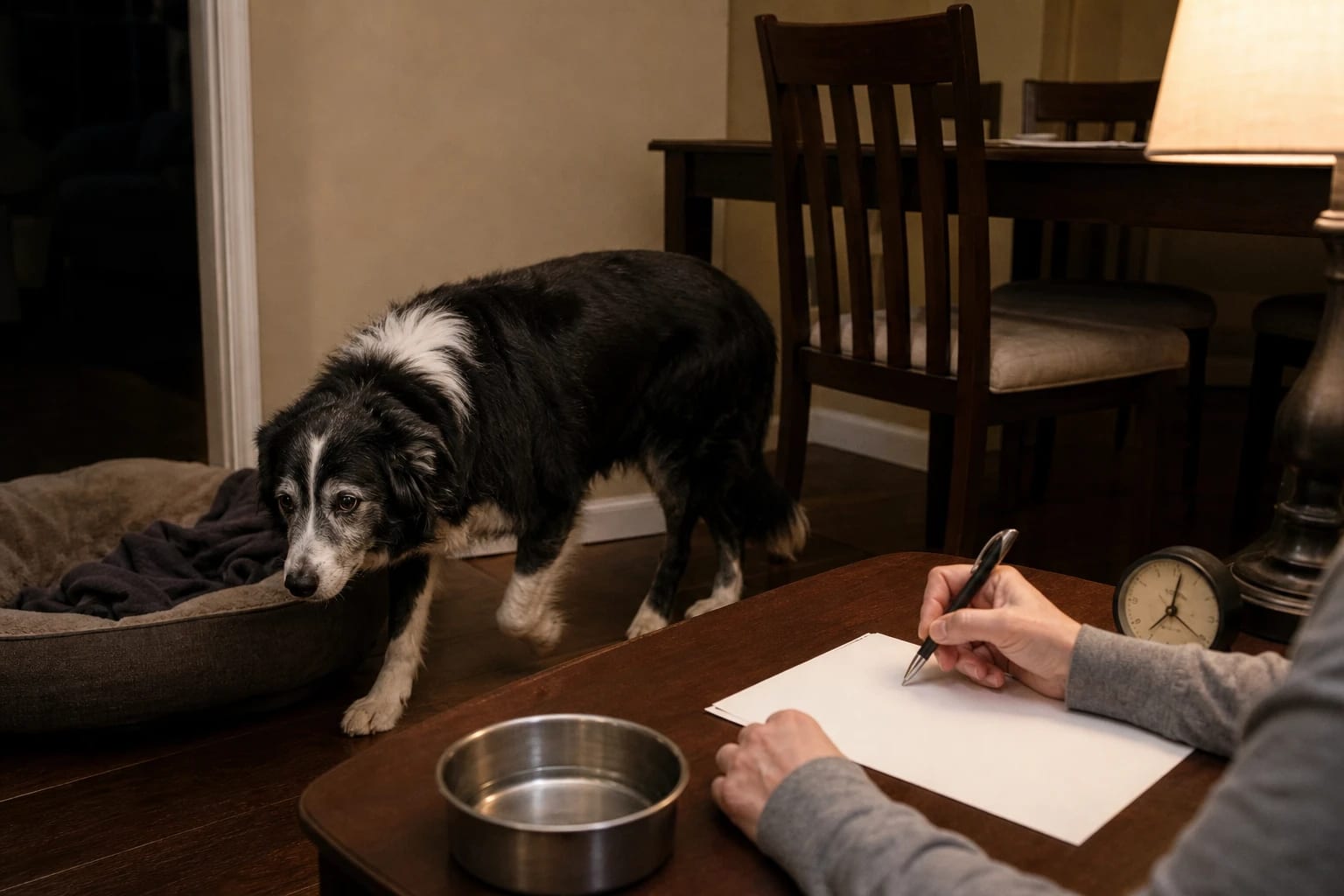
Keep a night log
For a week, write down:
- What time the pacing starts and how long it lasts
- Panting, whining, drinking or toilet needs
- What settles your dog
- Daytime naps and activity
Bring it to the vet with a short video. It makes the cause much easier to pin down.
FAQ
Why is my senior dog pacing at night?
The most common reasons are pain, needing to urinate, cognitive dysfunction and anxiety. Panting and pacing together often point to pain or a medical problem such as Cushing's disease.
Why is my dog pacing and panting at night?
Pain, Cushing's disease, heart or breathing problems, nausea, fever and anxiety. If it is new, or your dog cannot settle, see your vet soon. Pacing with retching and a swollen belly is an emergency.
Is pacing at night a sign of dementia in dogs?
It can be. Sleeping by day and being restless at night is one of the key signs of cognitive dysfunction. Your vet will rule out pain and other illness first.
How do I calm my dog with dementia at night?
Keep the day active, follow the same bedtime routine, take a late toilet trip, use a night light, and keep your dog close. Ask your vet about medication, diet and supplements.
Should I wake my dog up during the day to help them sleep at night?
Gently keeping your dog engaged during the day with walks and games helps reset the sleep-wake cycle. Let them rest, but avoid long stretches of daytime sleep.
References
- VCA Animal Hospitals. How Do I Know if My Dog Is in Pain?; Behavior Counseling: Senior Pet Behavior Problems; Cushing's Disease in Dogs; Selegiline; Melatonin.
- Fast R, et al. An observational study with long-term follow-up of canine cognitive dysfunction: clinical characteristics, survival, and risk factors. Journal of Veterinary Internal Medicine. 2013. PMID: 23701137
- Bray EE, et al. Associations between physical activity and cognitive dysfunction in older companion dogs: results from the Dog Aging Project. GeroScience. 2023. PMID: 36129565
- Mills DS, et al. Pain and problem behavior in cats and dogs. Animals. 2020. PMID: 32085528
- Rème CA, et al. Effect of S-adenosylmethionine tablets on the reduction of age-related mental decline in dogs: a double-blinded, placebo-controlled trial. Veterinary Therapeutics. 2008. PMID: 18597245
For individual health questions, your veterinarian remains the best partner.