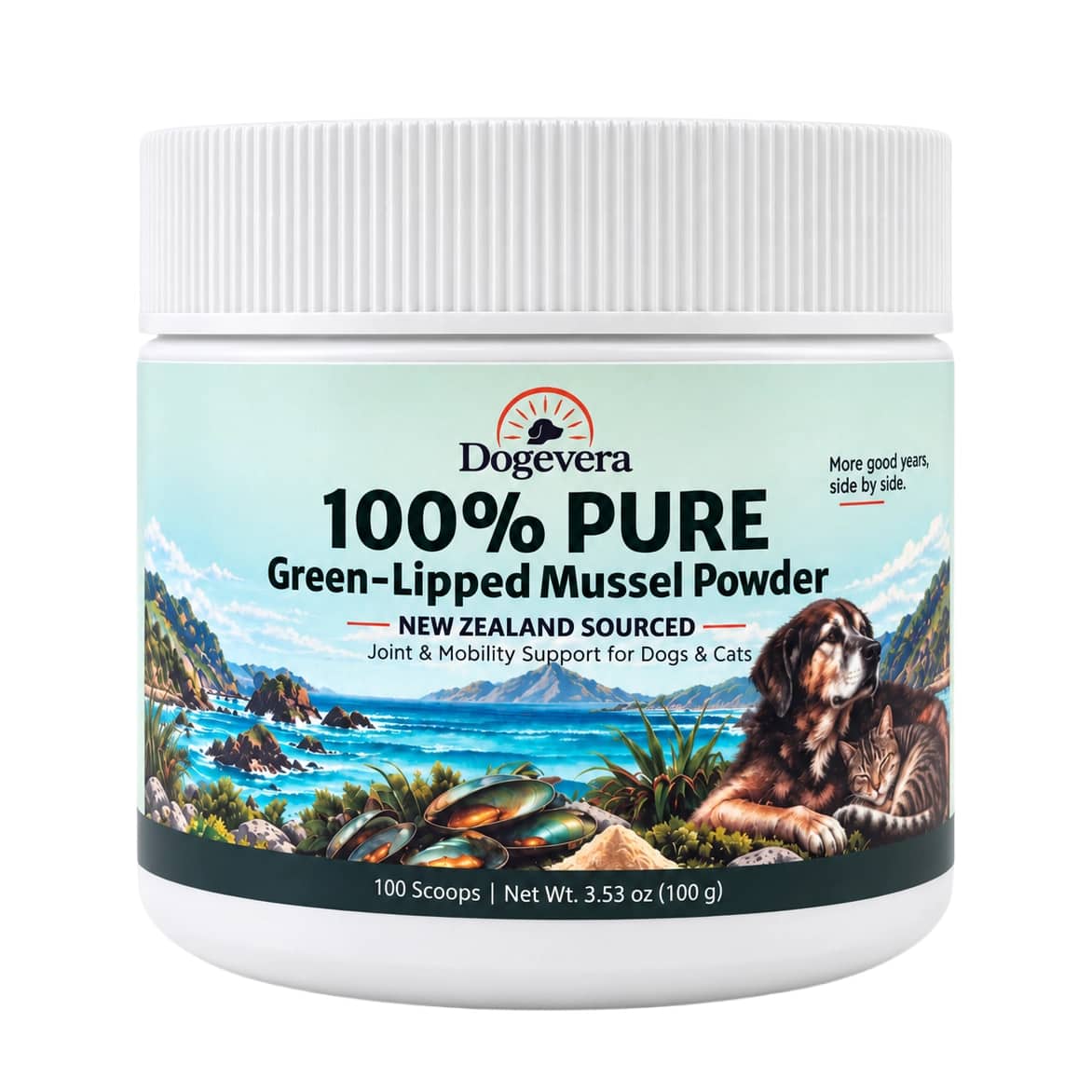
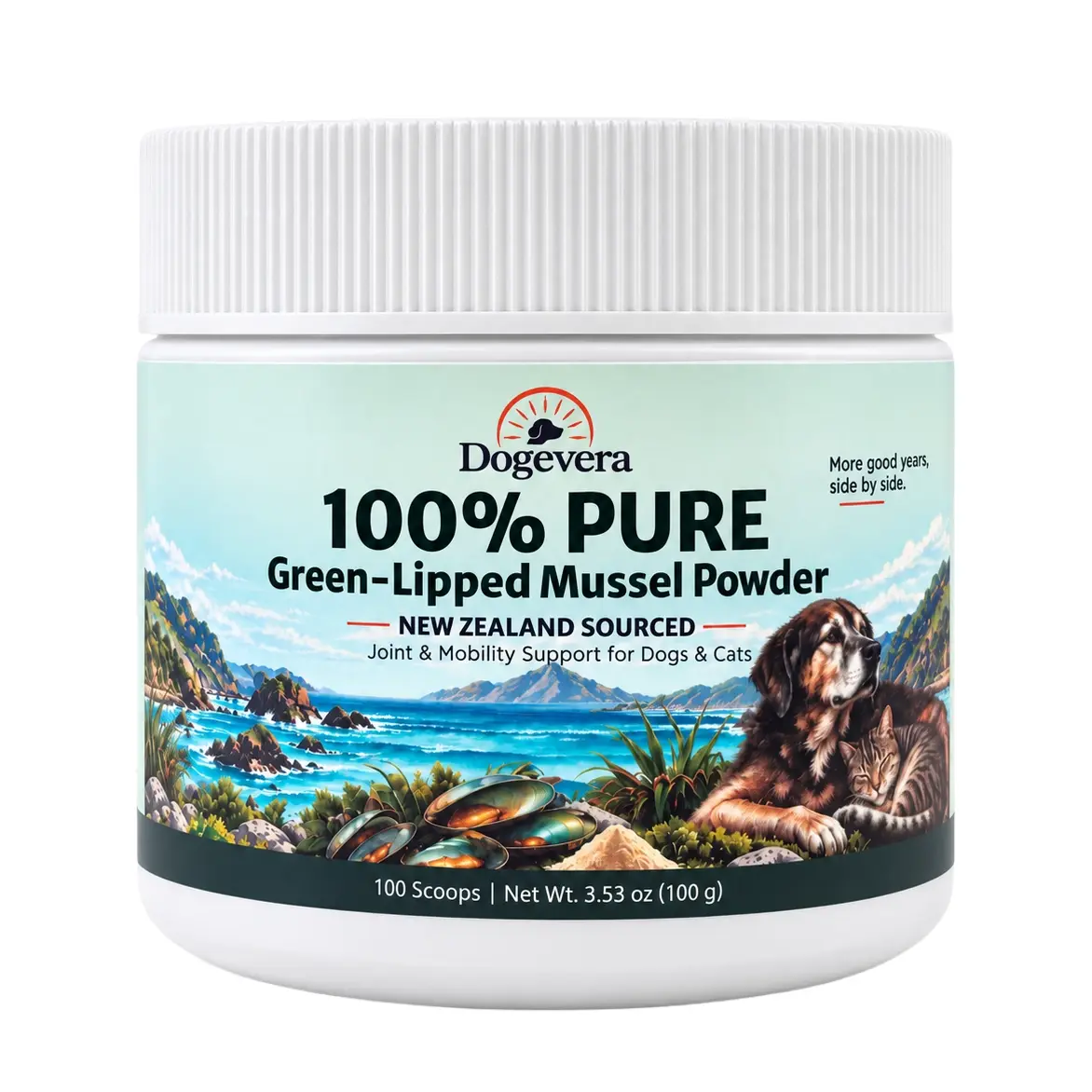
We sell this powder. It was not the product tested in the studies discussed here.
TL;DR
Glucosamine is the most popular joint supplement for senior dogs, but it has the weakest evidence of the common options. A 2022 review of 72 trials found a very marked lack of effect of chondroitin-glucosamine products on arthritis pain and recommended they no longer be recommended for it. Some older trials were positive, but they were small, often industry-sponsored, and a placebo-controlled trial found owners rated placebo dogs as improved just as often. Glucosamine appears safe, so if your dog already takes it and you want to continue, that is reasonable. If you are choosing a first supplement, omega-3 fish oil and green-lipped mussel have better evidence.
What glucosamine is supposed to do
Glucosamine and chondroitin are building blocks of cartilage. The idea is that supplying them helps protect or rebuild worn joint cartilage. The American College of Veterinary Surgeons notes that the mechanism by which joint supplements might ease arthritis pain is poorly understood, and in its hip dysplasia guidance states that there is no evidence in peer-reviewed literature that cartilage-protective supplements help repair or protect cartilage.
What the studies found
Trials that found a benefit
- 2007, 35 dogs: a randomized, double-blind trial compared glucosamine hydrochloride with chondroitin against carprofen, a prescription anti-inflammatory, in dogs with hip or elbow arthritis. By day 70, the glucosamine group had significantly better vet-scored pain, weight bearing and severity, but the response was slower than with carprofen. There was no placebo group, and the scores were subjective.
- 2007 systematic review: rated one trial of a combination of chondroitin, glucosamine and manganese ascorbate as high quality and gave it a moderate level of confidence.
Trials that did not
- 2017, 60 dogs: in a randomized, placebo-controlled trial, dogs wore activity monitors for 97 days. A glucosamine and chondroitin product did not increase activity compared with placebo. Owner pain scores improved in both groups equally, which the authors attributed to a caregiver placebo effect.
- 2023, 75 dogs with hip arthritis: glucosamine with chondroitin was compared with two green-lipped mussel extracts, carprofen and placebo. After 6 weeks, the glucosamine group's weight bearing fell between placebo and the other treatments, while the mussel extracts and carprofen clearly beat placebo.
What the reviews conclude
- 2012 systematic review: evidence for joint supplements was poor, except for omega-3 in dogs.
- 2017 review of glucosamine and chondroitin in dogs: found the trials generally small, at risk of funding bias from company sponsorship, and limited in how widely their results apply.
- 2022 systematic review and meta-analysis: across 72 trials, a very marked lack of effect for chondroitin-glucosamine, leading the authors to recommend they no longer be recommended for pain in canine and feline arthritis.
- 2023 COAST guidelines: glucosamine and chondroitin are optional supplements supported by only 3 or 4 of 9 experts, held back by limited evidence and variable product quality.
VCA Animal Hospitals reflects the split: one VCA page says small studies and many case histories suggest a benefit, while its nutrition team's page states that glucosamine and chondroitin are not effective for osteoarthritis and recommends omega-3 and physical rehabilitation instead.
Is glucosamine safe for older dogs?
Generally, yes. VCA notes glucosamine and chondroitin appear to be free of side effects, and the 2017 trial reported no serious adverse events. Two practical cautions:
- Product quality: VCA notes supplements are not highly regulated and some may not contain the labeled amount.
- Other ingredients: joint chews often add flavorings, chicken, fish or shellfish, and calories. Check the full label.
If you decide to try or continue it
- Get the diagnosis first. Stiffness in an older dog is not always arthritis. See senior dog sudden stiffness.
- Choose a product that states amounts. Look for mg of glucosamine and of chondroitin per serving, not a proprietary blend.
- Look for quality testing. The National Animal Supplement Council Quality Seal requires an independent quality audit and random product testing against label claims.
- Give it a fair test. In the 2007 positive trial, the effect took until day 70. Score your dog with a validated tool such as the Canine Brief Pain Inventory before starting and after 8 to 10 weeks.
- Do not let it replace pain treatment. In the 2007 trial, carprofen worked faster.
About forms: the 2007 positive trial used glucosamine hydrochloride with chondroitin sulfate. We did not find dog trials comparing glucosamine hydrochloride with glucosamine sulfate.
Better-supported alternatives
- Omega-3 fish oil: the strongest supplement evidence for arthritis pain. See is omega-3 good for dogs?
- Green-lipped mussel: moderate evidence. See green-lipped mussel vs glucosamine.
- A veterinary joint diet: see dog food for joint health.
- Injectable joint drugs: VCA describes injections of polysulfated glycosaminoglycan (Adequan) or pentosan polysulfate (Cartrophen) that your vet can give to support cartilage and joint lubrication. VCA notes Cartrophen is approved in Canada but not by the FDA.
- Weight loss and controlled exercise: the foundation of every arthritis plan in the COAST guidelines.
FAQ
Does glucosamine work for dogs?
The best current evidence says it has little or no effect on arthritis pain. Some small, older trials were positive.
Is glucosamine HCl better than glucosamine sulfate for dogs?
We did not find dog trials comparing the two. The 2007 positive trial used the hydrochloride form.
When should a senior dog start glucosamine?
There is no evidence that starting early prevents arthritis. For dogs at risk but without signs, the COAST guidelines put more weight on keeping the dog lean and active.
Can glucosamine replace my dog's pain medication?
No. In the 2007 trial it acted more slowly than carprofen, and later trials found little effect. Talk to your vet before changing any medication.
Can I give glucosamine with fish oil?
Yes. They do not overlap. Count the omega-3 if the glucosamine product also contains fish oil.
References
- McCarthy G, et al. Randomised double-blind, positive-controlled trial to assess the efficacy of glucosamine/chondroitin sulfate for the treatment of dogs with osteoarthritis. The Veterinary Journal. 2007. PMID: 16647870
- Aragon CL, Hofmeister EH, Budsberg SC. Systematic review of clinical trials of treatments for osteoarthritis in dogs. JAVMA. 2007. PMID: 17302547
- Scott RM, Evans R, Conzemius MG. Efficacy of an oral nutraceutical for the treatment of canine osteoarthritis. Vet Comp Orthop Traumatol. 2017. PMID: 28763523
- Kampa N, et al. Study of the effectiveness of glucosamine and chondroitin sulfate, marine based fatty acid compounds (PCSO-524 and EAB-277), and carprofen for the treatment of dogs with hip osteoarthritis. Frontiers in Veterinary Science. 2023.
- Vandeweerd JM, et al. Systematic review of efficacy of nutraceuticals to alleviate clinical signs of osteoarthritis. J Vet Intern Med. 2012. PMID: 22404506
- Bhathal A, et al. Glucosamine and chondroitin use in canines for osteoarthritis: a review. Open Veterinary Journal. 2017. PMID: 28331832
- Barbeau-Grégoire M, et al. A 2022 systematic review and meta-analysis of enriched therapeutic diets and nutraceuticals in canine and feline osteoarthritis. Int J Mol Sci. 2022. PMID: 36142319
- Cachon T, et al. COAST Development Group's international consensus guidelines for the treatment of canine osteoarthritis. Frontiers in Veterinary Science. 2023.
- American College of Veterinary Surgeons. Osteoarthritis in Dogs, Canine Hip Dysplasia.
- VCA Animal Hospitals. Degenerative Joint Disease in Dogs, Arthritis and Nutrition for Dogs, Joint Support and Disease-Modifying Osteoarthritis Drugs in Dogs.
- American Animal Hospital Association. 2022 Pain Management Guidelines: chronic pain assessment in dogs.
- National Animal Supplement Council. NASC Quality Seal.
For individual health questions, your veterinarian remains the best partner.