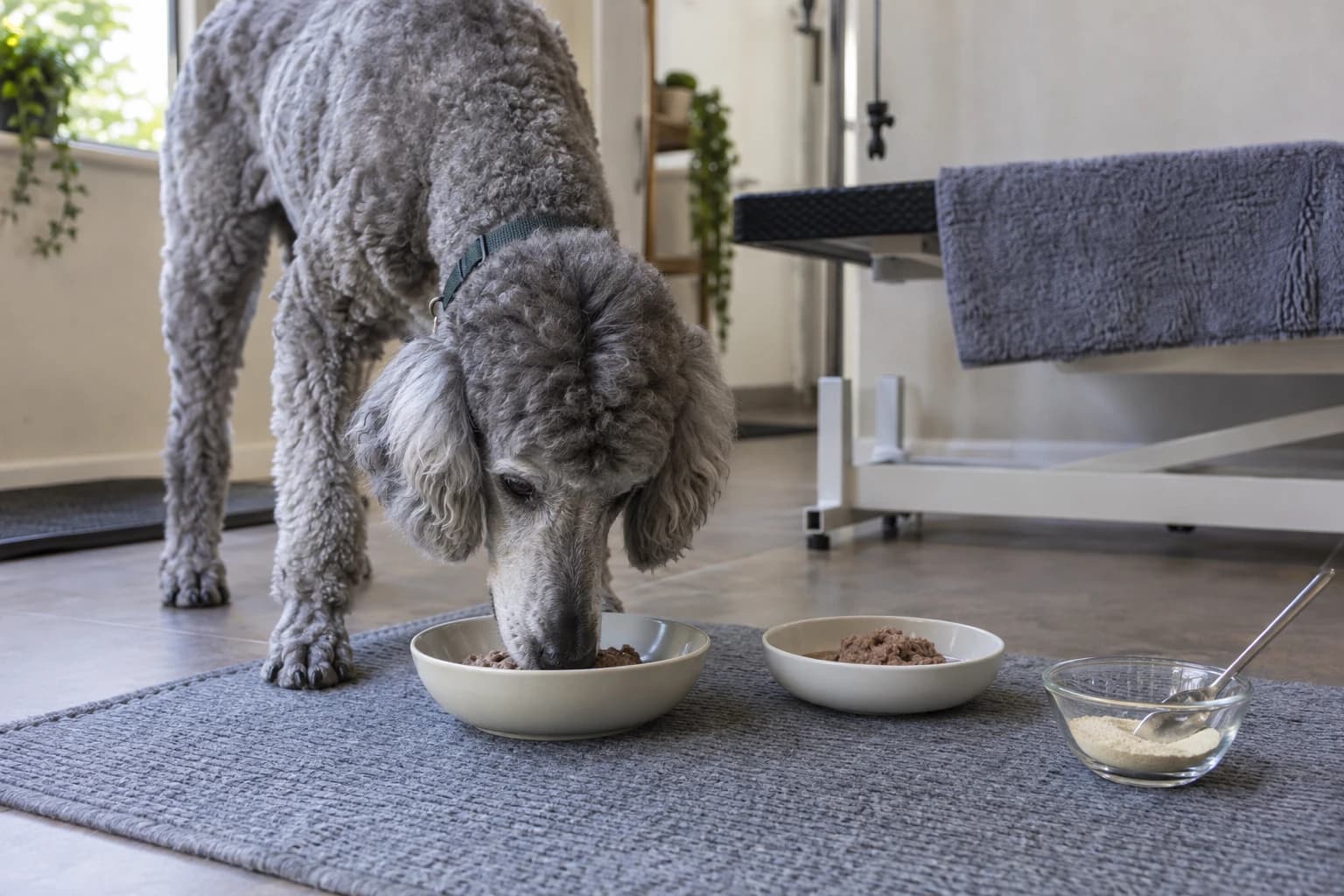
TL;DR
The best dog food topper powder depends on the job: improving palatability, adding a defined nutritional role, or supporting a specific part of your dog's routine. A topper is not automatically a complete meal, so compare its calories, ingredients, serving directions and intended use with the complete food your dog already eats.
Start With the Product's Job
A powder sold as a topper may fit one of three categories:
- Palatability topper: Used mainly to make a familiar meal more appealing. Its value is practical acceptance, not replacing the nutritional structure of the main food.
- Functional powder: Designed to support an area such as joints, teeth or another routine goal. It should have clearly named ingredients and a stated serving direction.
- Complete-food product: Made to provide the nutritional role of a meal when fed according to its own directions. This is different from sprinkling a small amount over an existing diet.
Read the front label, then confirm the purpose in the feeding directions. Words such as “topper,” “supplement,” or “complementary” suggest the product belongs alongside food rather than replacing it. A product described as complete food should have a clear statement explaining the life stage and feeding use it covers.
If you are comparing a senior food rather than an optional powder, Senior Dog Food High Protein: How to Compare Labels explains why protein wording should be read alongside the rest of the diet, calories and intended use.
Compare Calories Before Ingredients
A powder can look small in the bowl while still changing the daily energy intake. Compare products using the same information:
- Calories per labeled serving
- Serving size and the unit used, such as scoop or weight
- Number of servings in the container
- Whether the calorie information applies to the powder alone or a prepared mixture
- Whether the main food's portion should change when the topper is added
For a palatability topper, calories may be a minor part of the decision if the product is used as directed, but they still belong in your comparison. For a calorie-dense product, the amount matters more, especially when your dog already receives treats or several additions to meals.
Do not turn a topper into a meal replacement because the powder contains protein, oil, vitamins or minerals. Those ingredients do not by themselves show that the product supplies a complete diet.
Read Ingredients and Quantities Together
A useful label names each active ingredient and gives its amount per serving. “Proprietary blend” wording makes products harder to compare because you cannot see how much of each ingredient the serving provides. This is the same reason a label-reading guide such as Dog Dental Powder Ingredients: How to Read a Label focuses on ingredient identity, quantity and serving clarity rather than a long ingredient list alone.
Use this checklist:
- Is every active ingredient named plainly?
- Is the amount given per serving?
- Does the serving match the product's own directions?
- Are inactive ingredients, flavorings and carriers listed?
- Does the product contain ingredients already supplied by another food, treat or supplement?
- Are potential food sources clear enough for your dog's dietary restrictions?
Ingredient length is not a quality score. A short list may suit a dog whose diet needs to stay simple, while a longer list may be appropriate for a defined purpose. The important point is that you can identify what you are adding and why.
Choose by Intended Use
Use the product category that matches the actual decision:
- Choose a palatability topper when the problem is acceptance of an otherwise suitable meal. Keep the main food nutritionally central.
- Choose a functional powder when you have one clearly defined support goal and can track the added ingredients alongside the rest of the routine.
- Choose a complete food when you need the product itself to provide the meal's nutritional role. Follow that product's feeding directions rather than treating it like a sprinkle-on addition.
- Skip a new topper when it would create unclear ingredient overlap, make portions difficult to track or replace a needed change to the main diet.
A powder also has to fit the way your dog eats. Some dogs accept a dry dusting, while others prefer it mixed into wet food. If your dog refuses the portion carrying the powder, the product is not useful in that routine. Introduce only one change at a time so you can identify what affected acceptance or tolerance.
A Practical Buying Checklist
Before purchasing, write down the answers to these questions:
1. What is the product meant to do: improve taste, support a defined goal or provide a complete meal? 2. How many calories does one labeled serving add? 3. What ingredients are active, and how much of each is provided per serving? 4. Is the product intended to supplement food or replace it? 5. What other foods, treats and supplements are already part of the day? 6. Can you measure and serve it consistently? 7. What will you track after starting: meal acceptance, stool changes, refusal of the mixed food or another clearly defined observation?
Keep the package and serving directions available. For US shoppers, Are Dog Supplements Regulated in the US? A Shopper’s Guide provides useful context for evaluating facility, label and documentation claims without treating marketing language as proof of a finished product's performance.
A supplement does not replace diagnosis or treatment, and sudden or concerning symptoms need prompt professional care. The economical choice is usually the product that fits a clear purpose, avoids unnecessary overlap and can be used consistently, rather than a larger powder with an impressive but unclear label.
For individual health questions, your veterinarian remains the best partner.