TL;DR
Paw hyperkeratosis is a build-up of extra keratin, the tough protein that forms the outer layer of the paw pads, so the pads become thick, hard, crusty or "hairy" and can crack. In many older dogs it is a mild, age-related change that only needs softening and trimming. But it can also be a sign of something more serious: an inherited footpad disease in breeds such as the Irish Terrier and Dogue de Bordeaux, an autoimmune disease (pemphigus), distemper, or a rare but serious liver-related condition called hepatocutaneous syndrome, in which paw pad lesions were present in 100% of 143 reported dogs. See a vet if the pads crack and bleed, your dog limps, other skin is affected, or your dog seems unwell. At home, soaking, vet-recommended softening balms, careful trimming and protecting cracked pads keep most dogs comfortable.
What does paw hyperkeratosis look like?
- Pads that are thicker and harder than normal
- A dry, rough or crusty surface
- "Hairy" or feathery growths of keratin, often around the edges of the pads
- Cracks (fissures), which can bleed and become infected
- Sometimes the same changes on the nose
A dog with sore, cracked pads may lick its feet, limp, or slip on smooth floors.
Causes of paw hyperkeratosis
| Cause | Who gets it | What else you might see |
|---|---|---|
| Age-related (idiopathic) hyperkeratosis | Older dogs | Often the nose too; usually not painful unless pads crack |
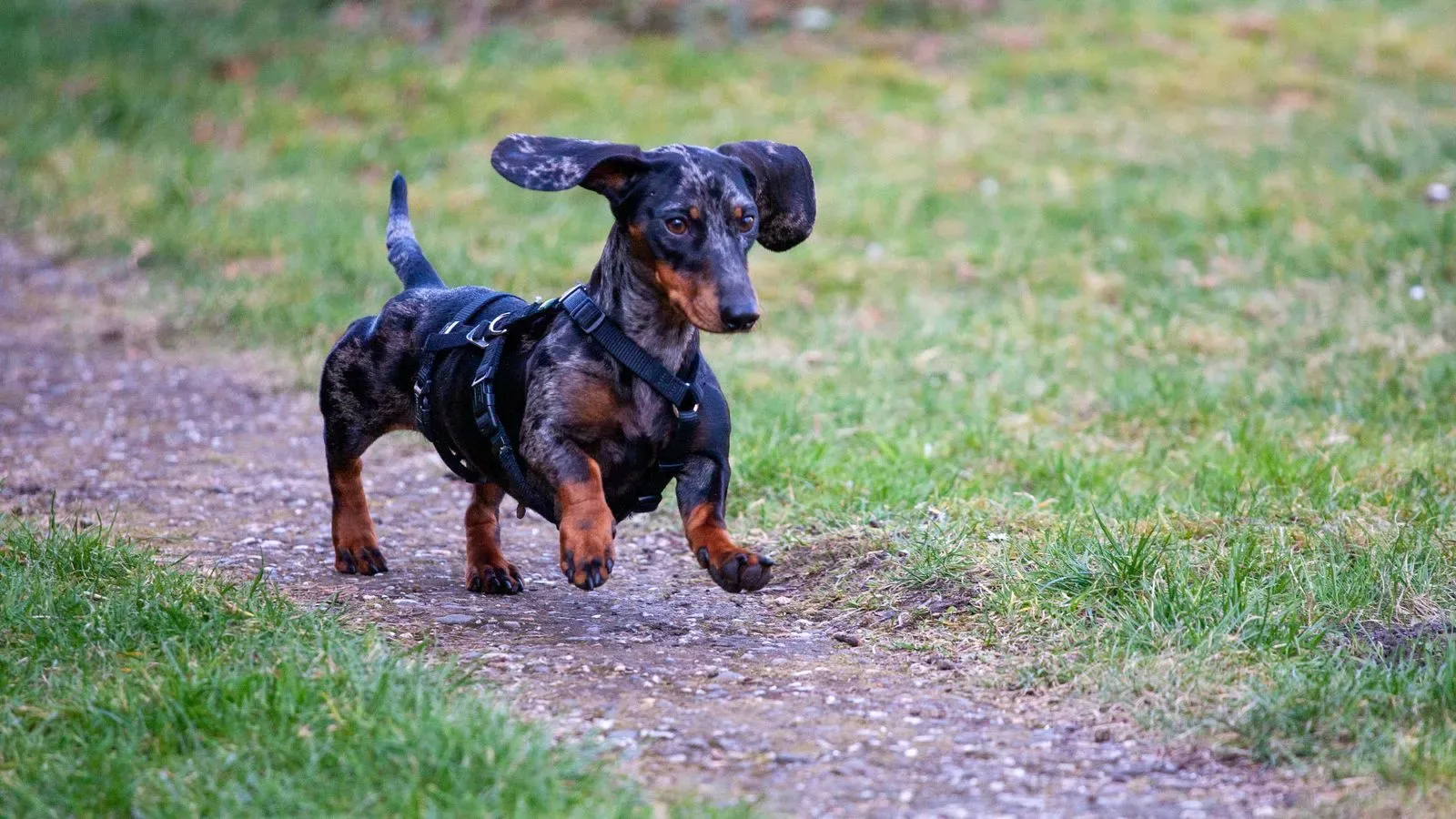
| Familial footpad hyperkeratosis | Young dogs of certain breeds, such as Irish Terriers, Dogues de Bordeaux and Kromfohrl盲nders | All pads affected from a young age; no other skin lesions |
| Pemphigus foliaceus | Any adult dog | Crusts on the face, ears and pads; an autoimmune disease |
| Hepatocutaneous syndrome | Mostly older dogs; Shih Tzus have been described as a breed at risk | Crusting of pads and around the mouth and eyes; lethargy, weight loss, poor appetite |
| Canine distemper ("hard pad") | Mostly young or unvaccinated dogs | Fever, discharge from eyes and nose, cough, neurologic signs |
| Leishmaniasis | Dogs in or from regions where it is common | Skin, nose and whole-body signs |
Age-related hyperkeratosis
The most common type in senior dogs has no other underlying cause. The Merck Veterinary Manual describes a similar change on the nose in older adult dogs that is not painful and generally does not need treatment. On the paws, it matters more when the extra keratin cracks, catches or makes the pads slippery.
Familial footpad hyperkeratosis
An inherited form in breeds such as the Irish Terrier and Dogue de Bordeaux. Merck notes that all footpads are involved from a young age, and that when it is severe, horns, fissures and infection cause pain and lameness. In Irish Terriers and Kromfohrl盲nders, it has been linked to a variant in the FAM83G gene, which a DNA test can detect.
Hepatocutaneous syndrome
A rare but serious condition, usually linked to a liver disorder or, less often, a pancreatic tumor. In a review of 143 dogs, every dog had skin lesions on the paw pads or around the mouth, eyes or other skin-mucosa junctions, and every dog tested had very low levels of amino acids in the blood. In a series of 31 Shih Tzus, the median age at diagnosis was 8 years, common signs were lethargy, poor appetite, weight loss and lameness, and the median survival after diagnosis was 3 months.
This is why crusty pads in an older dog that is also losing weight or seems unwell need a vet visit promptly, with blood tests and an abdominal ultrasound.
Pemphigus and other causes
Pemphigus foliaceus is an autoimmune disease that can cause crusting on the paw pads as well as the face and ears. Distemper causes "hard pad" in unvaccinated dogs. Merck lists hepatocutaneous syndrome, other keratinization disorders and pemphigus as the main conditions to rule out for footpad hyperkeratosis.
When to see a vet
- Cracks that bleed, ooze or smell
- Limping, or licking the feet constantly
- Lesions on other skin, especially the face, ears or around the mouth and eyes
- A dog that seems unwell: tired, losing weight, eating less or drinking more
- A young dog with all four feet affected
- Sudden changes rather than slow thickening over years
Your vet may take skin scrapings or a biopsy and, depending on what they find, run blood tests.
How to care for hyperkeratotic paws at home
Once serious causes are ruled out, regular care keeps most dogs comfortable:
- Soften the pads. Soak the feet in warm water for several minutes to soften the keratin, then pat dry, including between the toes.
- Apply a vet-recommended balm. For footpad hyperkeratosis, Merck describes supportive care with soaking and keratolytic (softening) and emollient (moisturizing) treatments. Common ingredients in these products include salicylic acid, urea, lactic acid and propylene glycol. Use a product made for dogs, since your dog will lick its paws.
- Trim excess keratin carefully, or ask your vet or groomer to do it. Remove only the loose, overgrown edges; cutting too deep hurts and bleeds.
- Trim the hair between the pads so your dog grips smooth floors. See senior dog grooming.
- Protect cracked pads with dog boots on rough or hot ground, and stop your dog from licking them.
- Treat infection if your vet finds one; cracked pads easily become infected.
Consistency matters more than any single product: little and often keeps the keratin from building back up.
Hyperkeratosis in senior dogs: keep them steady
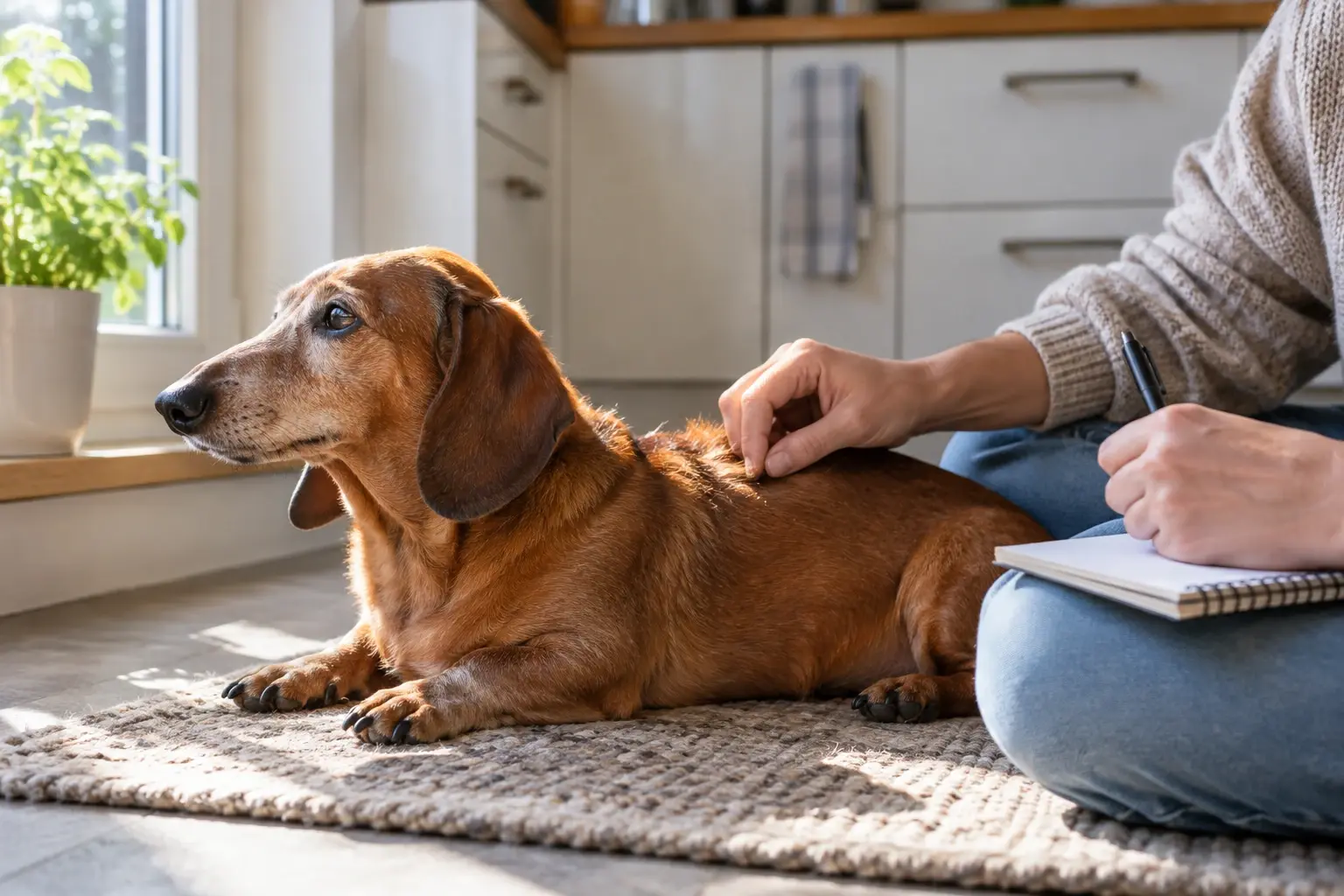
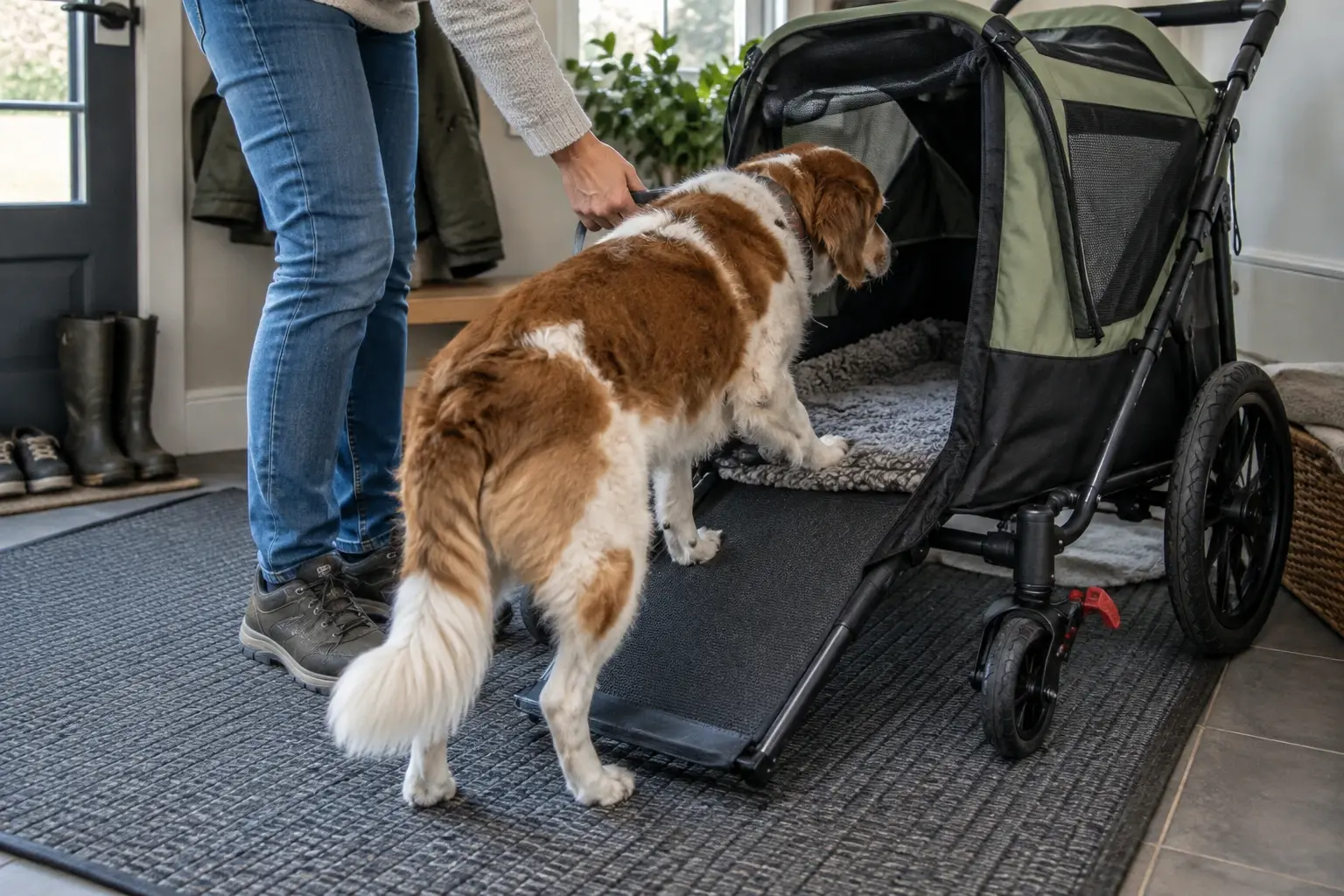
Hard, smooth pads lose grip, and an older dog with stiff joints and slippery pads is more likely to slip and fall. Along with pad care:
- Put rugs or runners on smooth floors.
- Keep nails short. See how to trim a senior dog's nails.
- Consider grip socks or boots indoors for dogs that slip.
- Support stiff joints. See old dog weak back legs and creating a senior-dog-friendly home.
FAQ
Is paw hyperkeratosis painful for dogs?
Mild thickening usually is not. It becomes painful when the pads crack, bleed or become infected, or when thick horn-like growths press when walking. Limping or constant licking are signs of pain.
Can hyperkeratosis in dogs be cured?
Age-related and inherited forms can be managed but not cured; regular softening and trimming keep them under control. When it is caused by another disease, such as pemphigus or a liver disorder, treating that disease is the priority.
Can I cut off my dog's paw hyperkeratosis?
Only the loose, overgrown edges, and carefully, after soaking. Cutting into living pad tissue hurts and bleeds. If the growths are thick or you are unsure, ask your vet or groomer.
What can I put on my dog's paws for hyperkeratosis?
A paw balm made for dogs, ideally one your vet recommends. Softening (keratolytic) and moisturizing ingredients such as salicylic acid, urea, lactic acid and propylene glycol are commonly used. Avoid human creams your dog could lick off.
Why does my old dog have crusty paws?
Often it is age-related hyperkeratosis. But crusty pads in an older dog that is also losing weight, eating less or seems unwell can be a sign of hepatocutaneous syndrome, a serious liver-related condition, so see your vet.
References
- Merck Veterinary Manual. Moriello KA. Hyperplastic and Seborrheic Syndromes in Animals. Last updated 2025.
- Merck Veterinary Manual. Heinrich NA. Nasal Dermatoses of Dogs. Last updated 2024.
- Dr枚gem眉ller M, et al. A mutation in the FAM83G gene in dogs with hereditary footpad hyperkeratosis (HFH). PLOS Genetics. 2014. PMID: 24832243
- DeMarle KB, et al. Approach to the diagnosis of hepatocutaneous syndrome in dogs: a retrospective study and literature review. Journal of the American Animal Hospital Association. 2021. PMID: 33260213
- Hall-Fonte DL, et al. Hepatocutaneous syndrome in Shih Tzus: 31 cases (1996-2014). Journal of the American Veterinary Medical Association. 2016. PMID: 27003022
- Areco WVC, et al. Macroscopic distribution, histopathology and viral antigen expression in dogs with canine distemper virus-induced hyperkeratosis in nasodigital and other regions. Journal of Comparative Pathology. 2022. PMID: 35487623
- Ihrke PJ, et al. Pemphigus foliaceus of the footpads in three dogs. Journal of the American Veterinary Medical Association. 1985. PMID: 3965427
For individual health questions, your veterinarian remains the best partner.