TL;DR
Grooming a senior dog requires shorter sessions, gentler handling, and attention to joint comfort. Focus on one task at a time, use a non-slip surface, and watch for signs your dog needs a break. If you notice new lumps, skin changes, or pain during grooming, schedule a veterinary check before continuing.
Why grooming gets harder as dogs age
Your dog may no longer hold still easily during nail trims or stand comfortably in the tub. Arthritis, hearing loss, vision changes, and skin that bruises or tears more easily all change how grooming feels. A routine that worked two years ago may now cause stress or discomfort.
Senior dogs also develop lumps, warts, and thinner skin that bleeds more readily when nicked. Coats may become drier, greasier, or matted in spots they can no longer reach. These changes mean grooming sessions need to be shorter, more frequent, and adapted to what your dog can tolerate right now.
Set up a safer grooming space
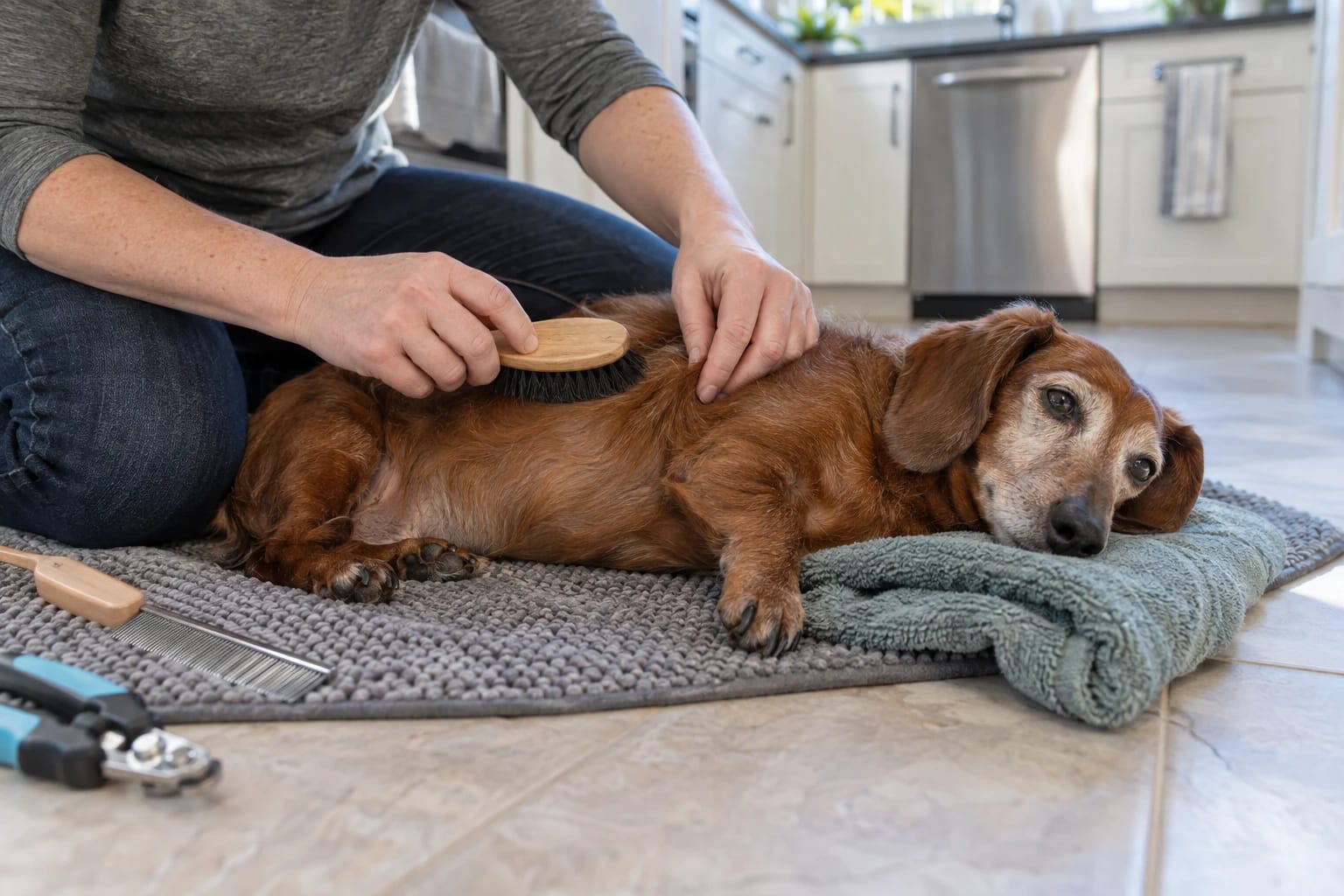
Use a non-slip mat on any surface where your dog stands. A yoga mat, rubber bath mat, or textured towel gives better footing than tile, tub surfaces, or grooming tables. If your dog struggles to stand, groom them lying on their side on a soft surface and work one section at a time.
Keep the area well-lit so you can see skin changes, mats, or small cuts. Position yourself at your dog's level instead of bending over them, which can feel threatening to a dog with declining vision or hearing. For dogs who tire quickly, place a folded towel or cushion under their chest or hips for support.
Have supplies within reach before you start: brush, comb, nail clippers or grinder, styptic powder, towels, and any grooming wipes or coat spray you use. Searching for tools mid-session extends the time your dog has to hold still.
Brush and check the coat in short sessions
Brush your senior dog two or three times a week rather than waiting for a full grooming day. Shorter, frequent sessions are easier on stiff joints and let you spot skin changes early. Use a soft-bristle brush or a slicker brush with rounded tips; metal combs and firm bristles can scratch fragile skin.
Work in sections: brush the back one day, the legs and belly the next. Pay attention to areas that mat easily, like behind the ears, under the collar, the armpits, and the base of the tail. If you find a mat, hold the skin taut below it and work the mat out gently with your fingers or a dematting tool. Cutting mats out with scissors risks nicking thin skin.
While brushing, run your hands over your dog's body to check for new lumps, scabs, hot spots, or tender areas. Note any changes and mention them at the next veterinary visit. If a lump suddenly grows, feels warm, or your dog reacts with pain, call your veterinarian before the next scheduled grooming.
Trim nails without forcing uncomfortable positions
Nail trimming becomes harder when a dog cannot easily lift a paw or hold it steady. Instead of asking your dog to stand, let them lie on their side. Gently extend one leg at a time, trim one or two nails, then give them a break. Spread the task across two or three days if your dog finds it stressful.
Use a bright light or headlamp so you can see the quick in light-colored nails. For dark nails, trim small amounts and stop when you see a grey or pink center dot. Keep styptic powder or cornstarch nearby in case you clip too short. A nail grinder can be gentler than clippers for dogs with thick or brittle nails, but introduce the sound and vibration gradually if your dog is not used to it.
If your dog's nails are overgrown or dewclaws have curled into the pad, ask your veterinarian or a professional groomer to trim them first. Overgrown nails change how a dog walks and can make joint discomfort worse.
How often should you bathe a senior dog?
Bathe your senior dog only when they are visibly dirty, smell strong, or have a skin condition that requires medicated baths. Frequent bathing strips natural oils from aging skin, which can lead to dryness, flaking, or irritation. For most senior dogs, a bath every two to three months is enough unless your veterinarian recommends otherwise.
Use lukewarm water and a mild, moisturizing dog shampoo. Avoid human shampoos, which have the wrong pH for canine skin. Wet your dog slowly, starting at the back legs and working toward the head, so they have time to adjust to the temperature. Support their body if they seem unsteady, and let them sit or lie down in the tub if standing is too tiring.
Rinse thoroughly. Leftover shampoo can cause itching or hot spots. After the bath, towel-dry your dog gently and keep them in a warm, draft-free room until their coat is mostly dry. A low-heat blow dryer held at a distance can speed drying, but introduce it gradually if your dog is noise-sensitive.
Watch for signs your dog needs a break
Grooming should not be a battle. If your dog pulls away, trembles, pants heavily, or tries to leave, stop and give them a rest. Calming routines that work in other contexts, like a quiet room and predictable timing, can also make grooming less stressful.
Some dogs tolerate grooming better after a short walk or gentle play session that tires them slightly. Others do best first thing in the morning when they are calm. Try different times of day and track which works best for your dog.
If your dog becomes aggressive, snaps, or shows signs of pain during grooming, do not continue. Schedule a veterinary appointment to rule out injuries, skin infections, or joint pain that makes handling uncomfortable.
FAQ
Can I groom my senior dog if they have arthritis? Yes, but adjust your approach. Let your dog lie down, work in short sessions, and avoid forcing joints into uncomfortable positions. If grooming seems painful, ask your veterinarian whether the pain is managed well enough or if the grooming plan needs to change.
What if my dog has a growth or wart I keep brushing against? Avoid brushing directly over lumps, warts, or scabs. Work around them and have your veterinarian examine any new or changing growths. Some can bleed easily or become irritated with repeated contact.
How do I groom a dog who cannot stand for long? Groom them lying on a padded surface. Work one side, let them rest, then gently turn them to reach the other side. Break each task into smaller steps spread across multiple days.
Should I take my senior dog to a professional groomer? A professional groomer can handle tasks like nail trimming, sanitary trims, and full baths if home grooming becomes too difficult or stressful. Let the groomer know about any mobility limits, skin issues, or areas that are sensitive, and ask them to work in shorter sessions if needed.
For individual health questions, your veterinarian remains the best partner.