TL;DR
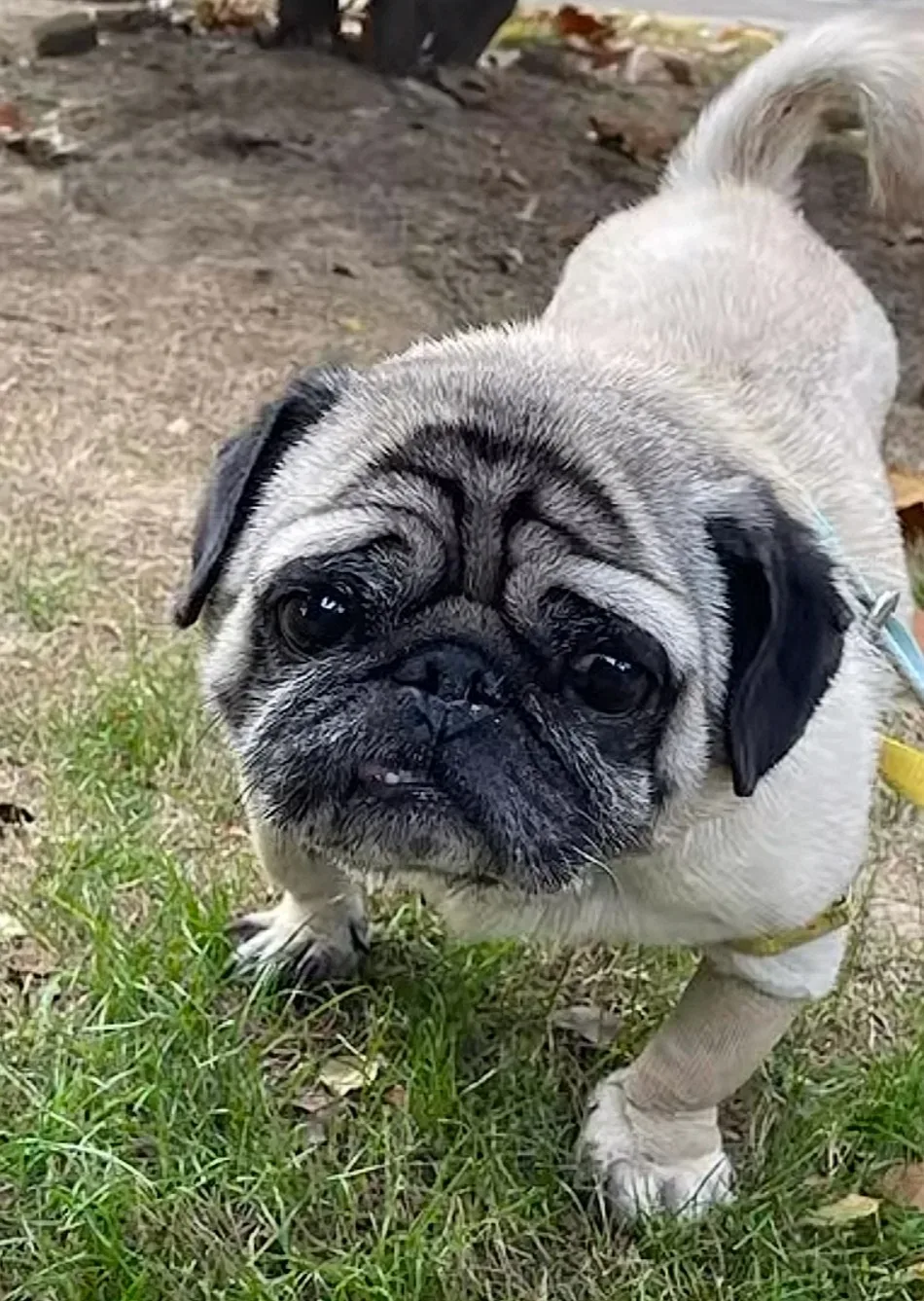
Dog wound care comes down to four things: stop the bleeding, clean gently with warm water or saline, stop the licking, and watch for infection. Do not use hydrogen peroxide, rubbing alcohol or tea tree oil on a wound, and do not put creams on a surgical incision unless your vet tells you to. Licking is the big risk: in a 2025 study of 208 dogs after keyhole spay surgery, 7.2% developed a wound infection, and not using the cone properly was one of the two risk factors identified. After skin tumor surgery the infection rate was 9.6%. Stitches usually come out after 10 to 14 days. Our founder Morty's 9-year-old pug had a 5 cm tumor removed from its leg; it was walking the next day, and with routine cleaning and dressing the wound healed quickly.
Which wounds need a vet?
Many small scrapes heal at home, but see a vet the same day for:
- Bites from another animal, even if they look small. Teeth push bacteria deep under the skin.
- Puncture wounds, such as from a stick or nail.
- Cuts that gape open or go through the full thickness of the skin.
- Bleeding that does not stop after several minutes of firm pressure.
- Wounds on the eye, chest, belly, joints or paw pads.
- Any wound in a dog that seems unwell: lethargic, not eating, feverish or in a lot of pain.
Wounds closed by a vet heal fastest when they are treated within a few hours. A contaminated wound that is left more than a few hours usually has to be cleaned out under sedation and may be left open to heal.
First aid for a bleeding wound
- Keep calm and keep your dog still. A hurt dog may bite, even its owner.
- Press firmly on the wound with clean gauze or a clean, dry cloth for several minutes without lifting to check.
- Add more layers on top if blood soaks through, rather than removing the first one.
- Raise the area above the heart if you can, for a leg wound.
- Wrap it loosely to hold the dressing in place, and get to a vet.
Do not apply creams, powders or disinfectants to a fresh, bleeding wound on the way to the vet.
How to clean a minor wound at home
For small, shallow scrapes and cuts:
- Trim the fur around the wound with blunt scissors, or clippers, so hair does not stick in it.
- Rinse gently with plenty of warm tap water or sterile saline. Flushing is more important than scrubbing.
- Pat dry with clean gauze.
- Repeat once or twice a day, or as your vet advises.
What not to use: hydrogen peroxide, rubbing alcohol, soaps and shampoos, herbal preparations and tea tree oil. VCA Animal Hospitals warns that some of these delay healing and some are toxic if licked off. Your vet may give you a dilute antiseptic such as chlorhexidine or iodine for a specific wound.
Stop the licking
A dog's tongue is the most common reason a wound fails to heal. Licking pulls out stitches, keeps the wound wet and adds bacteria.
- Use the cone (Elizabethan collar) properly and continuously until your vet says the wound has healed. In the 2025 spay study of 208 dogs, improper use of the cone was one of the two factors linked to infection, along with surgery lasting more than 46 minutes.
- Recovery suits or a fitted T-shirt can cover wounds on the body.
- A loose bandage, sock or stockinette can protect a leg wound for short periods, if your vet agrees.
- Supervise when the cone is off for eating.
Caring for stitches after surgery
Day by day
| Time after surgery | What to do | What is normal |
|---|---|---|
| Days 1 to 3 | Rest, short lead walks for toileting only, cone on, check the wound twice a day | Slight redness, mild swelling, a little clear or pink seepage, bruising in pale-skinned dogs |
| Days 4 to 7 | Keep activity restricted, no bathing or swimming, cone on | Redness fading, edges sealed together |
| Days 10 to 14 | Return for a check and stitch or staple removal if needed | A clean, closed line; dissolving stitches under the skin do not need removal |
| After stitches out | Build activity back up over a few days, longer after major surgery | A pink or pale scar |
VCA advises restricting activity for 7 to 14 days and keeping the incision dry, and notes that non-dissolving stitches and staples are usually removed 10 to 14 days after surgery.
Signs of a wound infection
Call your vet if you see:
- Spreading redness, heat or swelling after the first few days
- Pus, or yellow, green or foul-smelling discharge
- Bleeding that keeps seeping for more than a day
- The wound opening up, or stitches missing
- Your dog licking or chewing the wound despite the cone
- Fever, lethargy or loss of appetite
Infections are more common than many owners expect. Beyond the 7.2% after keyhole spay surgery, a 2025 study of 104 dogs having skin tumors removed found infection in 9.6%, and in 11.5% after mast cell tumor removal, above the 4% to 5% usually expected for clean surgery.
Morty's pug: recovery after leg surgery
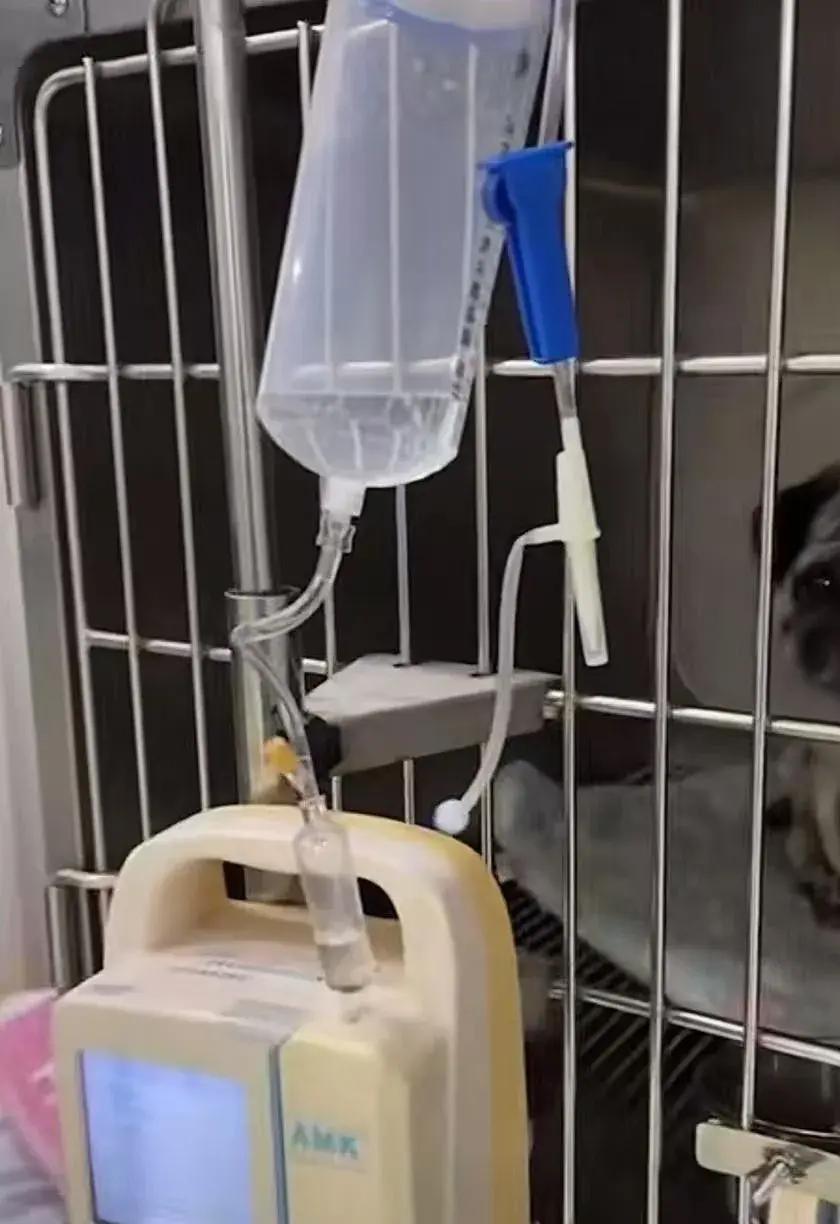
When one of our founder Morty's pugs was a little over 9 years old, a tumor about 5 cm across grew on its right leg, and the vet removed it surgically. After the operation, the pug went on an IV drip, and the next day it was already walking normally, just slowly, so Morty took it outside for some fresh air.
About three days after surgery, the wound was cleaned and dressed with antiseptic and ointment as part of routine care. It healed quickly.
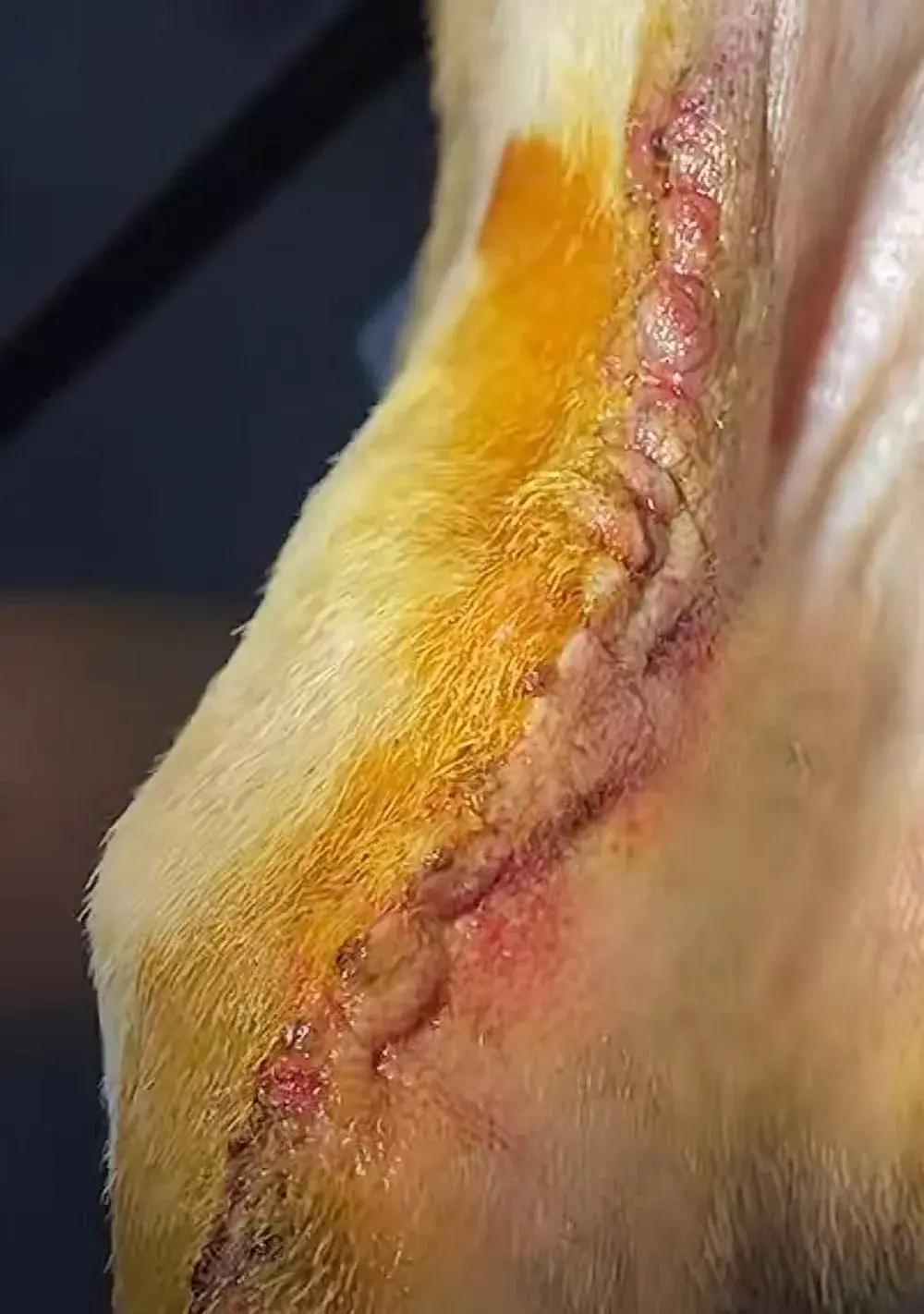
Two lessons from his experience: gentle, short walks soon after surgery are fine if your vet agrees, and the cleaning and dressing should be done the way your vet shows you. See skin tags and lumps on dogs for the full story of the tumor.
Helping an older dog heal
Older dogs often have other conditions or medicines that slow healing, so be extra careful:
- Tell your vet about every medicine and supplement, including steroids and fish oil, before surgery.
- Keep your dog lean, warm and comfortable, with soft, clean bedding changed often.
- Make sure it eats well. Healing needs protein and calories; ask your vet if appetite drops.
- Use non-slip floors and a support harness so a stiff older dog does not slip and strain the wound. See support harnesses for senior dogs.
- Keep stitches dry if your dog has incontinence, with pads and gentle cleaning around, not on, the wound. See dog diapers for senior dogs.
FAQ
How can I treat my dog's open wound at home?
For a small, shallow wound: trim the fur, flush it with warm water or saline, pat it dry, stop your dog licking it, and check it twice a day. See a vet for bites, punctures, deep or gaping cuts, or any sign of infection.
Should I bandage my dog's wound or leave it open?
Many small wounds heal well uncovered if your dog cannot lick them. Bandages can help on legs and paws but must be kept clean and dry and changed as your vet shows you; a bandage that is too tight or wet can cause serious problems.
Can you put Neosporin on a dog's wound?
Only if your vet says so. Many vets prefer not to put creams on wounds, and especially not on surgical incisions, and dogs tend to lick ointments off. Ask your vet what to use for your dog's wound.
How long does a dog's incision take to heal?
The skin usually seals within about two weeks. Non-dissolving stitches and staples are usually removed 10 to 14 days after surgery, and activity should stay restricted for 7 to 14 days, longer after major surgery.
Can I use hydrogen peroxide on my dog's wound?
No. Hydrogen peroxide and rubbing alcohol damage healing tissue and can delay healing. Warm water or saline is safer for cleaning.
Can I leave my dog alone after surgery?
For short periods once it is settled, if it is wearing its cone and confined to a safe, quiet space where it cannot jump or lick the wound. For the first day or two, it is best to have someone checking regularly.
References
- Fuertes-Recuero M, et al. Incidence and risk factors of surgical site infection in dogs undergoing laparoscopy ovariectomy: multicentric prospective cohort study. The Veterinary Journal. 2025. PMID: 41253276
- Stutz ZJ, et al. Impact of perioperative prophylactic antibiotics on surgical site infection rate after skin tumor removals in dogs: a prospective observational study. Tier盲rztliche Praxis Ausgabe K: Kleintiere/Heimtiere. 2025. PMID: 41092910
- VCA Animal Hospitals. Care of Surgical Incisions in Dogs.
- VCA Animal Hospitals. Care of Open Wounds in Dogs.
For individual health questions, your veterinarian remains the best partner.