TL;DR
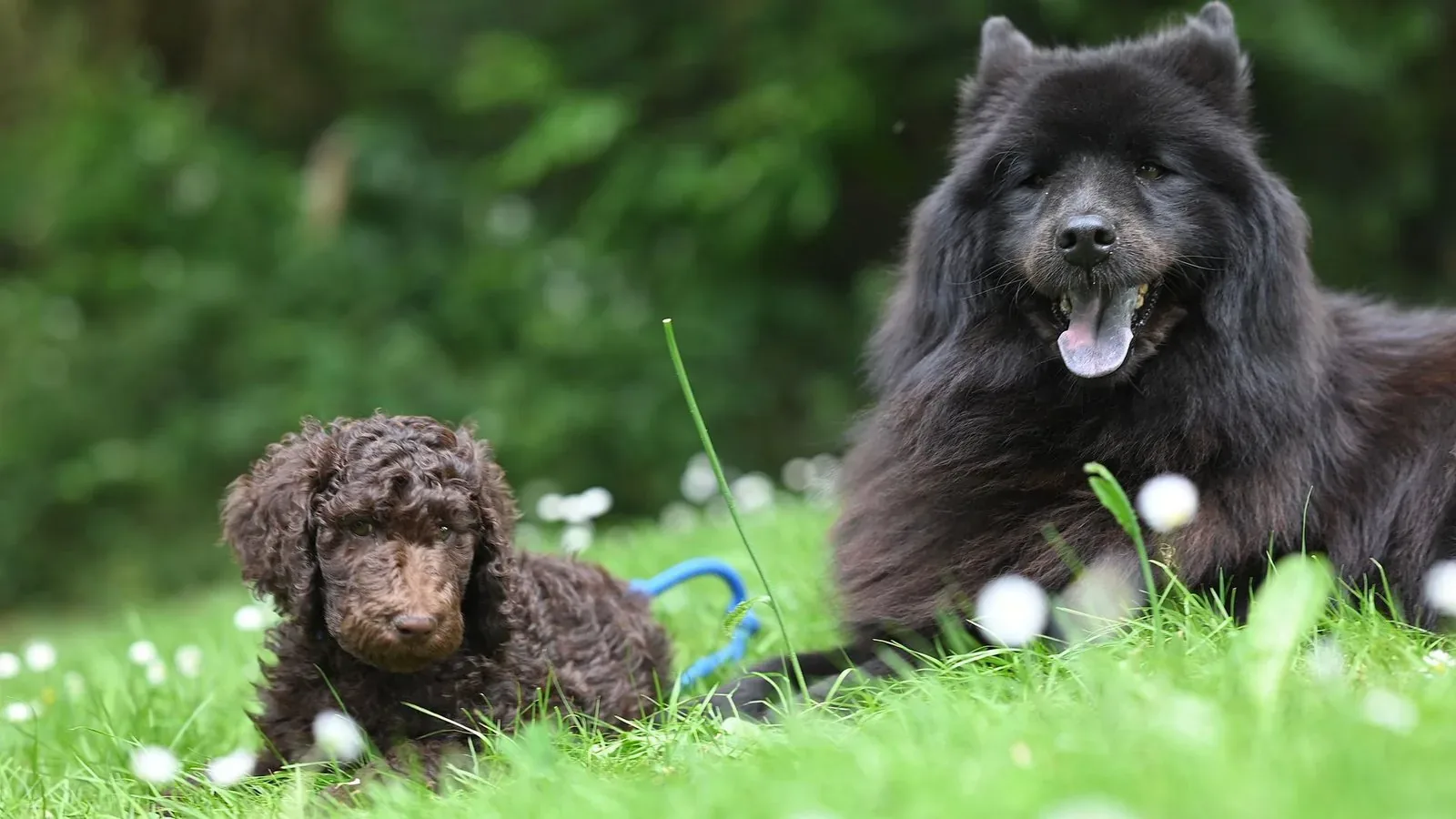
To introduce a puppy to an older dog, meet first on neutral ground, keep the first weeks short and supervised, give the senior dog puppy-free space and its own resources, and step in before the puppy pesters it to the point of growling. A second dog can be good for a senior's wellbeing: in the Dog Aging Project's survey of 21,410 dogs, social support, including living with other dogs, was linked to better health, and that effect was 5 times stronger than the effect of financial factors. But it does not always go smoothly: in a UK owner survey, 8% of owners reported aggression between dogs in the same household, and the risk rose with the dog's age and with harsh training methods. An older dog with arthritis, poor sight or hearing, or cognitive decline has less patience and more to lose, so set things up to protect it.
Is a puppy right for your older dog?
A puppy can bring an older dog more play, movement and company. It can also bring pain and stress to a dog that is stiff, deaf or confused. Think about your senior first:
| Likely to cope well | Think carefully |
|---|---|
| Sociable with other dogs, playful | Grumpy or fearful with other dogs |
| Mobile and comfortable | Arthritis, back pain or weak back legs |
| Good sight and hearing | Poor vision, deafness |
| Mentally sharp | Signs of cognitive decline, anxiety at night |
| Settled routine, not recently ill | Recent illness, surgery or a big change |
If your senior has joint pain, get it under control before the puppy arrives. See signs of arthritis in dogs and is my dog in pain.
Before the puppy comes home
- Set up separate spaces. A baby gate or pen lets them see and smell each other without contact.
- Give the older dog a retreat: its bed in a quiet room or a raised spot the puppy cannot reach.
- Duplicate everything: separate food bowls, water, beds and toys, so there is nothing to guard.
- Keep the senior's routine: same walk times, meals and sleeping place.
- Bring home a blanket with the puppy's smell for the older dog to sniff first.
The first meeting
- Meet on neutral ground if you can, such as a quiet garden that is not the senior's usual space, with both dogs on loose leads and two people.
- Let them sniff briefly, a few seconds, then call them apart and reward both.
- Watch body language: loose bodies and play bows are good; a stiff body, hard stare, lifted lip or the senior moving away mean "enough".
- Walk them in the same direction side by side for a few minutes. Walking together is easier than face-to-face greetings.
- Go home separately, with the older dog entering first.
The first weeks at home
- Short, supervised sessions, building up over days.
- Separate them when you cannot watch, using gates or a crate for the puppy.
- Feed apart. Food is the commonest flashpoint.
- Give the senior one-on-one time every day: a walk, a cuddle, its usual games.
- Tire the puppy out separately so it is calmer around the older dog.
- Let the senior set limits, then help. A short growl or air-snap telling the puppy to back off is normal dog communication. Do not punish it. If the puppy keeps going, calmly remove the puppy.
Why not to punish growling
In the UK survey, aggression toward other dogs in the household was linked to owners using punishment-based training methods, along with the dog getting older. Punishing a senior for warning a puppy teaches it to skip the warning, not to like the puppy. Reward calm behavior in both dogs instead.
Protecting an older dog's body
- Stop rough play with a frail or arthritic dog. Puppies jump on backs and hang off necks.
- Watch for limping or stiffness after play sessions.
- Non-slip rugs help both dogs, especially on smooth floors.
- Keep the senior lean and moving. See obesity in dogs and senior dog exercise.
- Support the joints. In controlled trials of arthritic dogs, green-lipped mussel raised the share of dogs improving from 41% on placebo to 91% after 56 days. Our New Zealand Green-Lipped Mussel Powder is 100% Perna canaliculus, stirred into food. See green-lipped mussel for dogs: the evidence.
Signs your older dog is not coping
- Hiding, avoiding rooms, or not coming to greet you.
- Eating less or guarding food.
- Sleeping badly, pacing at night.
- New accidents indoors.
- Growling or snapping more often, or a fight.
- Weight loss. See older dog losing weight.
If you see these, give the senior more separation and talk to your vet or a qualified behaviorist. Some changes, especially in very old dogs, may be signs of pain or cognitive decline that were there before the puppy. See cognitive changes in senior dogs.
How long does it take?
Most pairs settle within weeks to a few months, but it varies a great deal. Go at the older dog's pace. If things are getting worse rather than better after the first few weeks, get help early.
FAQ
How do I introduce a puppy to an older dog?
Meet on neutral ground with both dogs on leads, keep the first meetings short, walk them together, and at home use gates, separate resources and supervised sessions.
Is it good to get a puppy for an older dog?
It can be. In a study of over 21,000 dogs, living with other dogs was linked to better health. But a senior in pain, with poor senses or cognitive decline may find a puppy stressful, so judge your own dog.
Is it normal for my older dog to growl at the new puppy?
Yes. Short growls or air-snaps that make the puppy back off are normal limit-setting. Do not punish them; step in if the puppy keeps pestering.
Should my older dog and puppy eat together?
No. Feed them apart, at least at first, to prevent guarding and fights.
What if my older dog hates the new puppy?
Give more separation, more one-on-one time and slower introductions, rule out pain with your vet, and ask a qualified behaviorist for help if it does not improve.
References
- McCoy BM, et al. Social determinants of health and disease in companion dogs: a cohort study from the Dog Aging Project. Evolution, Medicine, and Public Health. 2023. PMID: 37388194
- Casey RA, et al. Inter-dog aggression in a UK owner survey: prevalence, co-occurrence in different contexts and risk factors. Veterinary Record. 2013. PMID: 23193037
For individual health questions, your veterinarian remains the best partner.