
We sell this powder. It was not the product tested in the studies discussed here.
TL;DR
Back legs that shake or tremble when an older dog stands are most often a sign of pain (usually arthritis) or weakness from muscle loss, but they can also signal spinal or nerve disease such as disc disease, lumbosacral disease or degenerative myelopathy. Book a vet visit; go the same day if your dog suddenly cannot stand, wobbles or drags its feet, cries out, or loses bladder or bowel control. Do not test your dog by making it stand up repeatedly. Instead, film it getting up and walking naturally and show the video to your vet.
Go to the vet now if
- Your dog suddenly cannot stand or walk
- The back legs wobble, cross, or the feet drag or knuckle over
- Your dog cries out when moving, or when you touch its back
- Your dog loses bladder or bowel control
VCA Animal Hospitals notes that some dogs with a ruptured spinal disc go from walking to total paralysis in under an hour, and that dogs with paralysis and loss of feeling should ideally have surgery within the first 24 hours.
Common causes
Pain, especially arthritis
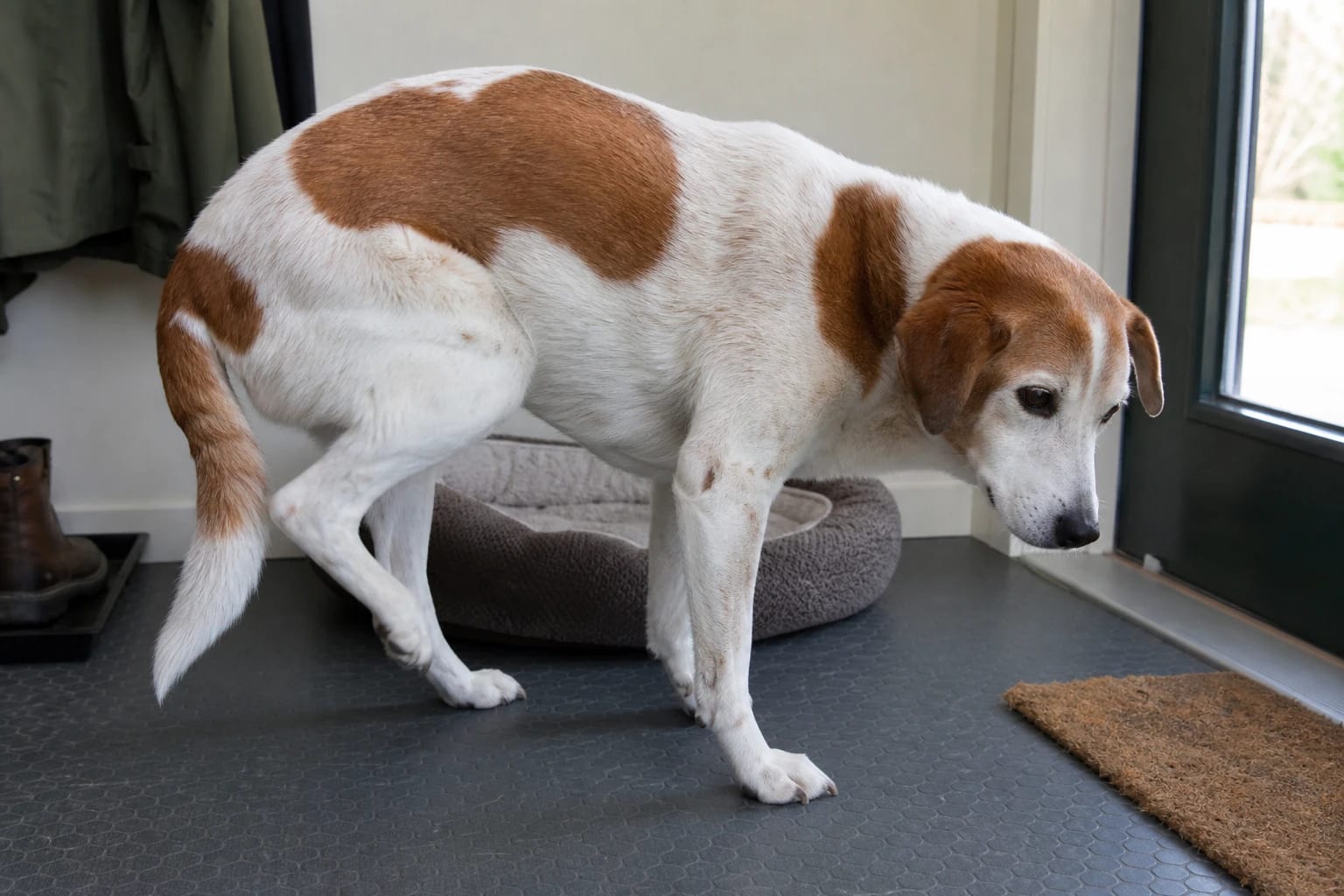
VCA lists trembling in the legs, particularly the rear legs, among the signs of pain in dogs. Other signs of joint pain include being slow to get up, reluctance to use stairs or jump, groaning when lying down or standing, standing with the front legs tucked back to take weight off the hips, and pulling up with the front legs instead of pushing with the back legs.
Arthritis is the most common chronic disease in dogs, according to VCA. The 2023 AAHA senior care guidelines note that owners often see chronic pain as normal aging. If the shaking is worst after rest and your dog is slow to stand, ask your vet about arthritis. See senior dog sudden stiffness.
Weakness from muscle loss
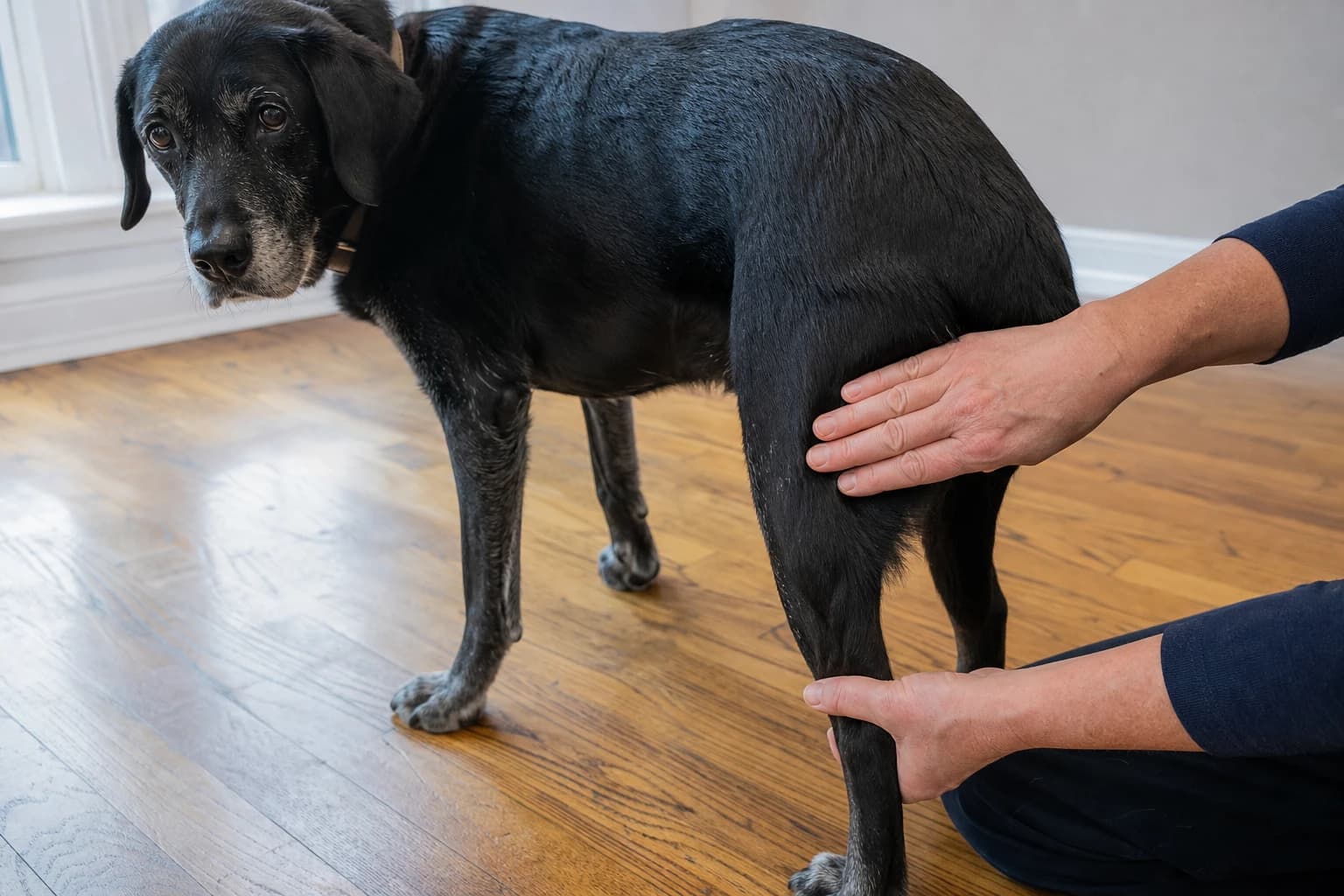
Muscles hold a dog up. Older dogs often lose muscle, a process called sarcopenia, and muscle loss from illness is called cachexia. A veterinary review notes both are common in older dogs. The WSAVA muscle condition score helps your vet judge whether the back and hind legs have lost muscle. See dog back legs getting skinny.
Spinal disease
- Disc disease: a degenerated disc can rupture and press on the spinal cord, causing back pain, wobbly walking or paralysis. VCA notes that most affected dogs are three to seven years old, and that high-risk breeds include Dachshunds, Beagles, Cocker Spaniels and French Bulldogs.
- Lumbosacral disease: narrowing of the spinal canal in the lower back, most often in middle-aged to older large dogs such as German Shepherds. VCA describes affected dogs as slow to rise, sore when the lower back is pressed, and sometimes weak in the hind legs from muscle loss.
Degenerative myelopathy
A slowly progressive disease of the spinal cord. VCA describes early signs as the back paws knuckling over, especially when turning, and the hindquarters swaying when the dog stands still. It occurs mostly in dogs aged 4 to 14 years, including German Shepherds, Boxers, Corgis, Golden Retrievers and many other breeds. VCA notes that affected dogs usually do not seem to be in pain, just weak, and that early signs resemble arthritis, which makes diagnosis difficult. There is no cure, but in a 2006 study, among 22 dogs whose physiotherapy was compared, those given intensive physiotherapy kept walking longer and survived longer than those given moderate or no physiotherapy.
Orthostatic tremor (rare)
A rare movement disorder in which the legs tremble rapidly only while standing. In a study of 60 dogs, 85% of those with the primary form had hind-leg tremors while standing, and 45% had difficulty getting up or sitting down. Most were young giant-breed dogs, but in Retrievers it began after age 3.5. Medication improved signs in most dogs, though usually not completely.
What to record for your vet
These are practical steps, not tests to perform on your dog:
- Film it. The AAHA pain management guidelines note that owner videos help vets assess pain that is intermittent or happens at home. Film your dog getting up after a rest, standing still, walking and turning on a non-slippery floor, without asking it to do anything extra.
- Note the pattern. When does the shaking happen: after rest, after a walk, all the time, only on slippery floors? Is it one leg or both?
- Note other changes: appetite, weight, toileting, stairs, sleep and mood.
Making standing easier while you wait
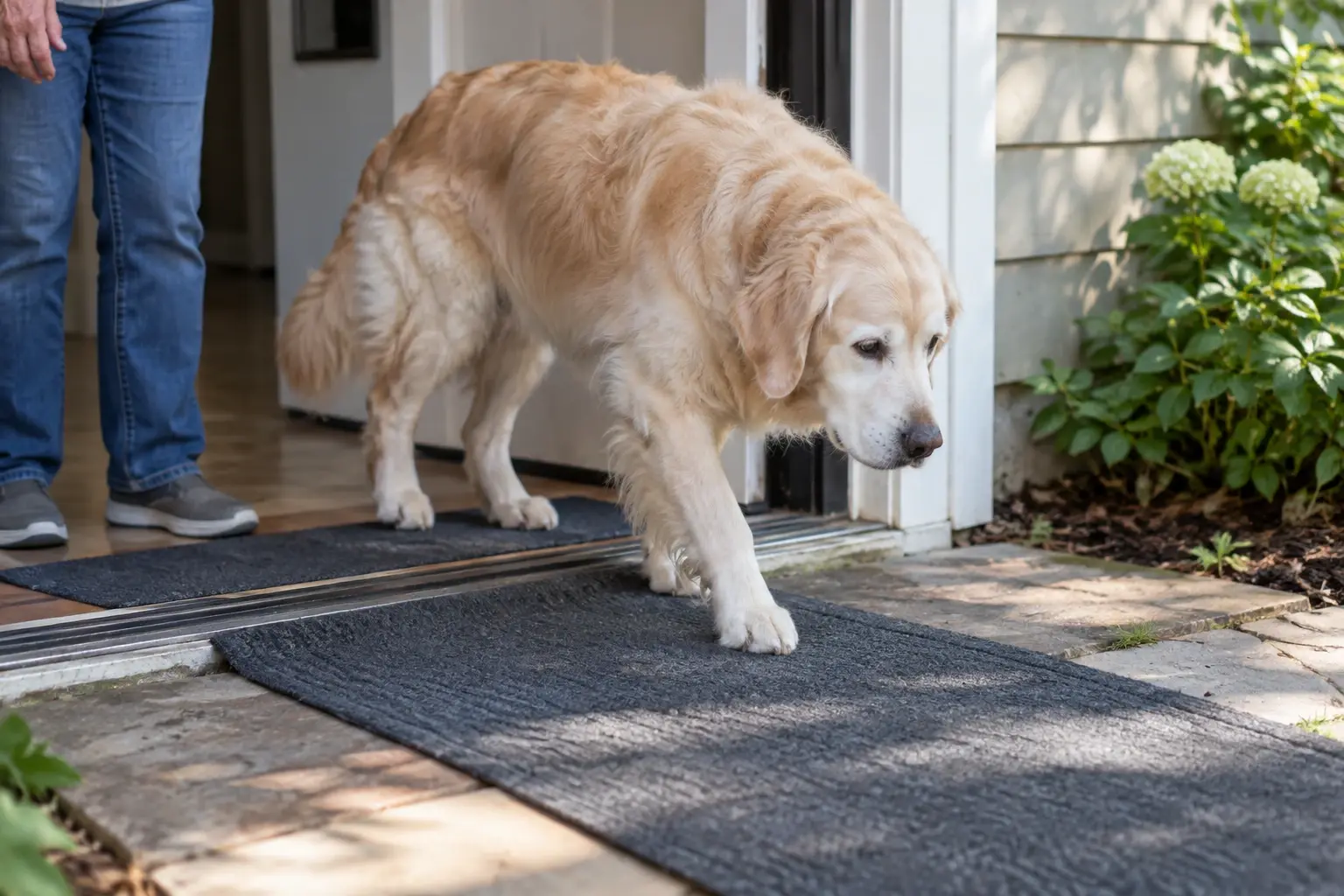
- Improve traction. VCA recommends non-slip rugs or yoga mats on hard floors and keeping nails short; most dogs need nails trimmed at least monthly.
- Limit stairs and jumping. Use baby gates and ramps.
- Support the hind end. A sling or support harness can help with stairs and toileting. See support harnesses for senior dogs.
- Keep walks short and steady until your vet has examined your dog.
- Do not give human pain relievers. VCA warns never to give dogs medication meant for people unless prescribed.
After the diagnosis
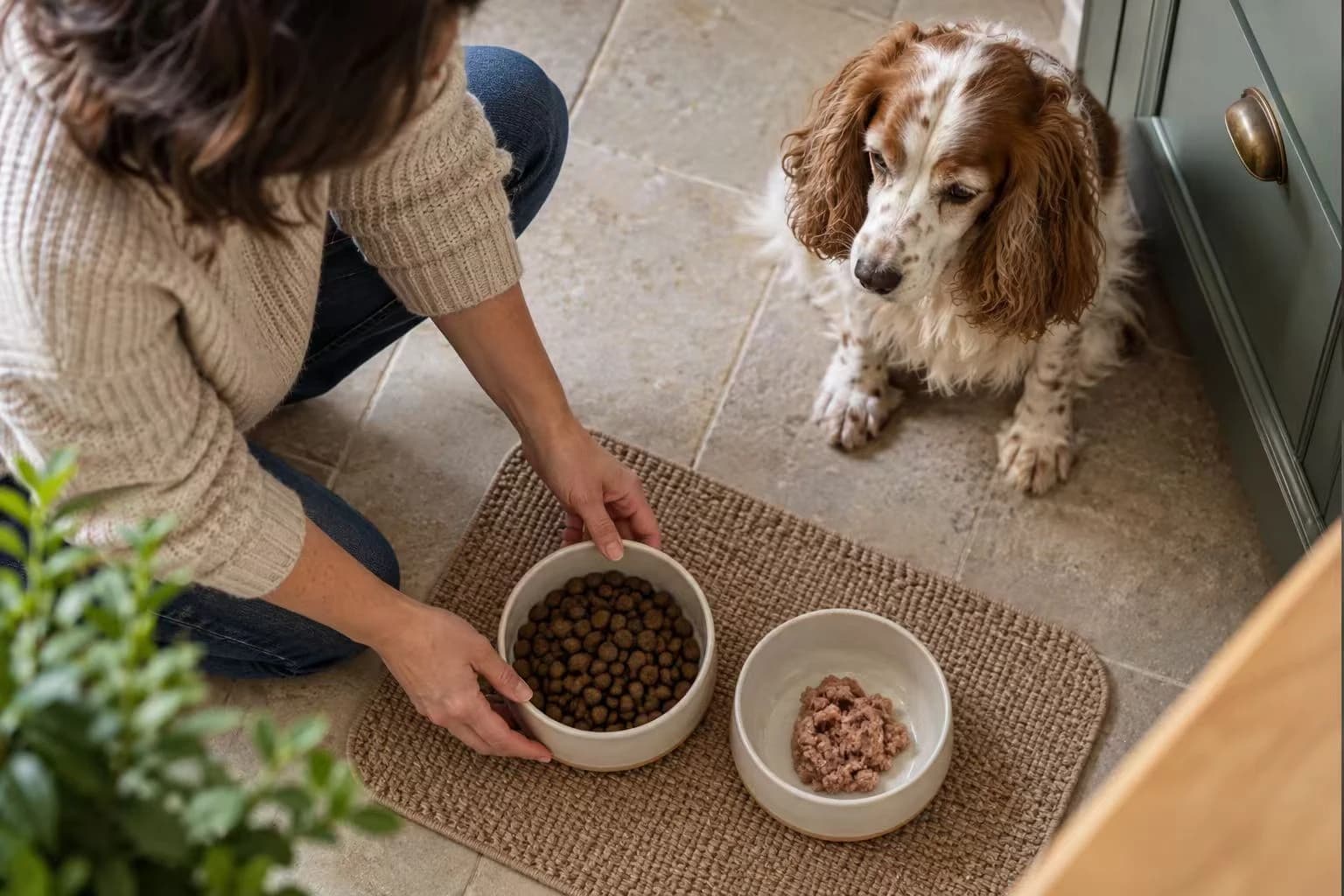
Treatment depends on the cause. Arthritis pain often responds well to weight control, controlled exercise and pain medication. Muscle loss responds to enough dietary protein and targeted exercise; see senior dog food high in protein. The 2023 AAHA senior care guidelines note that senior dogs with chronic musculoskeletal disease may benefit from physical rehabilitation for pain, mobility and balance.
FAQ
Why do my old dog's back legs shake when standing?
The most common reasons are pain from arthritis and weakness from muscle loss. Spinal problems and degenerative myelopathy are less common but important to rule out.
Is back leg shaking in an old dog an emergency?
Not usually, if it is mild and your dog walks normally. It is an emergency if your dog suddenly cannot stand, wobbles or drags its feet, cries out, or loses bladder or bowel control.
Can tiredness make my dog's back legs shake?
Possibly, but repeated shaking deserves a vet check, because pain, weakness and nerve problems can look alike at home.
Will supplements stop the shaking?
Not on their own. Find the cause first. Joint supplements and muscle-support products are add-ons to treatment, not substitutes. See the best joint supplements for senior dogs.
References
- VCA Animal Hospitals. How Do I Know If My Dog Is in Pain?, Degenerative Joint Disease in Dogs, Degenerative Disc Disease in Dogs, Lumbosacral Syndrome in Dogs, Degenerative Myelopathy in Dogs, Creating a Comfortable Home for Your Mobility Compromised Dog.
- Kathmann I, et al. Daily controlled physiotherapy increases survival time in dogs with suspected degenerative myelopathy20[927:dcpist]2.0.co;2). J Vet Intern Med. 2006. PMID: 16955818
- Liatis T, et al. Primary orthostatic tremor and orthostatic tremor-plus in dogs: 60 cases (2003-2020). J Vet Intern Med. 2022. PMID: 34897811
- Freeman LM. Cachexia and sarcopenia: emerging syndromes of importance in dogs and cats. J Vet Intern Med. 2012. PMID: 22111652
- World Small Animal Veterinary Association. Muscle Condition Score chart for dogs.
- American Animal Hospital Association. 2023 Senior Care Guidelines: pain management, 2022 Pain Management Guidelines: chronic pain assessment in dogs.
For individual health questions, your veterinarian remains the best partner.