
We sell this powder. It was not the product tested in the studies discussed here.
TL;DR
Bad breath in dogs usually comes from bacteria living in plaque on the teeth and under the gums, so the home remedy that works best is the one that removes plaque: brushing every day with a dog toothpaste. Dental chews, water additives and food toppers that carry the Veterinary Oral Health Council (VOHC) seal are the next best option. Kitchen remedies such as coconut oil, parsley, apple cider vinegar and baking soda have not been tested in controlled studies in dogs. If the smell is strong, sudden, or comes with red gums, brown tartar or eating changes, home care is not enough and your dog needs a vet exam.
Why your dog's breath smells
The smell comes mostly from volatile sulfur compounds, gases that oral bacteria produce as they break down proteins. Those bacteria live in plaque, the soft film that builds up on teeth every day. VCA Animal Hospitals calls periodontal disease the number one cause of bad breath in dogs, and Cornell University's veterinary college reports that 80% to 90% of dogs over 3 years old have some component of periodontal disease.
This is why masking the smell rarely lasts. A remedy that only covers the odor leaves the plaque, and the plaque keeps feeding the bacteria.
Home remedies that have evidence
1. Brushing with a dog toothpaste
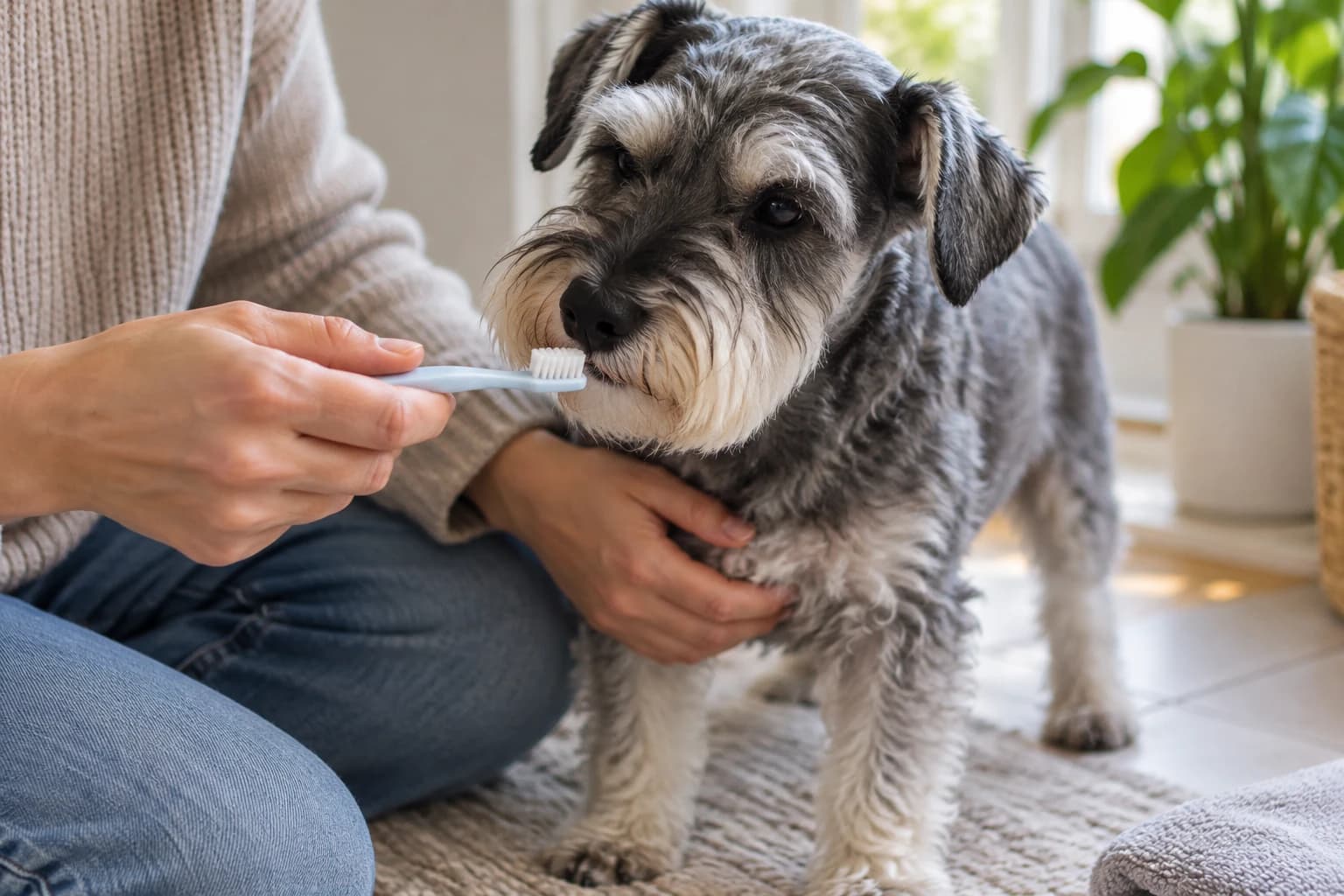
Brushing is the only home method that physically removes plaque from the tooth surface, and it beats every alternative in head-to-head studies:
- In a 2015 controlled study in Beagles, brushing daily or every other day kept plaque, tartar and gum inflammation significantly lower than brushing weekly or every other week.
- In a 2019 trial in a general practice, daily brushing was more than three times as effective at controlling plaque as a daily dental chew or a dental diet.
VCA's guidance is to brush at least once a day with a pet-safe toothpaste, spending about 30 seconds on each side of the mouth, and at least 3 times a week as a minimum. Cornell suggests building up slowly: start by touching the lips, then the gums, then letting your dog taste the paste on your finger, and only then add the brush, rewarding each step.
One caution from the AAHA dental guidelines: brushing teeth with gums that are already inflamed causes pain, and the dog learns to resist. If the gums are red or bleed easily, get them checked and treated first. For paste choices, see our guide to the best dog toothpaste for bad breath.
2. VOHC-accepted dental chews
Chewing scrapes plaque off the back teeth, and some chews add an anti-tartar ingredient. The VOHC seal means the product reduced plaque or tartar in controlled trials. Pick the size the package lists for your dog's weight; VCA warns that a chew your dog can swallow with barely any chewing is not working and could be a choking hazard. More in our guide to the best dog chews for bad breath.
3. VOHC-accepted water additives
These work like a mouthwash added to the water bowl. Several are on the VOHC list for plaque or tartar. They have no scrubbing action, so they work best alongside chewing or brushing. See dog water additives for bad breath.
4. A dental diet
Some complete foods use kibble size, texture or a coating to clean the teeth as your dog eats. AAHA notes that only diets accepted by the VOHC have met preset standards for this claim. See dental health dog food.
Kitchen remedies: what we could find
We searched the veterinary literature for controlled studies in dogs testing coconut oil, parsley, apple cider vinegar or baking soda for breath, plaque or gum health, and found none. That does not prove they do nothing, but it does mean any benefit is unmeasured. Herbs such as parsley and mint are often added for smell; we found no studies showing they reduce plaque.
Carrots and other crunchy foods are fine as treats if your vet is happy with them, but they have not been tested as dental cleaners either.
What not to use
- Human toothpaste. Cornell explains that human paste contains detergents and fluoride that people spit out but dogs swallow. VCA adds that it can upset the stomach.
- Anything with xylitol. The FDA warns that xylitol, a sweetener found in some toothpastes, sugar-free gum and mints, can cause a rapid and dangerous drop in blood sugar in dogs. It may also be listed as birch sugar or wood sugar. If your dog eats a product containing it, call your vet, an emergency clinic or an animal poison control center right away.
- Human mouthwash. VCA warns that human mouthwashes are toxic to pets. Use only products made for dogs.
- Bones, antlers, hooves, ice cubes and hard nylon chews. VCA lists these as common causes of broken teeth, and recommends that any chew should bend and give when you press it.
- Scaling by a groomer or "anesthesia-free" cleaning. AAHA says scaling must only be done by trained veterinary staff in an anesthetized animal, and that anesthesia-free scaling is cosmetic and does not improve oral health.
When bad breath means a vet visit
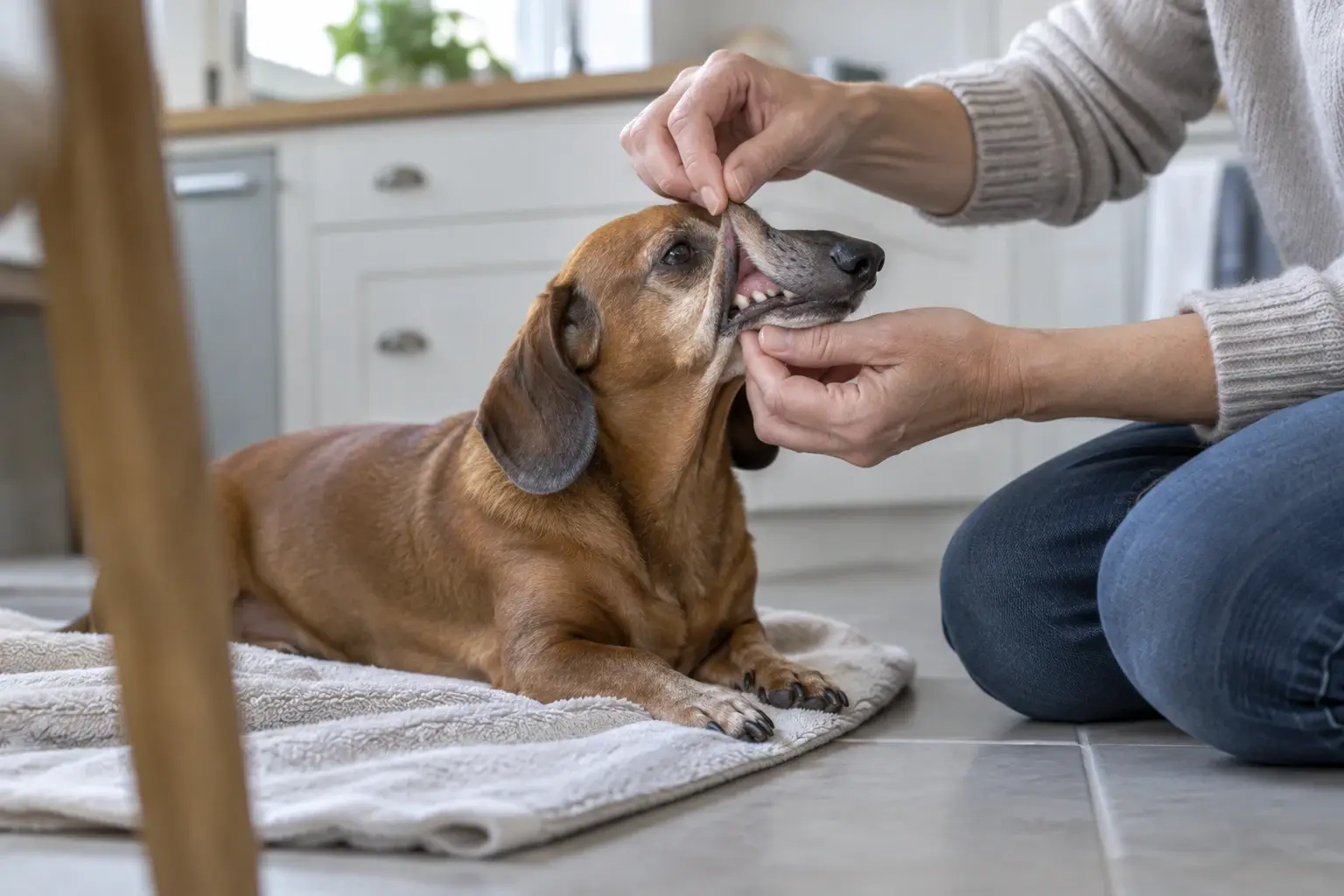
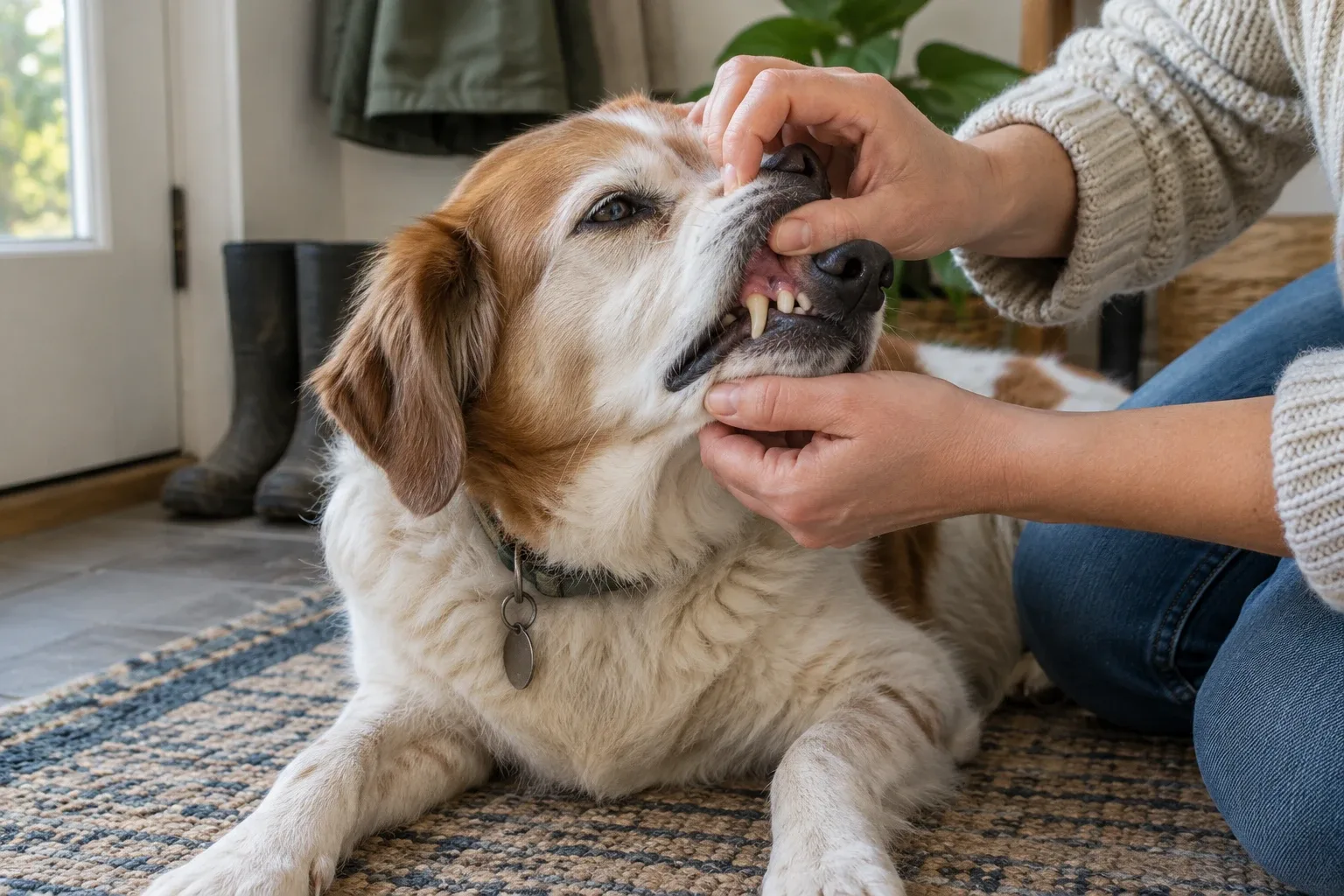
Home remedies cannot remove tartar. Once plaque hardens, VCA notes that it needs professional scaling under general anesthesia. Book an exam if you see:
- Brown or yellow tartar along the gum line
- Red, swollen or bleeding gums
- Dropping food, chewing on one side, or pawing at the mouth
- Drooling, or blood in the saliva
- Loose or broken teeth, or swelling on the face
- Breath that changed suddenly or smells unusual
Bad breath is not always dental. VCA notes that kidney disease can also cause it, and blood and urine tests can rule this out when the mouth looks healthy. Oral tumors can cause bad breath too, usually with drooling, difficulty eating or facial swelling.
FAQ
How fast can I fix my dog's bad breath at home?
If the cause is plaque on otherwise healthy teeth, daily brushing is the fastest route. If there is tartar or gum disease, breath will not stay fresh until a vet cleans the teeth.
Is coconut oil good for dog breath?
We found no controlled studies in dogs. If you want to try it, keep the amount small, count the calories, and do not use it instead of brushing.
Does a dental powder fix bad breath?
Some ingredients have been studied. A 2018 trial found that treats containing the brown seaweed Ascophyllum nodosum lowered breath sulfur compounds compared with placebo in small dogs, starting from freshly cleaned teeth. A powder does not remove existing tartar. Our Daily Dental Cleaning Powder contains this seaweed but has not itself been tested in a trial.
Is bad breath normal in older dogs?
No. AAHA lists bad breath among the signs of untreated dental pain. See why your senior dog's breath smells bad.
References
- Cornell University College of Veterinary Medicine, Riney Canine Health Center. Periodontal disease.
- VCA Animal Hospitals. Causes of bad breath in puppies, Dental Disease in Dogs, Plaque and Tartar Prevention in Dogs, How to choose puppy dental treats, Oral Tumors in Dogs.
- American Animal Hospital Association. 2019 AAHA Dental Care Guidelines for Dogs and Cats.
- U.S. Food and Drug Administration. Paws off xylitol; it's dangerous for dogs.
- Harvey C, Serfilippi L, Barnvos D. Effect of frequency of brushing teeth on plaque and calculus accumulation, and gingivitis in dogs. Journal of Veterinary Dentistry. 2015. PMID: 26197686
- Allan RM, Adams VJ, Johnston NW. Prospective randomised blinded clinical trial assessing effectiveness of three dental plaque control methods in dogs. Journal of Small Animal Practice. 2019. PMID: 30575038
- Sordillo A, Casella L, Turcotte R, Sheth RU. A novel postbiotic reduces canine halitosis. Animals. 2025. PMID: 40509062 (background on how oral bacteria produce volatile sulfur compounds)
- Gawor J, Jank M, Jodkowska K, Klim E, Svensson UK. Effects of edible treats containing Ascophyllum nodosum on the oral health of dogs. Frontiers in Veterinary Science. 2018. PMID: 30109236
- Veterinary Oral Health Council. VOHC Accepted Products for Dogs. List updated August 2026.
For individual health questions, your veterinarian remains the best partner.