In this article
TL;DR
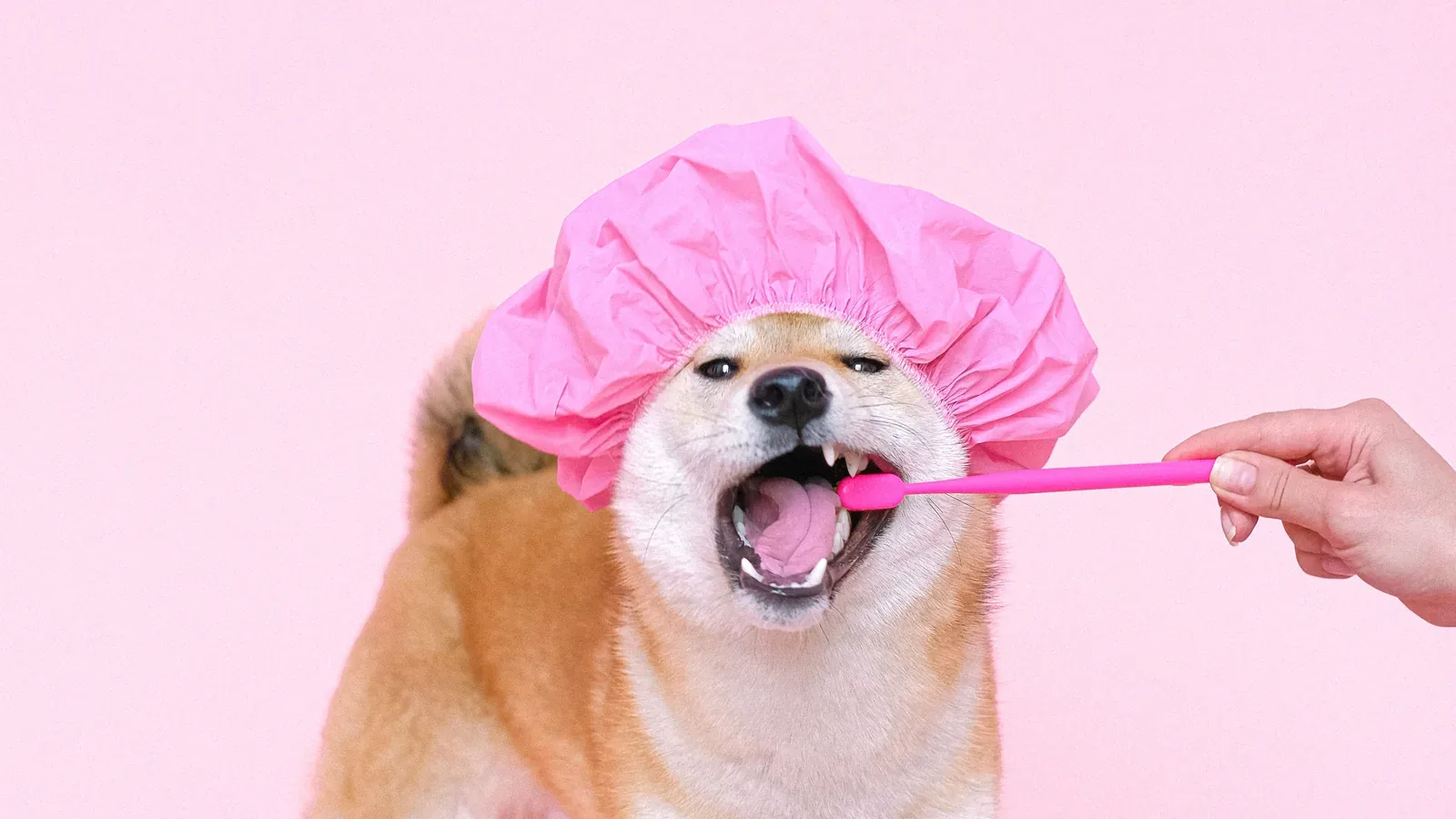
Daily brushing cleans best, and the right daily product covers the days you can't brush. In a 2019 randomized, blinded trial, daily brushing was more than three times as effective at controlling plaque as a daily dental chew or a dental diet, and the chew and the diet performed about the same. Dental powders work chemically instead of by scrubbing: in a 2018 placebo-controlled trial of 60 small dogs over 90 days, a treat containing the brown seaweed Ascophyllum nodosum led to significantly less plaque and tartar and fewer bad-breath compounds. Sodium hexametaphosphate (HMP) cut tartar formation by about 60% to 80% in Beagle studies. The best routine for most dogs: brush when you can, plus one daily product your dog takes without a fight, starting from clean teeth.
Dog teeth cleaning methods compared
| Method | How it cleans | Strongest evidence | Effort | Best for | Downsides |
|---|---|---|---|---|---|
| Toothbrush and dog toothpaste | Scrubs plaque off every surface | More than 3 times as effective as a chew or dental diet (2019) | Daily, 2 minutes | Any dog that accepts handling | Needs training; many dogs resist |
| Dental wipes, finger brush | Wipes plaque off the outer surfaces | Several wipes carry the VOHC seal | Daily | Dogs learning to accept a brush | Misses the back and inner surfaces |
| Dental chews (VOHC-accepted) | Chewing scrapes the back teeth | About equal to a dental diet (2019); a daily chew reduced deposits in dogs with uncleaned teeth (2025) | Daily treat | Dogs that chew slowly and well | Calories; gulpers get little benefit |
| Dental diet (VOHC-accepted) | Kibble texture cleans as the dog eats | About equal to a daily chew (2019) | Every meal | Dogs that can switch food | Some are prescription-only |
| Dental powder | Seaweed and HMP work through saliva | Seaweed: less plaque and tartar in 60 small dogs over 90 days (2018); HMP: about 60% to 80% less tartar in Beagles (1995) | One scoop on food | Dogs that won't be brushed, seniors with sore mouths | Iodine in seaweed; check allergens |
| Water additive | Ingredients in the water bowl | A pomegranate additive reduced plaque and tartar (2023); improved gum health when added to a chew or weekly brushing (2025) | Add to water | Multi-dog homes, dogs that drink well | Some dogs drink less if they dislike the taste |
| Gels and sprays | Applied to teeth and gums | Some carry the VOHC seal | Daily | Dogs that tolerate a finger in the mouth | Still needs mouth handling |
The Veterinary Oral Health Council (VOHC) seal goes to specific products whose makers submitted controlled trial data. Check the exact product on the VOHC list.
What the head-to-head trials found
- 2019, brushing vs chew vs diet: in a randomized, blinded trial, daily brushing controlled plaque more than three times as well as either a daily dental chew or a prescription dental diet.
- 2025, dogs that had not had a cleaning: a daily chew, or brushing every other day, reduced deposits; a water additive improved gum health when combined with a daily chew or weekly brushing. None of the routines brought dogs with heavier deposits back to normal.
- 2018, seaweed: 60 small-breed dogs got a daily treat with or without Ascophyllum nodosum for 90 days after a professional cleaning. The seaweed group built up significantly less plaque and tartar and had lower levels of the sulfur compounds that cause bad breath. The study was funded by the maker of ProDen products.
- 1995, HMP: coating dry food or biscuits with sodium hexametaphosphate reduced tartar formation by about 60% to 80% in 27 Beagles, depending on the regimen.
- 2023, water additive: a pomegranate-based additive reduced plaque and tartar buildup.
More detail: does dental powder work for dogs? and dog water additives for bad breath.
Which method for which dog?
Toy and small breeds
Small dogs need the most help. In a UK study of 22,333 dogs, Toy Poodles had nearly 4 times the odds of periodontal disease of crossbreds, flat-faced breeds had 1.25 times the odds, and the odds rose steadily as body weight fell. Best plan: daily brushing plus a powder, so the dogs at highest risk get both mechanical and daily chemical cleaning.
Dogs that won't let you brush
A dental powder or water additive plus a VOHC chew, and keep working toward brushing in small steps: lips, then gums, then a taste of toothpaste on your finger, then the brush. See how to clean dog teeth without brushing.
Senior dogs with sore mouths or missing teeth
A powder or water additive, which need no chewing. A dog that drops food, chews on one side or paws at its mouth needs a vet exam first. See senior dog dental care.
Right after a professional cleaning
This is the best time to start. Most trials began on freshly cleaned teeth, so a daily product started the same week keeps the result longer.
Power chewers
Use bendable VOHC chews only. VCA lists bones, antlers, hooves, ice cubes and hard nylon as common causes of broken teeth. See broken tooth in dogs.
Dogs on a diet
A powder or water additive adds almost no calories. Count dental chews in the daily allowance.
Dogs with thyroid disease or allergies
Brown seaweed and kelp are naturally rich in iodine, and the 2018 trial excluded dogs with raised thyroid hormone. Ask your vet before any seaweed product if your dog has thyroid disease. Check labels for allergens: some powders contain egg-derived lysozyme.
Dental chews vs dental powder
- How they work: chews scrape the back teeth mechanically; powders work through the saliva after every meal.
- Who they suit: chews suit dogs that chew slowly. Powders suit gulpers, small dogs, seniors and dogs on a diet.
- Together: they do different jobs, so combining them is reasonable. In the 2025 study, adding a second product to a daily chew helped gum health.
Dental powder vs brushing
Brushing wins. A powder is what keeps working on the days you can't brush, and for many owners that is most days. If you brush twice a week and use a powder daily, your dog gets mechanical cleaning and daily chemical help. See how to brush your dog's teeth.
What a vet tells owners
A small-animal vet Morty has known for years, who asked us not to use their name, keeps it simple: for most owners, a dental powder plus dental chews is enough for daily care. Brushing cleans best in trials, but few owners keep it up every day, and a routine you actually follow beats a perfect one you drop. The vet also recommends the first professional cleaning at about 2 years old, then once a year.
What none of them can do
No chew, powder, wipe or additive removes tartar that has already hardened, or reaches disease under the gum line. That needs scaling and polishing by your vet under anesthesia. "Anesthesia-free" cleaning only polishes what you can see. See dog teeth cleaning without anesthesia and how to remove tartar from dog teeth.
FAQ
Are dental chews as good as brushing?
No. In the 2019 trial, daily brushing was more than three times as effective at controlling plaque as a daily dental chew.
Is dental powder better than dental chews?
They work differently. A seaweed powder reduced plaque and tartar in a 90-day trial, and VOHC chews reduce buildup by scraping. Powders suit dogs that gulp chews, small dogs and seniors; many owners use both.
Do I still need to brush if I use dental powder?
Brush when you can. Brushing is the most effective method, and the powder covers the days you don't.
Dental wipes vs toothbrush: which is better?
A toothbrush reaches more surfaces. Wipes are a good first step for dogs that won't accept a brush yet.
Water additive vs dental powder?
Both work chemically. Water additives suit homes with several dogs sharing a bowl; powders give each dog a measured amount with food.
What is the best way to clean a small dog's teeth?
Daily brushing with a small or finger brush, plus a daily dental powder. Small breeds have the highest odds of gum disease.
References
- Allan RM, Adams VJ, Johnston NW. Prospective randomised blinded clinical trial assessing effectiveness of three dental plaque control methods in dogs. Journal of Small Animal Practice. 2019. PMID: 30575038
- Gawor J, Jank M, Harvey CE, Nicolas CS. Effectiveness of dental homecare protocols in unscaled dogs. Journal of Veterinary Dentistry. 2025. PMID: 39587858
- Gawor J, Jank M, Jodkowska K, Klim E, Svensson UK. Effects of edible treats containing Ascophyllum nodosum on the oral health of dogs: a double-blind, randomized, placebo-controlled single-center study. Frontiers in Veterinary Science. 2018. PMID: 30109236
- Stookey GK, Warrick JM, Miller LL. Effect of sodium hexametaphosphate on dental calculus formation in dogs. American Journal of Veterinary Research. 1995. PMID: 7574160
- Gawor JP, Ziemann D, Nicolas CS. A water additive with pomegranate can reduce dental plaque and calculus accumulation in dogs. Frontiers in Veterinary Science. 2023. PMID: 37841470
- O'Neill DG, et al. Epidemiology of periodontal disease in dogs in the UK primary-care veterinary setting. Journal of Small Animal Practice. 2021. PMID: 34374104
- Veterinary Oral Health Council. VOHC Accepted Products for Dogs.
- American Animal Hospital Association. 2019 AAHA Dental Care Guidelines for Dogs and Cats.
- VCA Animal Hospitals. Plaque and Tartar Prevention in Dogs, Dental Disease in Dogs.
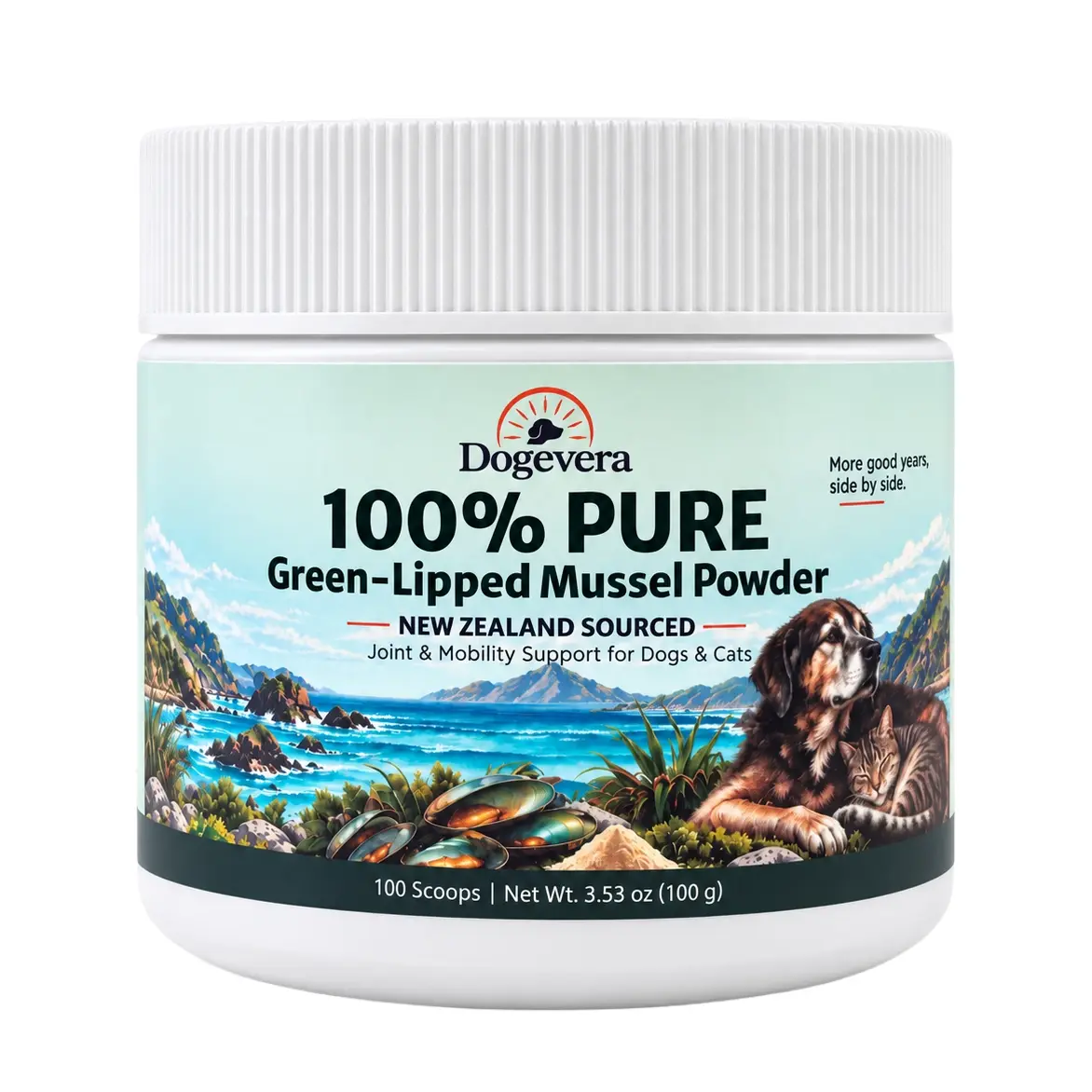
Put this into practice
Daily joint support for senior dogs
100% New Zealand Green-Lipped Mussel Powder for Dogs4.5142 reviews
- 100% New Zealand green-lipped mussel. No fillers, no blends.
- Naturally rich in ETA omega-3s and GAGs for hips and joints
- One scoop on food, dosed by your dog’s weight
Black Friday40% off your first subscription order
Free shipping · 100-day money-back guarantee