TL;DR
Good paw pad care means checking the pads and between the toes every week, rinsing off salt, mud and chemicals after walks, keeping the fur between the pads trimmed, avoiding hot pavement in summer, and getting cuts, swelling or constant licking checked. Pad cuts are common and usually heal well: in a study of 120 footpad injuries, most were cuts on a front paw, 27% had short-term complications, but there was no lasting disability once healed. Deep, full-thickness cuts were 7 times more likely to have major complications than shallow ones and took longer to heal, so those need a vet. Between the toes, yeast and bacteria cause a lot of itchy, red paws, often linked to allergies; a small-animal vet Morty has known for years, who asked us not to use their name, names inflammation between the toes as one of the problems they see constantly in Labradors. Older dogs need extra attention, because thickened, dry pads and long nails make slipping more likely.
Weekly paw check
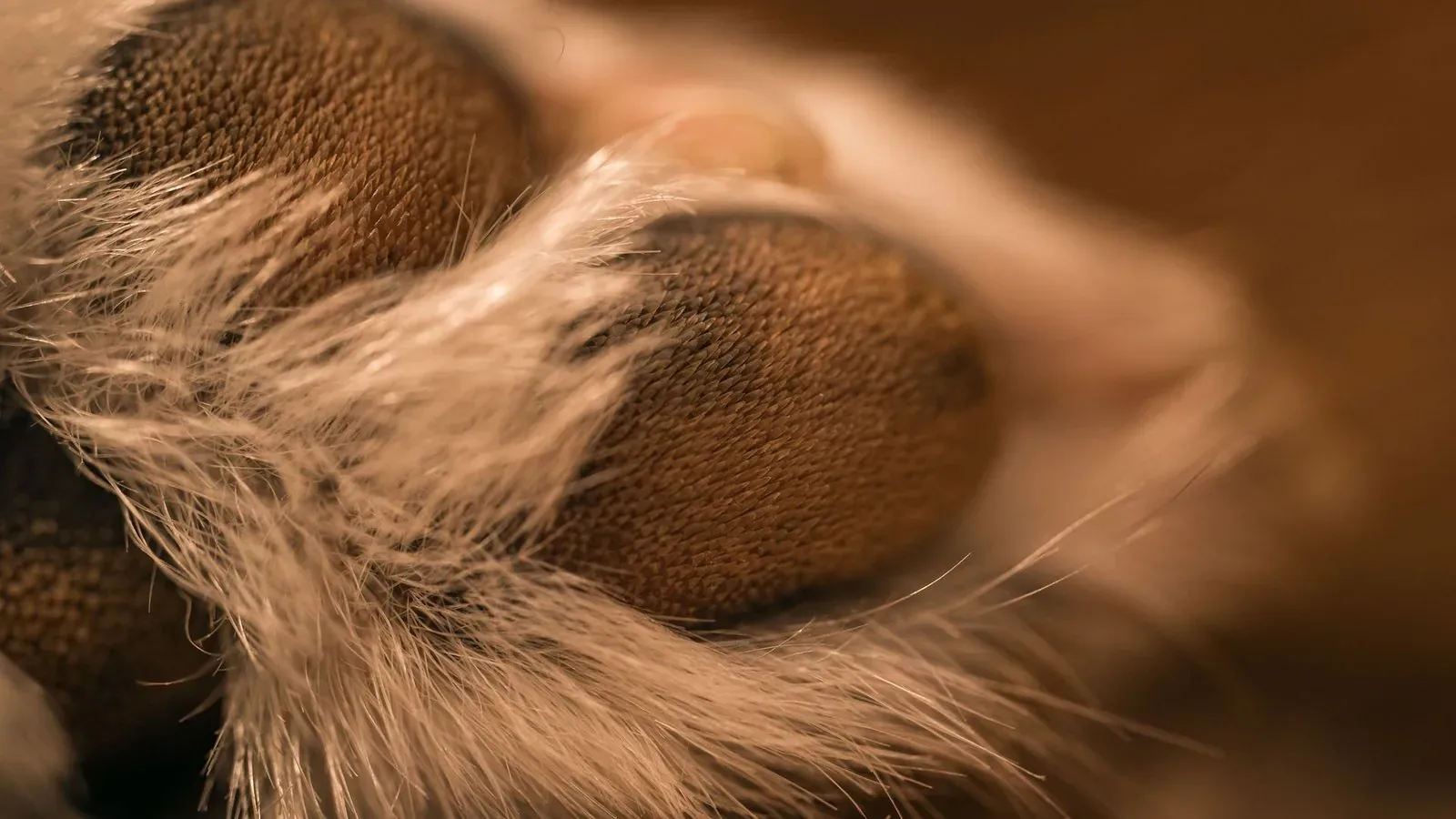
- Look at each pad for cuts, cracks, blisters, peeling or thickened, crusty skin.
- Spread the toes and check for redness, swelling, lumps, grass seeds or brown staining from licking.
- Smell: a musty or yeasty smell suggests yeast.
- Check the nails and dewclaws. See how to trim dog nails.
- Feel for heat or pain when you press gently.
Everyday paw care
After walks
- Rinse or wipe paws after walks in snow, road salt, mud, beaches or chemically treated lawns.
- Dry thoroughly between the toes. Damp fur between the toes encourages yeast.
- Check for grass seeds in summer; they can burrow between the toes and cause painful swellings.
Fur between the pads
Long fur between the pads collects ice balls, mud and burrs and makes floors more slippery. Trim it level with the pads using rounded scissors or clippers.
Dry or cracked pads
- Dog-safe paw balm (wax or plant-oil based) on clean, dry pads, especially in winter.
- Avoid human creams with fragrance or zinc, which dogs lick off.
- Thick, crusty, horn-like pads in older dogs may be hyperkeratosis, which needs regular softening and trimming. See dog paw hyperkeratosis.
Hot and cold weather
- Summer: walk early or late on hot days. If the pavement is too hot to keep the back of your hand on it, it is too hot for paws. Hot surfaces can blister pads.
- Winter: rinse off grit and salt, consider booties for long icy walks, and dry the paws well.
Paw pad injuries
In the 120-dog study:
- 68% of injuries were cuts to a front-leg pad, and the large central pads were most often injured.
- 27% of dogs had short-term complications, such as the wound opening or infection.
- No dog had long-term disability once the pad healed.
- Full-thickness cuts had 7.27 times the odds of major short-term complications and took a median of 12 days longer to heal when complications occurred.
- Shallow, partial-thickness cuts healed well whether bandaged, stitched or left to heal.
What to do for a cut pad
- Rinse with clean water or saline.
- Apply gentle pressure with a clean cloth if it is bleeding.
- Look at the depth: if you can see pink or red tissue below the tough pad surface, or the cut gapes, see a vet.
- Cover it with a clean sock or bandage to get to the vet, not too tight.
- Stop licking with a cone.
See dog wound care for home wound care.
Red, itchy paws and licking between the toes
Constant paw licking is one of the commonest signs of allergy, and licking keeps the skin wet, which lets yeast (Malassezia) and bacteria overgrow. Signs include:
- Red or brown-stained fur between the toes.
- Greasy skin and a musty smell.
- Lumps or boils between the toes (interdigital furuncles or cysts).
Labradors and other allergy-prone breeds are often affected. Treatment usually combines medicated washes or wipes, treating the allergy and sometimes antibiotics or antifungals. See dog itchy skin and Labrador lifespan.
Paws in older dogs
- Non-slip floors: rugs and runners help dogs with weak back legs. Some owners use grippy socks or toe grips.
- Keep nails short so the pads, not the nails, meet the floor.
- Watch for scuffed nails or toes on the back feet, which can mean the dog is dragging its feet from weakness or a spine problem. See senior dog back legs shaking.
- Check lumps on toes and nail beds; some toe tumors occur in older dogs. See signs of cancer in dogs.
- Support joints, since stiff dogs place their feet less evenly. See signs of arthritis in dogs.
FAQ
How do I take care of my dog's paw pads?
Check them weekly, rinse and dry after walks, trim fur between the pads, use a dog-safe balm for dryness, and avoid hot pavement and road salt.
What can I put on my dog's cracked paws?
A dog-safe paw balm on clean, dry pads. Avoid human creams with fragrance or zinc. Deep cracks, bleeding or limping need a vet.
Do cut paw pads heal on their own?
Shallow cuts usually heal well with cleaning and licking prevention. Deep cuts through the pad have a much higher risk of complications and should be seen by a vet.
Why does my dog keep licking its paws?
Most often allergies, with yeast or bacteria between the toes making it worse. Grass seeds, injuries and pain can also cause licking.
Should I trim the fur between my dog's paw pads?
Yes, keep it level with the pads. It reduces slipping, ice balls, mud and burrs.
References
- Hansen LA, et al. Distribution, complications, and outcome of footpad injuries in pet and military working dogs. Journal of the American Animal Hospital Association. 2015. PMID: 26083442
For individual health questions, your veterinarian remains the best partner.