TL;DR
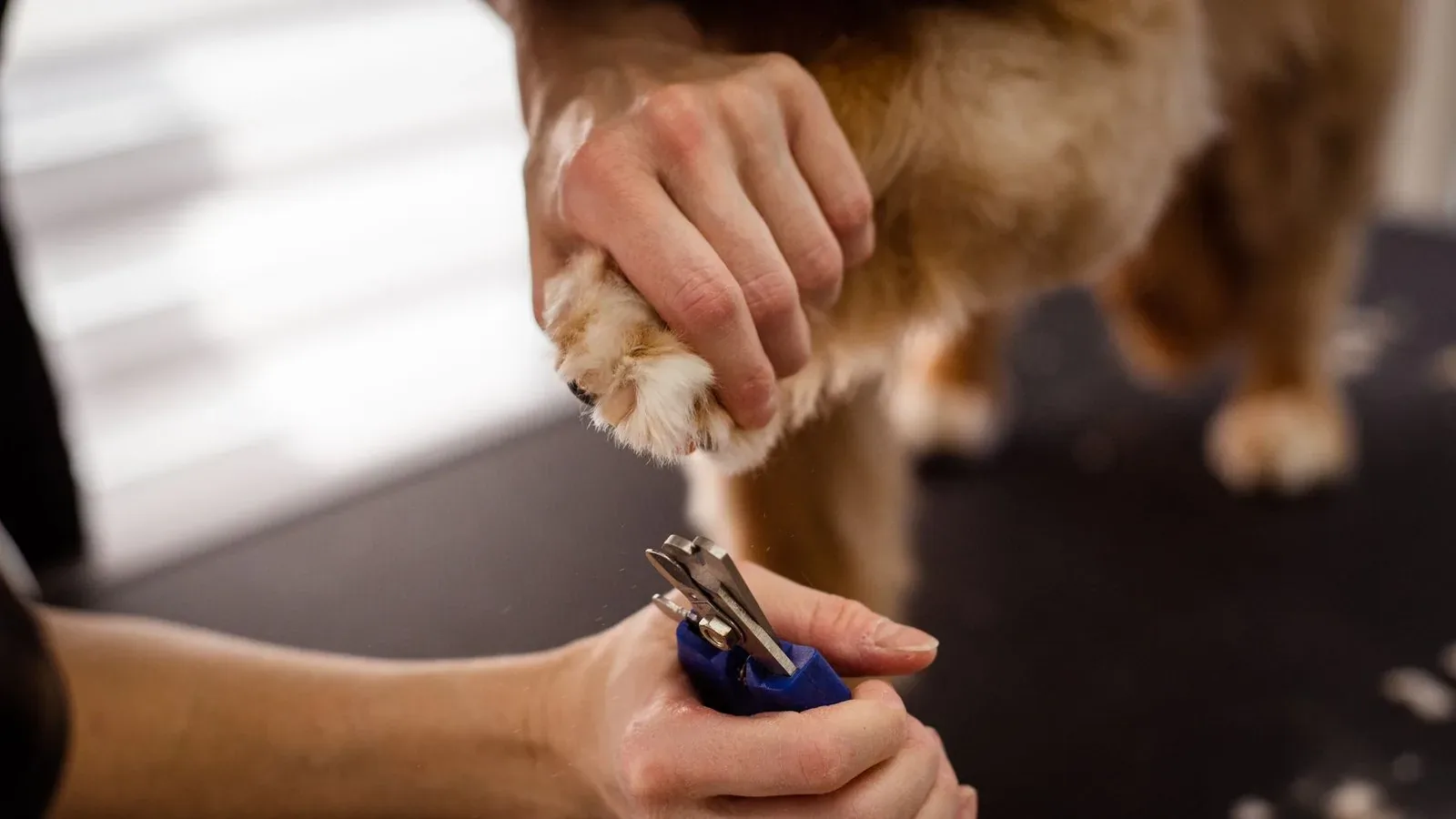
To trim your dog's nails at home, hold the paw firmly, clip small slivers from the tip at a slight angle, stop before the pink quick (or, on black nails, when you see a grey-to-dark dot in the center of the cut surface), and reward after every nail or two. Most dogs need a trim every few weeks; seniors often need it more, because they walk less and wear their nails down less. That last point has new support: a 2026 study using a pressure-sensing treadmill found that trimming nails in healthy dogs did not change stride length, stance time or the forces through the legs, and the authors suggested that long nails are often a consequence of an abnormal or weakened gait rather than its cause. So in an older dog, nails that suddenly need trimming more often can be a clue that it is moving less or differently, which is worth a joint check. If your dog is anxious, go slowly: in a small grooming study, playing classical piano music made dogs noticeably calmer during bathing, drying, clipping and nail trimming.
What you need
- Clippers: scissor-style for medium and large dogs, guillotine or small scissor clippers for small dogs. Keep them sharp.
- Or a grinder (rotary nail file), good for thick or black nails and for smoothing edges.
- Styptic powder or cornstarch to stop bleeding if you nick the quick.
- Treats: small, high-value, lots of them.
- Good light and a non-slip surface.
Step by step
- Get your dog comfortable lying on its side or sitting, on a mat. A second person can hold and feed treats.
- Hold one paw with your thumb on the top of the toe and a finger on the pad, pushing gently to extend the nail.
- Find the quick.
- On white nails, it is the pink area inside. Cut a little in front of it.
- On black nails, take off thin slices. When the cut surface shows a pale ring with a darker dot in the middle, stop: that is the quick approaching.
- Clip at a slight angle, following the natural curve of the nail, not straight across the curve.
- Do not forget the dewclaws on the inside of the leg, which never touch the ground and can curl into the pad.
- Reward after every nail or two, and stop while your dog is still relaxed. You can do one paw a day.
- Smooth rough edges with a file or grinder.
If you cut the quick
It will bleed, and it hurts. Stay calm, press styptic powder or cornstarch onto the nail end for a minute or two, and keep your dog quiet. Bleeding that does not stop after several minutes of steady pressure needs a vet. Finish the other nails another day so your dog does not learn to fear trimming.
How often to trim
- When nails click on hard floors, they are usually long enough to trim.
- Most dogs: every few weeks.
- Senior dogs, small dogs and dogs walked mainly on grass: often more frequently, because their nails wear down less.
Long quick? Trim little and often
If nails have been left long, the quick grows longer too. Trimming a small amount every week or two encourages the quick to recede so the nail can gradually be shortened.
Why nail length matters in older dogs
The 2026 treadmill study measured healthy dogs before and after a trim:
- Stride length, stance time and vertical forces did not change after trimming.
- Front paws were about 2 mm longer before trimming, and the side-to-side movement of pressure under the paw shifted very slightly.
- The authors concluded that in clinically sound dogs, longer claws do not impair overall movement, and that long claws may be the result of an abnormal or inefficient gait that stops the nails wearing down naturally.
Overlong nails still cause problems: they snag and tear, curl into the pads (especially dewclaws), and make slippery floors harder for wobbly seniors. But if your older dog's nails are suddenly growing long, also ask why:
- Less walking from arthritis or pain. See signs of arthritis in dogs.
- Uneven wear, for example one paw worn down more from dragging toes, which can be a nerve or spine sign. See senior dog back legs shaking.
- Weight shifted off a sore leg, which leaves that foot's nails longer.
For the pads themselves, see dog paw hyperkeratosis.
Making nail trims less stressful
- Start with handling only. Touch paws during cuddles, reward, and stop before your dog pulls away.
- Introduce the clipper or grinder without cutting: let your dog sniff it, hear it, get a treat.
- One nail, then a treat. Build up over days.
- Try calm background music. In a pilot study of 15 dogs at a grooming salon, classical piano music led to significantly calmer behavior, especially in males, across bathing, drying, clipping and nail trimming.
- Use a lick mat smeared with a little dog-safe food to keep your dog busy.
- Get help from a groomer or vet nurse if your dog is very frightened, rather than restraining it hard.
For older dogs, keep sessions short, make sure your dog can lie comfortably without stressing sore joints, and choose a supportive mat.
When to see a vet
- A nail that is cracked, split or torn near the base.
- A swollen, red or oozing toe, or a dog licking one toe constantly.
- Nails falling off, soft or misshapen nails, or several nails affected at once.
- A lump at the nail bed, which in older dogs can be a tumor. See signs of cancer in dogs.
FAQ
How do I cut my dog's black nails without hitting the quick?
Take off thin slices and look at the cut surface after each one. When you see a pale ring with a darker dot in the center, stop.
How often should I trim my dog's nails?
Usually every few weeks, or when the nails click on hard floors. Seniors and dogs walked mostly on soft ground often need it more often.
Is a grinder or clipper better?
Both work. Clippers are quicker; grinders are good for black or thick nails and leave smoother edges. Some dogs prefer one over the other.
What happens if I cut the quick?
The nail bleeds and hurts. Press styptic powder or cornstarch on it for a minute or two. If bleeding does not stop after several minutes of pressure, call your vet.
Do long nails cause joint problems in dogs?
A 2026 study found that trimming nails did not change gait in healthy dogs. Long nails can still snag, tear and curl into pads, and in older dogs they can be a sign of moving less because of joint pain.
References
- Häusler K, Söhnel K. Trimming of nails in healthy dogs does not change gait parameters when comparing pre- and post-nail trim. Frontiers in Veterinary Science. 2026. PMID: 41728131
- Krupa W, et al. Classical cuts: a pilot study of classical music's effects on dogs in grooming settings. Animal Cognition. 2025. PMID: 40699467
For individual health questions, your veterinarian remains the best partner.