TL;DR
Spay and neuter recovery usually takes about 10 to 14 days. The keys are strict rest, no licking at the incision (use a cone or recovery suit), keeping the wound dry, giving the pain relief your vet sends home, and checking the incision twice a day. Most dogs recover without problems, but complications are not rare: in a study of 1,880 spays, 7.5% had a complication, mostly bleeding, wound healing problems and, later, urinary incontinence or ovarian remnants, and the risk rose with body weight and longer anesthesia. For neutering, the commonest problems in a review of 437 dogs were swelling, bleeding, pain and self-trauma (licking or chewing the wound). Licking is the problem owners can prevent. Call your vet for gaping, oozing, a swelling that keeps growing, bleeding that does not stop, vomiting, not eating after 24 hours, or a dog that is very flat.
The first 24 hours
- Expect sleepiness and wobbliness as the anesthetic wears off.
- Keep your dog warm and in a quiet room, on a low bed with no stairs.
- Offer a little water once your dog is steady, and a small meal in the evening if your vet says so. Some dogs skip the first meal; most eat by the next day.
- Take it out on a lead to toilet, then straight back in.
- Give pain relief exactly as prescribed. Never give human painkillers. See is my dog in pain.
Spay and neuter aftercare checklist
| Task | How |
|---|---|
| Rest | Lead walks for toileting only; no running, jumping, stairs, sofa, rough play or off-lead time for about 10 to 14 days, or as your vet says |
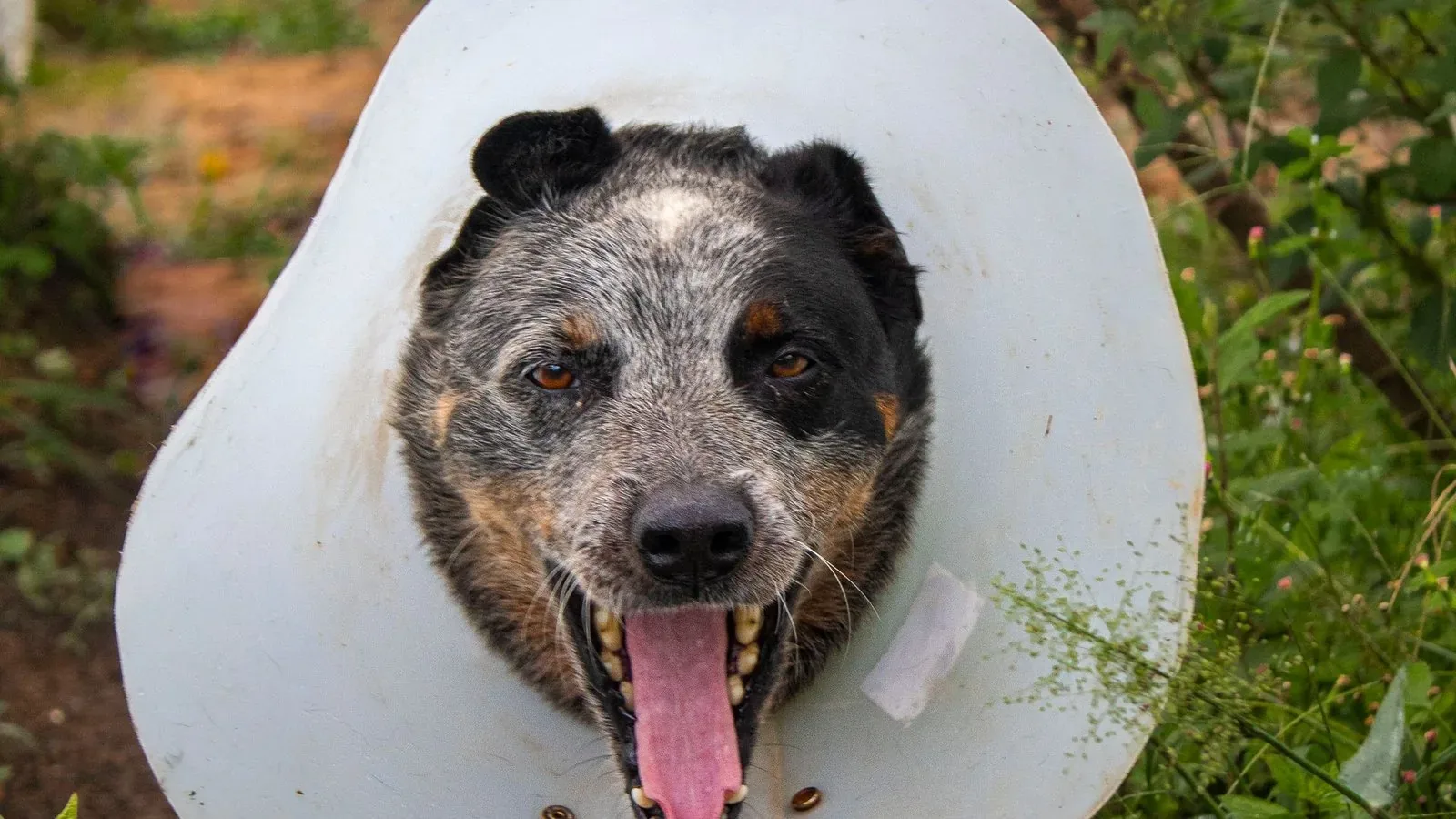
| Stop licking | Cone (Elizabethan collar), soft cone or a fitted recovery suit, worn day and night |
| Keep it dry | No baths, swimming or wet grass until the vet checks the wound |
| Check the incision | Morning and evening, in good light; take a photo to compare |
| Medicines | Pain relief and any antibiotics on schedule |
| Recheck | Attend the wound check or stitch removal appointment |
Cone or recovery suit?
Self-trauma was the one complication linked to the incision approach in the neutering review, which shows how much licking matters. A cone stops licking and chewing everywhere. A recovery suit (a snug bodysuit) covers belly wounds and is often better tolerated for spays, but check it stays clean and does not slip. For a neuter, a suit may not cover the scrotal area, so a cone is usually safer.
What a normal incision looks like
| Normal | Call your vet |
|---|---|
| Edges together, slight pink or red line | Edges gaping or stitches missing |
| Mild bruising around the wound | Bruising that spreads or a dark swelling |
| A small firm ridge under the skin | A soft swelling that grows, feels like fluid, or is hot |
| A little clear or pink seepage on day 1 | Pus, a bad smell, or ongoing blood |
| Gradually less redness | Redness and swelling increasing after day 2 or 3 |
A neutered male often has some scrotal swelling or bruising for a few days. A large, firm, purple scrotum can be bleeding and needs a call.
Signs of a complication
In the 1,880-spay study, complications included:
- Bleeding from the ovarian artery or from the wound.
- Wound healing problems.
- Urinary incontinence later on. See urinary incontinence in older dogs.
- Ovarian remnant syndrome, where a piece of ovary left behind causes heat signs again.
Larger dogs and longer anesthesia raised the risk: the odds of a complication rose about 3% for every extra kilogram of body weight and about 2% for every extra minute under anesthesia.
Go to the vet the same day if your dog:
- Has pale gums, a swollen belly or seems weak. See pale gums in dogs.
- Vomits repeatedly or will not eat after 24 hours.
- Has an incision that opens or something protruding from it.
- Is straining to pee or not peeing.
Days 3 to 14
- Keep the cone on even if the wound looks healed; the itch of healing drives licking.
- Short lead walks can lengthen gradually from about the end of the first week, if the wound is healing well.
- Stop jumping with ramps or by lifting your dog in and out of the car.
- Use food puzzles and sniffing games to tire your dog's brain without running. See senior dog exercise.
Spaying or neutering an older dog
Older dogs are sometimes spayed or neutered later in life, or have similar belly surgery for a tumor or a womb infection. Recovery takes the same steps but often a little longer. Ask for blood tests before anesthesia, IV fluids and good pain relief. See dog teeth cleaning without anesthesia for what the research shows about anesthesia risk with age.
From our founder: when one of Morty's pugs had a 5 cm tumor removed from its leg at 9 years old, it had an IV drip after surgery, was walking again, slowly, the next day, and had its wound cleaned and redressed at about day 3. The wound healed quickly. See dog wound care for how to look after a wound at home.
After recovery: weight and diet
Many dogs need fewer calories after spaying or neutering. Weigh your dog a month after surgery and adjust portions. See obesity in dogs.
FAQ
How long does it take a dog to recover from spaying?
Most dogs feel better in a few days, but the incision needs about 10 to 14 days to heal, so keep rest and the cone on for that time or as your vet advises.
How long should my dog wear a cone after neutering?
Usually until the incision has healed and been checked, around 10 to 14 days. Remove it only when you can watch your dog closely.
When can my dog go for a walk after being spayed?
Short lead walks for toileting straight away; gradually longer lead walks from about a week if healing is good. No running or off-lead play until your vet clears it.
Is it normal for a spay incision to have a lump?
A small, firm ridge under the skin is common as it heals. A soft, growing, hot or oozing swelling needs a vet check.
What are signs of infection after spay or neuter?
Increasing redness, swelling, heat, pus, a bad smell, the wound opening, or a dog that becomes lethargic or stops eating.
References
- Muraro L, White RS. Complications of ovariohysterectomy procedures performed in 1880 dogs. Tierärztliche Praxis Ausgabe K: Kleintiere/Heimtiere. 2014. PMID: 25323211
- Brunn A. Surgical castration in dogs: does the incision approach influence postoperative recovery? Veterinary Evidence. 2022. PMID: 42004675
- Spaar Weiss MR, et al. Risk factors associated with increased mortality within 14 days of general anesthesia in specialty veterinary dentistry and oral surgery practices. Veterinary Anaesthesia and Analgesia. 2025. PMID: 40350333
For individual health questions, your veterinarian remains the best partner.