TL;DR
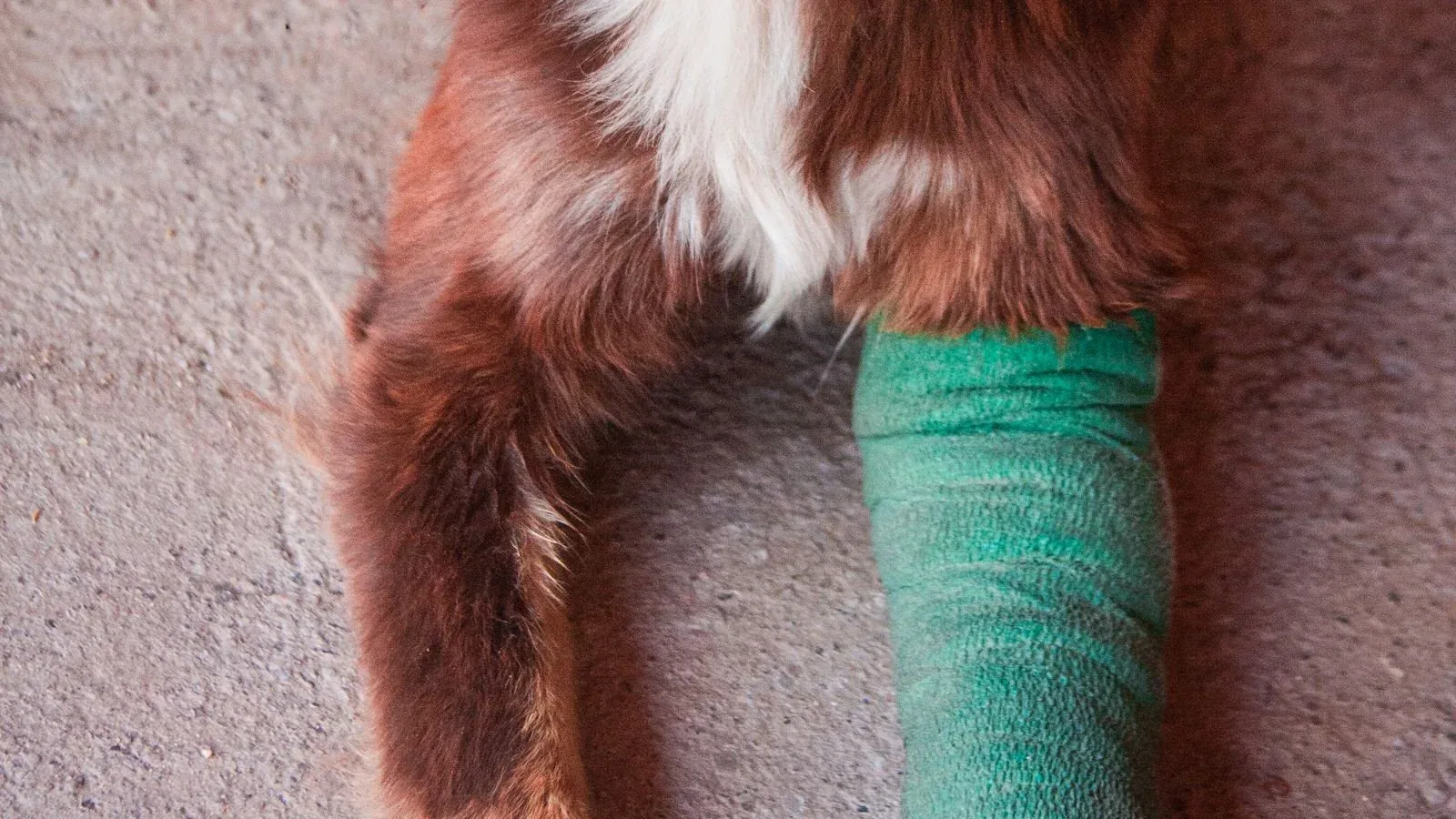
Braces for a dog's back legs (knee or hock braces, called orthoses) can help some dogs, mostly those with a torn cruciate ligament that cannot have surgery, or with a ligament injury in the hock or wrist. They work best when custom-made, fitted properly and combined with exercise. The evidence is mixed but useful. In an owner survey of dogs with cruciate ligament disease, at least 85% of owners in both the custom knee brace group and the surgery (TPLO) group said they would choose the same treatment again, but surgery gave better results, and among brace users 46% reported skin sores, 11% later needed surgery and 7% of dogs never tolerated the brace. For wrist ligament injuries, a brace plus exercises returned 11 of 14 dogs to normal function. A brace supports a joint; it does not rebuild muscle, which older dogs with weak back legs need most. Pair it with daily exercise, weight control and joint support.
What a back-leg brace can and cannot do
| Brace | Used for | What to expect |
|---|---|---|
| Custom knee (stifle) brace | Torn cruciate ligament when surgery is not possible | Reduces some instability; most owners satisfied; skin sores common |
| Off-the-shelf knee wrap or sleeve | Mild support, warmth, reminder to slow down | Little true stabilization |
| Hock (tarsal) brace | Ligament injuries, Achilles injuries, knuckling | Often custom; may be used with physical therapy |
| Wrist (carpal) brace | Front-leg ligament injuries, hyperextension | Good results in a small study of athletic dogs |
| Not a brace: support harness or wheelchair | Weak back legs, nerve problems, severe arthritis | Helps mobility; see below |
Cruciate ligament injuries and knee braces
The cranial cruciate ligament stabilizes the knee and is the most common back-leg ligament to tear in dogs. Surgery is the usual recommendation for medium and large dogs, but not every dog is a good candidate, because of age, other illness or cost.
In the survey comparing custom knee braces (203 owners) with TPLO surgery (76 owners):
- Owners in the surgery group were more likely to report mild or no lameness and to rate the result as good to excellent.
- Still, 85% or more in both groups said they would choose the same treatment again.
- In the brace group, 46% reported skin lesions from the device, 11% said their dog later had surgery, and 7% said their dog never tolerated the brace.
A gait study in healthy dogs found that a knee brace did not fully limit knee motion as intended and changed the motion of the hock and hip as well, a reminder that a brace supports a joint but cannot make it stable again.
Wrist braces
In 14 athletic dogs with wrist ligament instability treated with a brace plus range-of-motion and strengthening exercises, 11 returned to normal function, and 11 of 12 competition dogs returned to agility. Lameness scores fell from a median of 3 out of 5 to 0.
Is a brace right for my senior dog?
A brace may help if your dog has:
- A cruciate ligament tear and surgery is not an option.
- A specific ligament injury at the hock or wrist.
- Knuckling of a back foot from nerve problems, with a vet's guidance.
A brace is less useful for:
- General back-leg weakness from age or muscle loss: a harness, exercise and muscle support help more. See dog back legs getting skinny.
- Hip arthritis or hip dysplasia: the hip cannot be braced well. See hip dysplasia in dogs treatment.
- Dogs that cannot use the leg at all or have nerve damage in both back legs: see dog wheelchair for back legs.
Getting the most from a brace
- Get a proper diagnosis first, with X-rays if needed.
- Choose custom-fitted over generic for real joint instability.
- Build up wearing time slowly, starting with short periods.
- Check the skin every day. Skin sores affected nearly half of brace users in the survey.
- Keep exercising: controlled walks and strengthening, ideally with a rehabilitation vet.
- Recheck the fit as muscle and weight change.
Supporting weak back legs beyond a brace
- Weight control. Extra weight loads every joint. See obesity in dogs.
- A support harness with a back-end handle for stairs and getting up. See support harness for senior dogs.
- Non-slip floors and ramps.
- Strength exercises: sit-to-stands, slow walking, gentle hills.
- Joint support. In controlled trials of arthritic dogs, green-lipped mussel raised the share of dogs improving from 41% on placebo to 91% after 56 days, and 83% of dogs given mussel powder on food improved their arthritis score by 30% or more in 6 weeks, against 7% without. Our New Zealand Green-Lipped Mussel Powder is 100% Perna canaliculus, stirred into food. See green-lipped mussel for dogs: the evidence.
- Muscle support. Our Muscle Strength & Recovery Soft Chews provide 150 mg calcium HMB and 160 mg L-leucine per serving alongside exercise. See HMB for dogs.
FAQ
Do knee braces work for dogs with a torn ACL (cruciate ligament)?
They can help dogs that cannot have surgery, and most owners in a large survey were satisfied, but surgery gave better results and brace users often reported skin sores.
Are back-leg braces good for old dogs with weak legs?
Usually not on their own. Weakness from age or muscle loss responds better to exercise, a support harness, weight control and joint and muscle support.
Can a dog wear a leg brace all day?
Build up gradually and remove it for rest and sleep unless your vet says otherwise. Check the skin daily for rubbing and sores.
Can a brace help hip dysplasia in dogs?
The hip cannot be braced effectively. Weight control, exercise, pain relief, joint supplements and sometimes surgery are the main options.
Should I get a custom or off-the-shelf brace?
For real ligament instability, a custom brace fitted after a vet diagnosis. Off-the-shelf sleeves give mild support only.
References
- Hart JL, et al. Comparison of owner satisfaction between stifle joint orthoses and tibial plateau leveling osteotomy for the management of cranial cruciate ligament disease in dogs. Journal of the American Veterinary Medical Association. 2016. PMID: 27479283
- Torres BT, et al. Pelvic limb kinematics in the dog with and without a stifle orthosis. Veterinary Surgery. 2017. PMID: 28198549
- Tomlinson JE, Manfredi JM. Evaluation of application of a carpal brace as a treatment for carpal ligament instability in dogs: 14 cases (2008-2011). Journal of the American Veterinary Medical Association. 2014. PMID: 24479458
- Pollard B, et al. Clinical efficacy and tolerance of an extract of green-lipped mussel (Perna canaliculus) in dogs presumptively diagnosed with degenerative joint disease. New Zealand Veterinary Journal. 2006. PMID: 16751841
- Bierer TL, Bui LM. Improvement of arthritic signs in dogs fed green-lipped mussel (Perna canaliculus). Journal of Nutrition. 2002.
For individual health questions, your veterinarian remains the best partner.