We sell this powder. It was not the product tested in the studies discussed here.
TL;DR
Weak back legs in an old dog usually come from one of three things: arthritis pain in the hips, knees or spine; muscle loss; or a spine or nerve problem such as disc disease or degenerative myelopathy. Weakness is not just "old age", and many of the causes can be treated or slowed. Go to an emergency vet if your dog suddenly cannot stand, drags its back feet, wobbles, cries out when you touch its back, or loses bladder or bowel control. For weakness that has crept in over weeks or months, what helps most is a diagnosis, pain relief, a lean body weight, daily strengthening exercise and good footing at home. In dogs with degenerative myelopathy, those given intensive physiotherapy lived on average 255 days after diagnosis, against 55 days for dogs given none.
Emergency signs: go now
- Suddenly cannot stand or walk
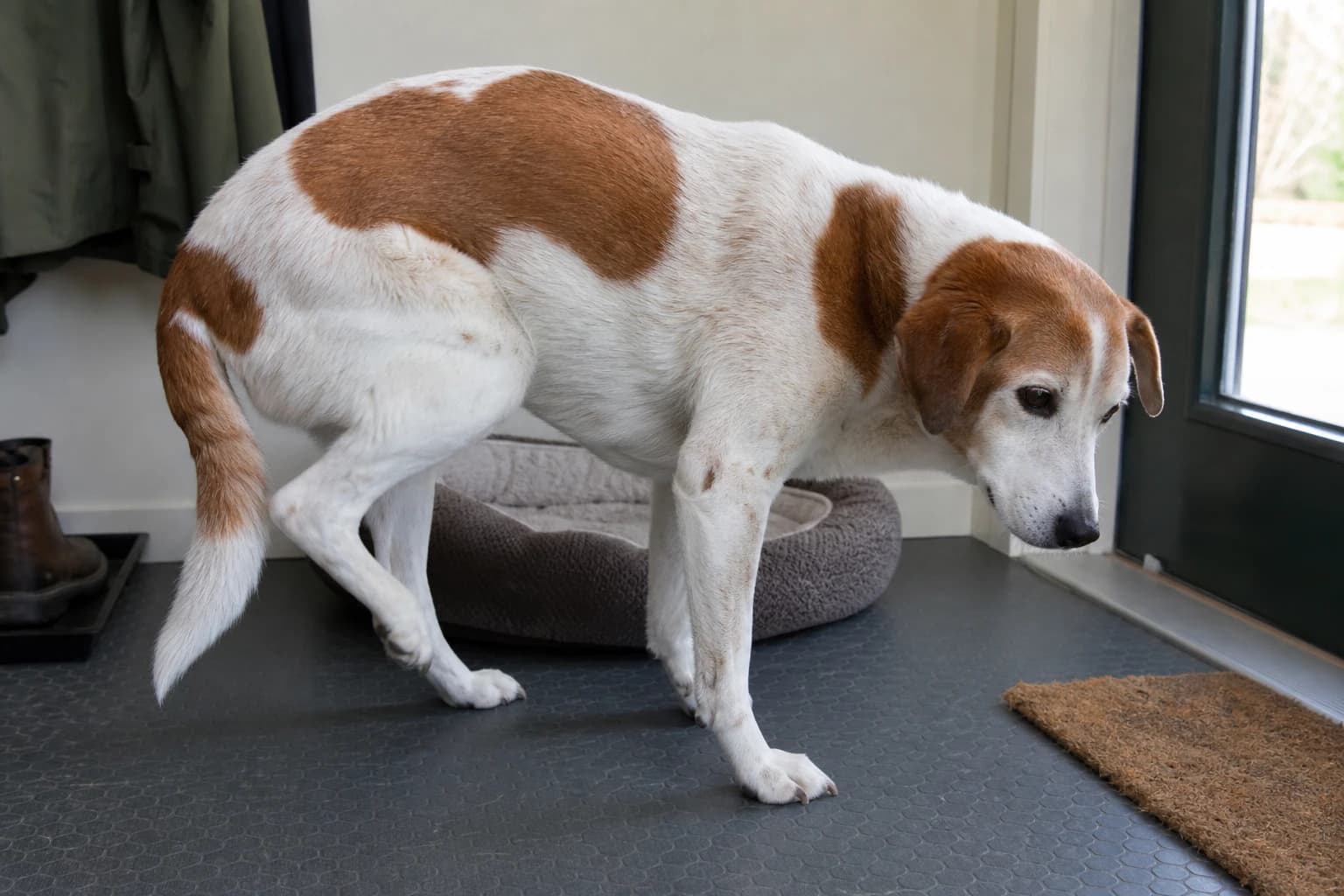
- Dragging the back feet, knuckling over onto the tops of the toes, or walking in a wobbly, uncoordinated way
- Crying out when moved or touched along the back
- Loss of bladder or bowel control
- Back legs collapsing together with collapse, pale gums or breathing trouble
VCA Animal Hospitals notes that some dogs with a ruptured disc go from walking to total paralysis in under an hour, and that dogs with paralysis and loss of feeling should ideally have surgery within 24 hours.
Signs to watch for at home
Weakness usually starts subtly:
- slow to get up, or pushing up with the front legs first
- hesitating at stairs, the car or the sofa
- sitting with one back leg kicked out to the side
- a swaying back end when standing still
- scuffing the back toes or wearing the nails down on top
- back legs sliding out on smooth floors
- trembling back legs when standing
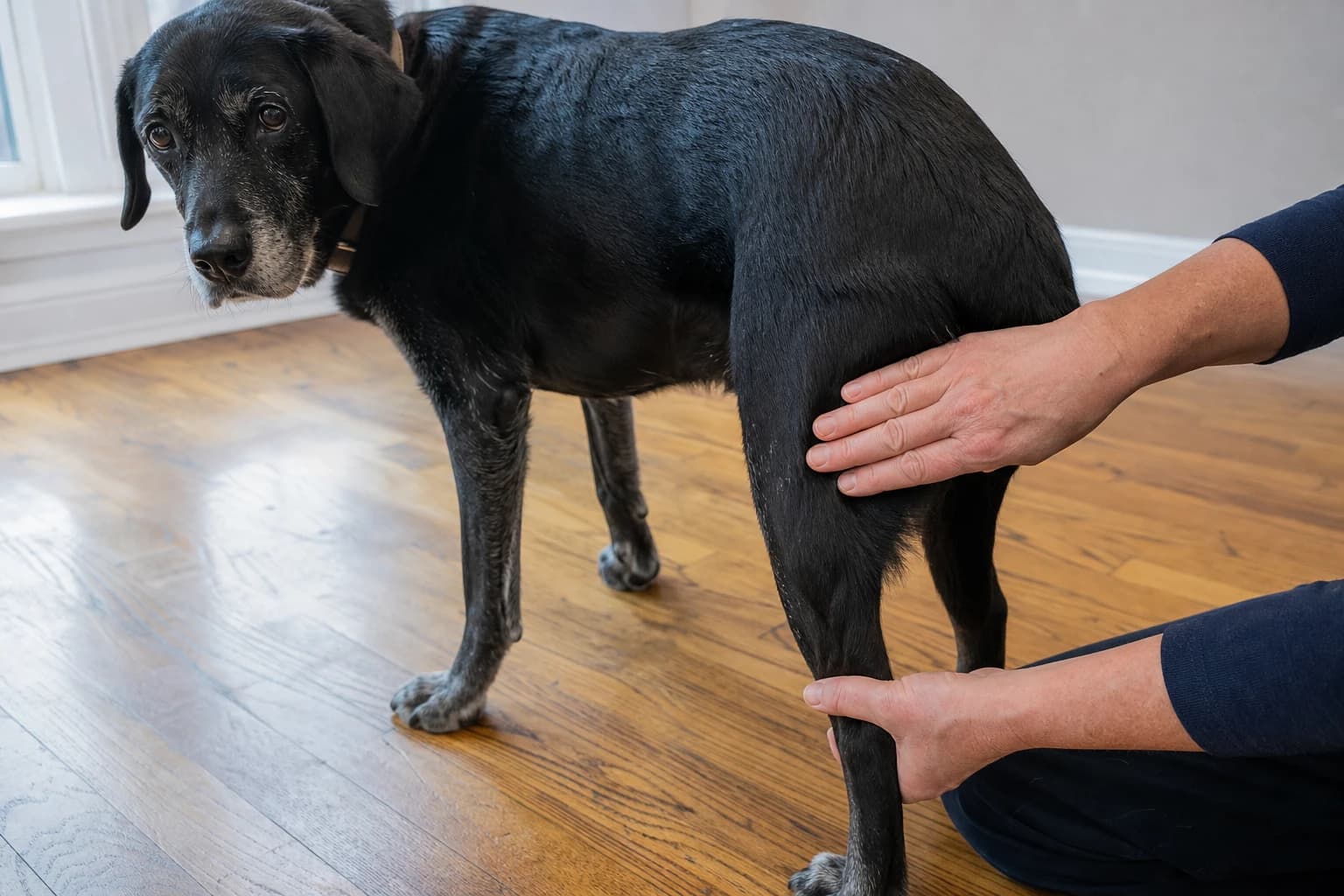
- muscle wasting over the hips and thighs
Common causes of weak back legs in old dogs
Arthritis in the hips, knees and spine
VCA lists weakness and pain in the hind legs, reluctance to rise and reluctance to climb stairs among the signs of hip dysplasia, and slowness to stand among the signs of degenerative joint disease. Arthritis is the most common chronic disease in dogs, according to VCA. Arthritic dogs are usually stiff after rest and loosen up as they move.
Knee ligament (cruciate) disease
VCA lists early signs as slight or intermittent limping, difficulty getting up, hesitating at stairs and sitting with the back legs to one side. When both knees are affected, it can look like general back leg weakness. See dog limping on front or back leg.
Muscle loss
Older dogs lose muscle, often first over the back legs and spine, even when their weight stays the same. A Tufts University review describes this age-related muscle loss (sarcopenia), and the related muscle wasting caused by heart disease, kidney disease and cancer (cachexia), as linked to more illness and a higher risk of death. Weak muscles also make arthritis worse. See dog losing muscle in back legs.
Disc disease and lumbosacral disease
The Merck Veterinary Manual's owner guide describes back discs causing back pain, reluctance to move, and signs ranging from loss of control of the hind legs to paralysis. VCA notes lumbosacral disease, most common in middle-aged to older large dogs, makes dogs slow to rise and can cause back leg weakness.
Degenerative myelopathy
A slowly progressive spinal cord disease. VCA describes early signs as the back paws knuckling over and the hindquarters swaying when the dog stands still, usually without pain, mostly in dogs aged 4 to 14. In a Swiss study of 50 dogs, the average age at diagnosis was 9.1 years, and German Shepherds, Kuvasz, Hovawarts and Bernese Mountain Dogs were overrepresented. Because it is not painful, it is easy to mistake for arthritis at first.
Pug myelopathy
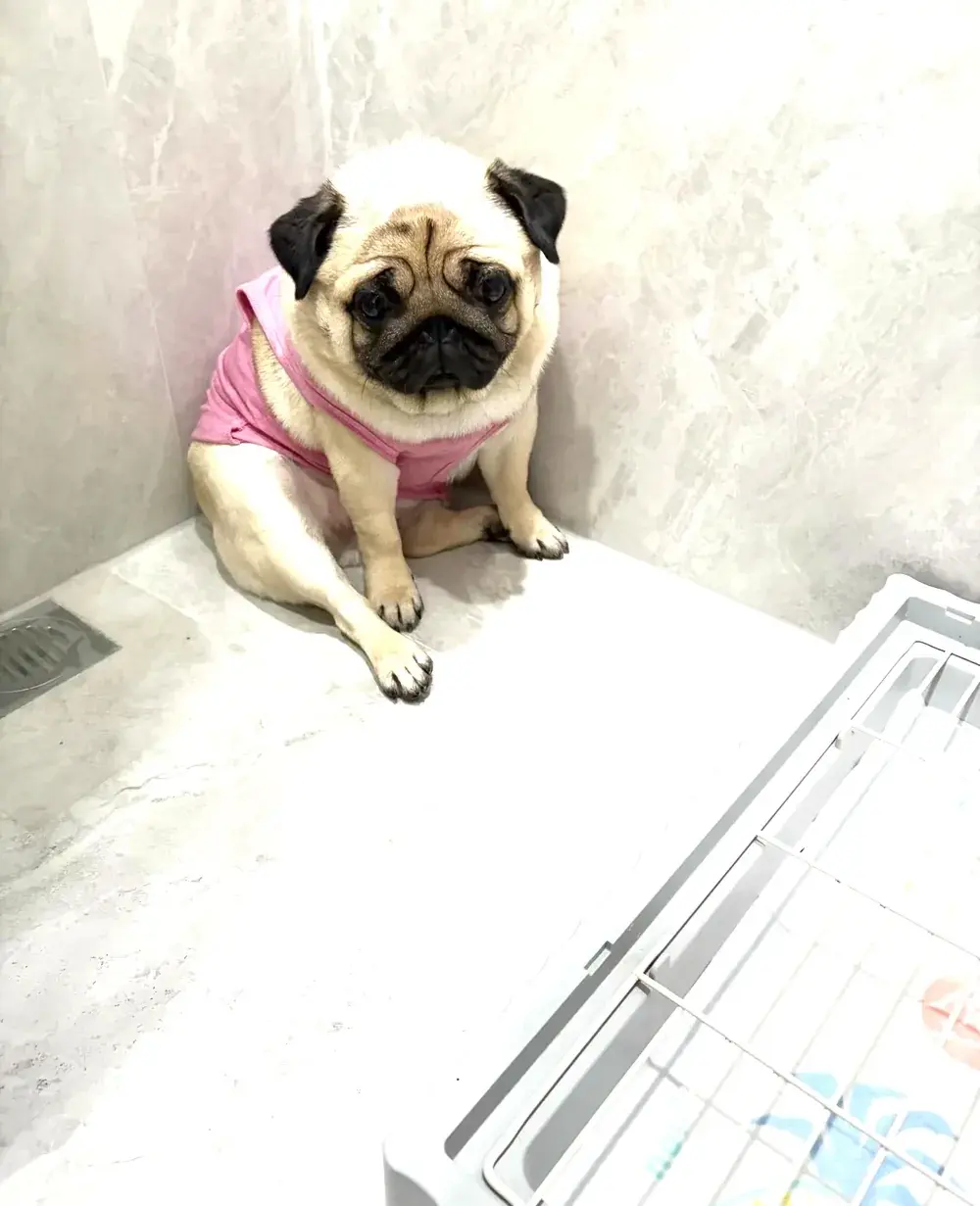
Pugs have their own spinal cord disease. A 2023 genetics study describes pug thoracolumbar myelopathy as progressive wobbliness and weakness of the back legs, commonly with incontinence, that starts late in life and affects more males than females. Any pug with worsening back leg coordination should see a vet, ideally one with access to a neurologist.
Other causes
A 2024 review of neurological disease in older dogs names degenerative, cancer-related and vascular diseases as the most common. These include a spinal stroke (fibrocartilaginous embolism), which causes sudden weakness, often on one side, and tumors of the spine or nerves. Hormone disorders and other illness can also weaken the back legs.
Arthritis or a nerve problem?
You cannot tell for certain at home, but these patterns point your vet in the right direction:
- More like arthritis: stiffness after rest that eases with movement, pain when the hips or knees are moved, reluctance rather than inability.
- More like a nerve or spinal cord problem: knuckling, scuffing the toes, crossing the back legs, a swaying back end, weakness without obvious pain, or incontinence.
Your vet will check paw placement and reflexes, feel the joints and spine, and may recommend X-rays, blood tests or, for spinal disease, MRI. Film your dog getting up and walking on a non-slip surface before the visit.
How to help an old dog with weak back legs
1. Get a diagnosis and treat pain
Many causes are treatable. Pain relief from your vet matters for strength too: a dog that hurts uses its legs less, and unused muscles waste. See arthritis in dogs: treatment and home care.
2. Keep your dog lean
Extra weight loads weak legs. In obese dogs with arthritis, lameness improved measurably from about 6% weight loss.
3. Strengthening and rehabilitation
The 2023 AAHA senior care guidelines note that rehabilitation can help with pain, mobility and balance in senior dogs. For degenerative myelopathy, a review in the Veterinary Clinics of North America describes physical rehabilitation as the only intervention that slows progression and prolongs quality of life. In the 2006 Swiss study, dogs given intensive physiotherapy survived on average 255 days after diagnosis, against 130 days with moderate and 55 days with no physiotherapy, and stayed walking longer.
Exercises your vet or a rehabilitation vet may suggest:
- Sit-to-stands. Ask your dog to sit, then stand, on a non-slip surface. In a 2025 study in Beagles, the front thigh muscle that straightens the knee worked at about 3.4 times its walking level during sit-to-stand, and lowering back into a sit made all three tested back leg muscles work together.
- Slow lead walks, including gentle slopes if your vet agrees.
- Standing weight shifts: while your dog stands, gently move its hips side to side.
- Stepping over low poles to make your dog lift each back foot.
- Hydrotherapy (underwater treadmill or swimming) at a rehabilitation center.
Start with a few repetitions, stop before your dog tires, and build up slowly. Exercise should not make a limp or pain worse the next day.
4. Support at home
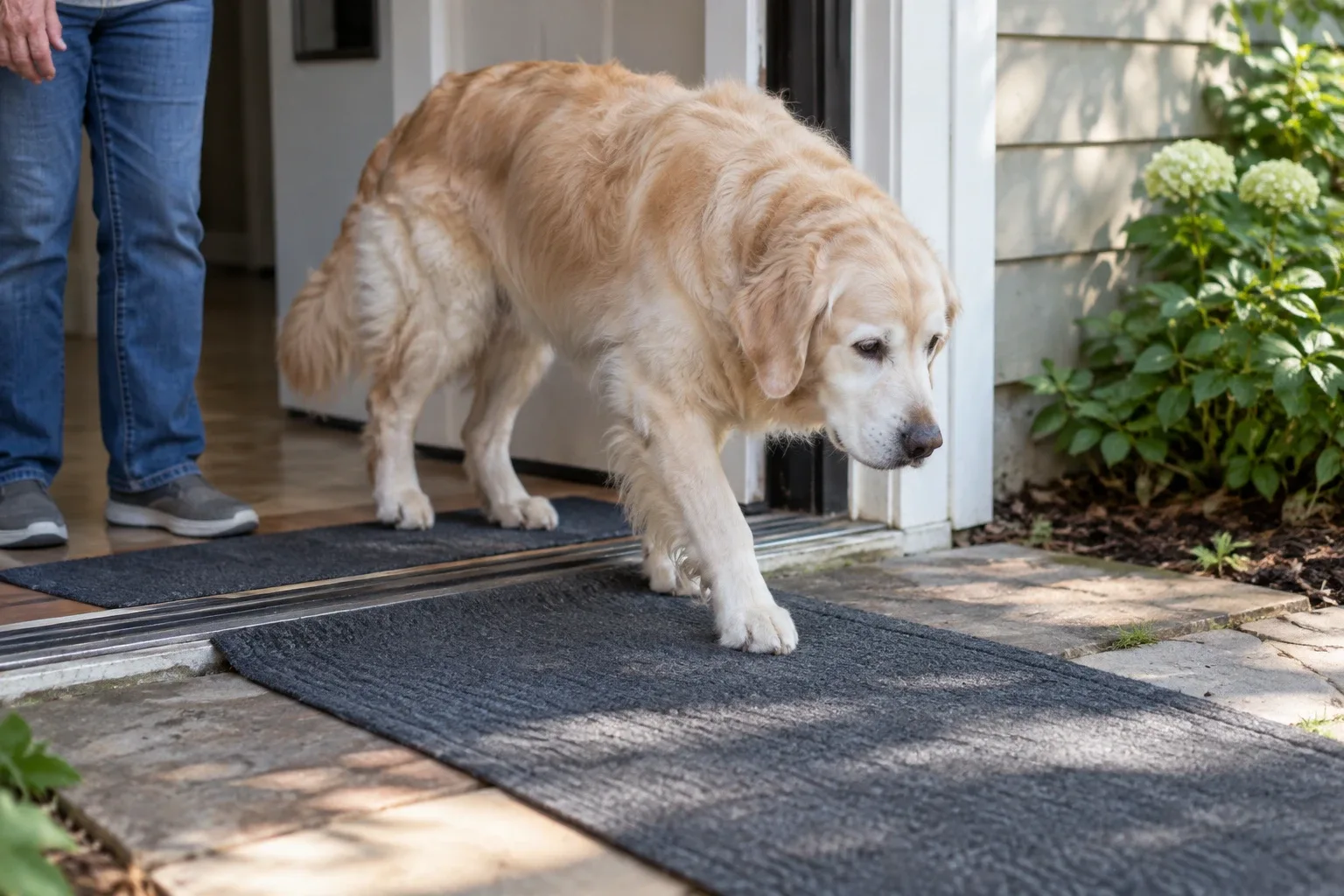
- Grip. Non-slip rugs or runners on smooth floors, short nails and trimmed fur between the pads. See making your home safer for a senior dog.
- A rear sling or support harness for stairs, getting up and toilet trips. In a pinch, a towel looped under the belly works as a temporary sling. See support harness for senior dogs.
- Ramps instead of jumps, for the car and furniture. See dog stairs and ramps for bed.
- Several short walks rather than one long one, as AAHA suggests for older dogs.
- A supportive, easy-to-clean bed your dog can step onto without climbing.
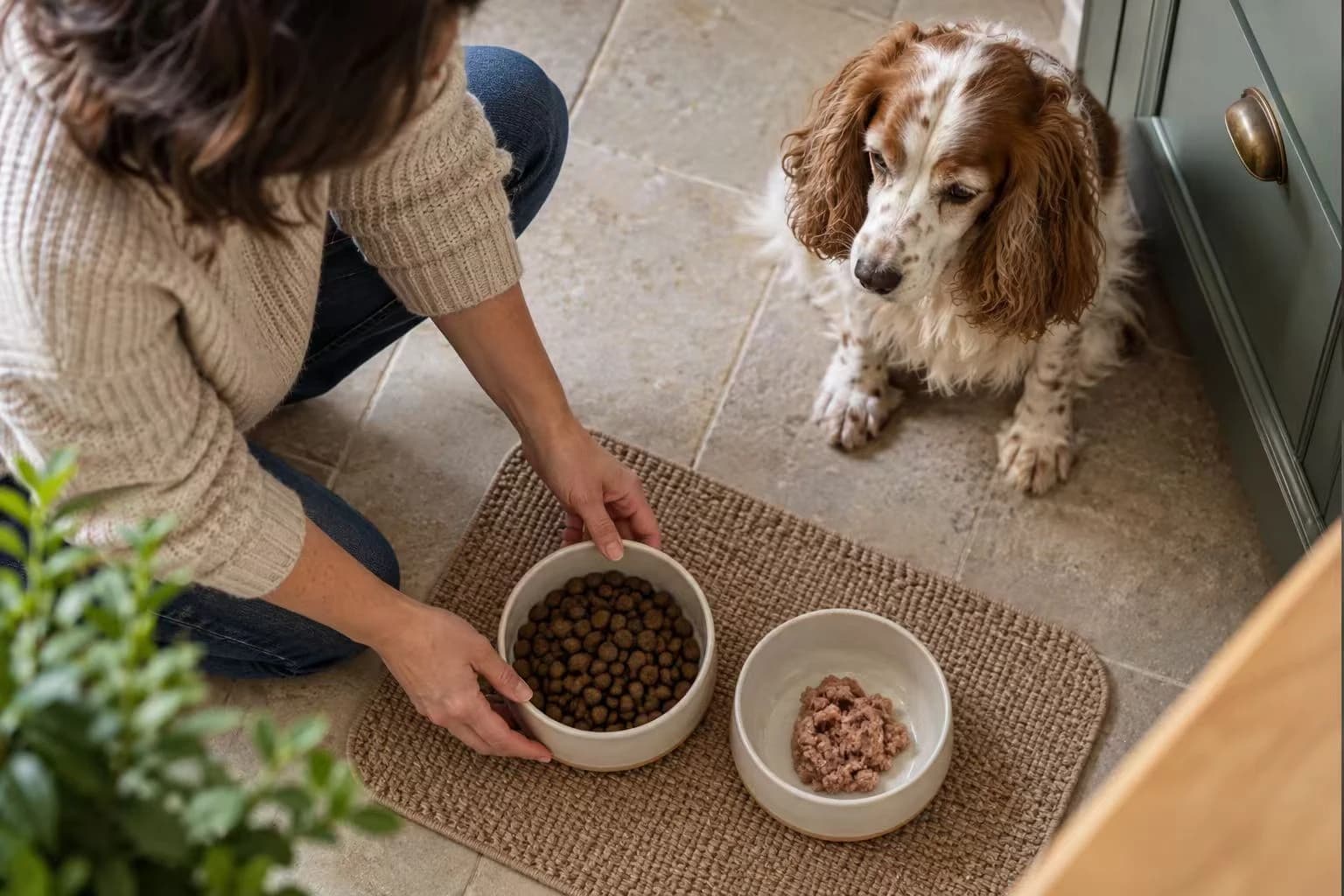
- Raised food and water bowls if bending down is hard.
5. Joint and muscle nutrition
- Joints. In a 2006 trial, 67% of dogs with joint disease on a green-lipped mussel extract had improved by day 56, against 41% on placebo. Our green-lipped mussel powder is a single-ingredient daily food topper.
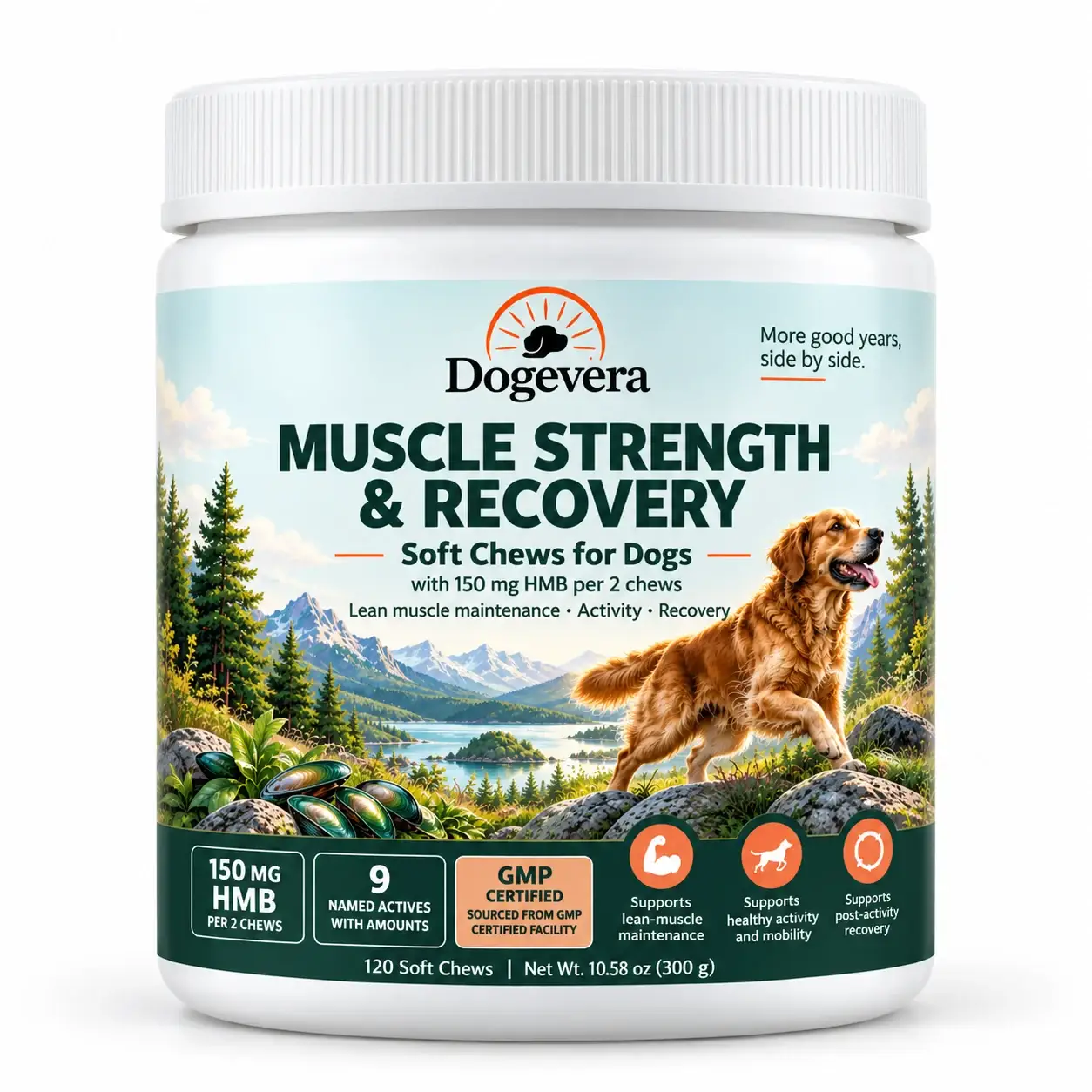
- Muscle. No supplement has been shown to reverse age-related muscle loss in dogs; protein, exercise and pain control come first. Our Muscle Strength & Recovery Soft Chews provide 150 mg of calcium HMB with amino acids, salmon oil and green-lipped mussel per serving, at amounts below those used in dog studies, as an add-on to diet and exercise. See HMB for dogs.
FAQ
How can I help my senior dog with weak back legs?
Get a diagnosis, treat pain, keep your dog lean, do short daily strengthening exercises such as sit-to-stands, and add grip and support at home: rugs, a harness, ramps and short nails.
Why are my old dog's back legs suddenly weak?
Sudden weakness points to a disc, a spinal stroke or a ligament injury more than to arthritis. Go to a vet the same day, or an emergency clinic if your dog cannot stand.
Why are my 13-year-old dog's back legs collapsing?
Collapsing back legs can come from arthritis pain, muscle loss, disc disease, degenerative myelopathy or other neurological disease. It needs a vet exam soon; go immediately if it is sudden or comes with incontinence or pain.
My old dog's back legs are weak and shaking. What does it mean?
Trembling legs are a common sign of pain, and can also come from weakness or nerve disease. See senior dog back legs shaking when standing.
Can old dogs recover from weak back legs?
It depends on the cause. Arthritis pain and muscle loss can improve with treatment and exercise. Degenerative myelopathy progresses, but physiotherapy helps dogs stay mobile longer.
Should I still walk my dog with weak back legs?
Usually yes, in short, slow walks on good footing, unless your vet has prescribed rest. Use a harness to help on stairs and slopes.
References
- VCA Animal Hospitals. Degenerative Disc Disease in Dogs, Hip Dysplasia in Dogs, Degenerative Joint Disease in Dogs, Lumbosacral Syndrome in Dogs, Degenerative Myelopathy in Dogs, Cruciate Ligament Rupture in Dogs.
- Merck Veterinary Manual. Disorders of the Spinal Column and Cord in Dogs.
- Kathmann I, et al. Daily controlled physiotherapy increases survival time in dogs with suspected degenerative myelopathy. Journal of Veterinary Internal Medicine. 2006. PMID: 16955818
- Pancotto TE. Rehabilitation therapy for the degenerative myelopathy patient. Veterinary Clinics of North America: Small Animal Practice. 2023. PMID: 37179117
- Brander G, et al. Multiple genetic loci associated with pug dog thoracolumbar myelopathy. Genes. 2023. PMID: 36833311
- Espino L, Miño N. Common neurologic diseases in geriatric dogs. Animals. 2024. PMID: 38929372
- Yoshikawa K, et al. Surface electromyography of the gluteus medius, vastus lateralis, and gastrocnemius muscles during sit-to-stand and stand-to-sit transitions in normal Beagles. Research in Veterinary Science. 2025. PMID: 40616965
- Freeman LM. Cachexia and sarcopenia: emerging syndromes of importance in dogs and cats. Journal of Veterinary Internal Medicine. 2012. PMID: 22111652
- Marshall WG, et al. The effect of weight loss on lameness in obese dogs with osteoarthritis. Veterinary Research Communications. 2010. PMID: 20237844
- Pollard B, et al. Clinical efficacy and tolerance of an extract of green-lipped mussel in dogs presumptively diagnosed with degenerative joint disease. New Zealand Veterinary Journal. 2006. PMID: 16751841
- American Animal Hospital Association. 2023 AAHA Senior Care Guidelines for Dogs and Cats.
For individual health questions, your veterinarian remains the best partner.