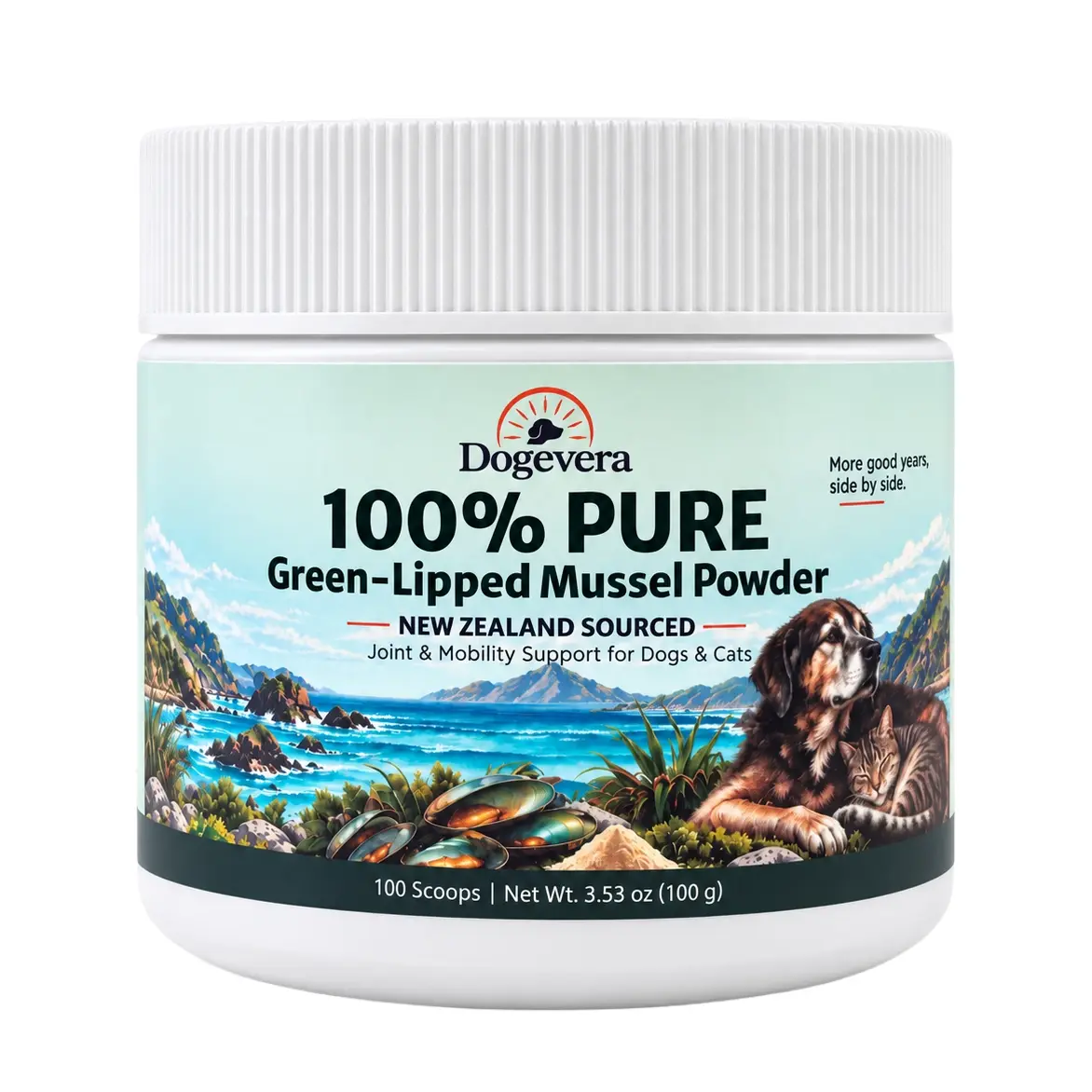
We sell this powder. It was not the product tested in the studies discussed here.
TL;DR
Arthritis in dogs is treated with a combination, not a single pill: weight control, controlled exercise and rehabilitation, pain medication from your vet, joint diets or supplements, and changes at home, with surgery for some joints. Weight comes first; the American College of Veterinary Surgeons calls a slender body weight by far the most critical part of arthritis management. For pain, vets use anti-inflammatory drugs (NSAIDs), a monthly injection called Librela, and add-on medicines. Among supplements, omega-3 fish oil and green-lipped mussel have the strongest trial results. In rehabilitation, laser therapy has two positive controlled trials. Arthritis cannot be cured, but most dogs can live active, comfortable lives with the right plan.
What arthritis in dogs is
Osteoarthritis is the gradual breakdown of joint cartilage, with inflammation, pain and stiffness. VCA Animal Hospitals calls it the most common chronic disease in dogs, affecting about a quarter of dogs, and notes that up to 60% of dogs show it on X-rays at some point in life.
Signs of arthritis in dogs
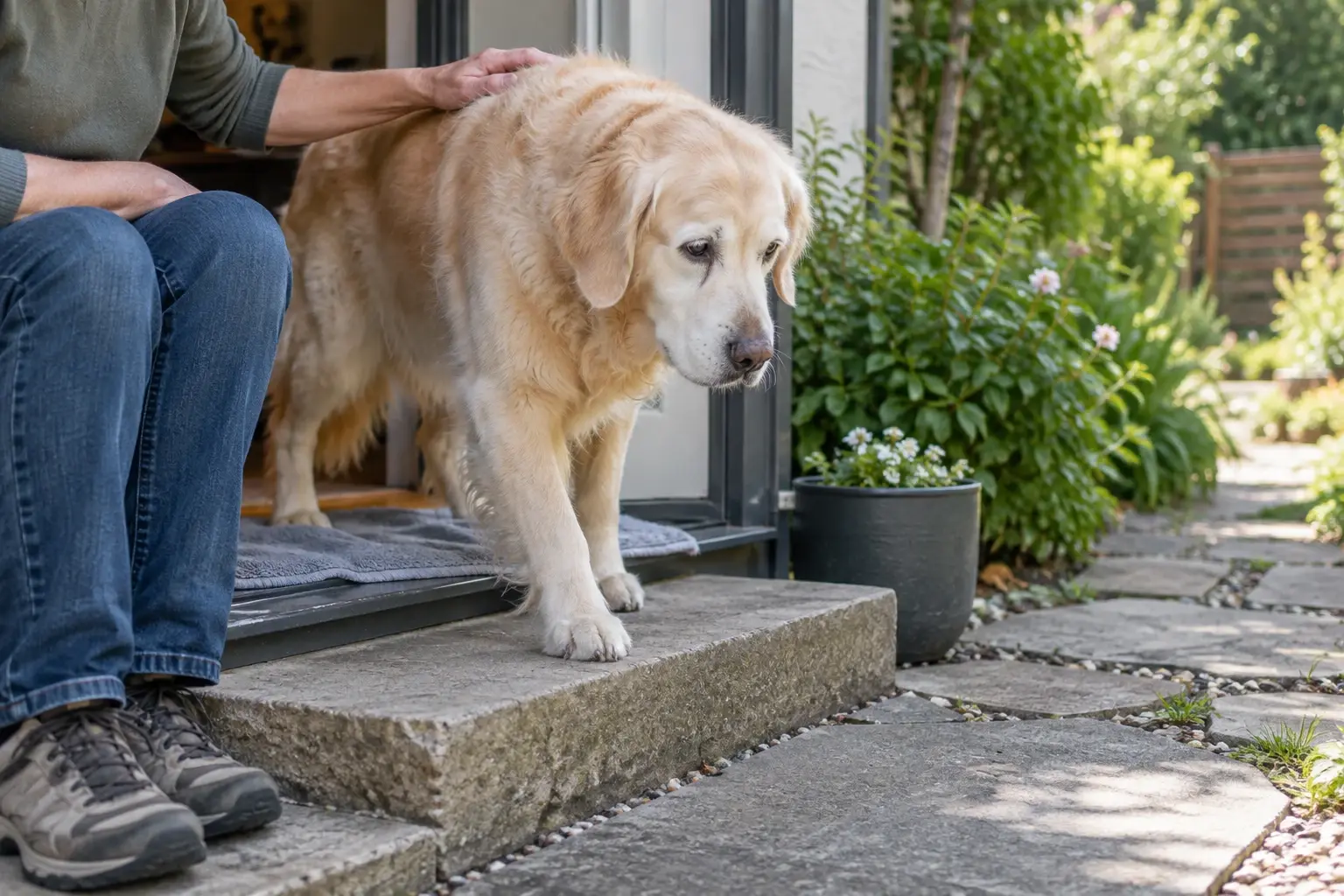
Dogs with long-term joint pain rarely cry out. The 2022 AAHA pain guidelines describe quieter changes that owners often put down to old age:
- Sleeping more, walking more slowly or not as far, lagging behind on walks
- Stiffness after rest that eases once the dog gets moving
- Hesitating before stairs, the car or the sofa
- Limping, a "lazy sit", or carrying the head or tail lower
- Shifting weight off one leg when standing
- Licking one joint
- Irritability when touched, less interest in play, and accidents in the house
AAHA notes that owners may explain these signs away for months, and that dogs often act normal in the clinic. A short phone video of your dog getting up, climbing stairs and walking helps your vet see what you see at home. Sudden, severe or worsening lameness needs a prompt check, because Cornell lists injuries and other conditions besides arthritis as causes of limping in older dogs.
Which dogs get arthritis?
Any dog can, but some are at higher risk. A study of 455,557 dogs in UK primary care records (VetCompass) found these risk factors for a diagnosis of limb osteoarthritis:
- Breed, for example Labrador and Golden Retrievers
- Higher body weight
- Age over 8 years
- Being neutered
Joint problems in young dogs, such as hip or elbow dysplasia and cruciate ligament injuries, also lead to arthritis later. If your dog fits these groups, the COAST guidelines encourage starting the conversation about weight, exercise and joint health early, before signs appear.
How vets diagnose arthritis in dogs
Your vet watches your dog move, feels each joint for pain, swelling and reduced range of motion, and usually takes X-rays. AAHA points out that X-ray changes and pain often do not match: a dog with mild X-ray changes can be very sore, and the reverse. That is why the hands-on exam and your observations at home matter as much as the images.
Treatment 1: weight control
- In a lifelong study of 48 Labrador Retrievers, dogs fed 25% less developed hip arthritis on X-rays at a median of 12 years, versus 6 years for their littermates.
- In obese dogs with arthritis, lameness improved from about 6% weight loss, confirmed on a force plate from about 9%.
VCA's nutrition team suggests a lean target of 3 on a 5-point body condition scale. The COAST guidelines put weight management at every stage of arthritis care.
Treatment 2: exercise and rehabilitation
The ACVS advises replacing high-impact activity such as running and jumping with controlled, low-impact exercise like leash walks, which builds muscle around the joints. Several shorter walks often suit a stiff dog better than one long one. The 2023 AAHA senior care guidelines recommend rehabilitation for senior dogs with chronic musculoskeletal disease, and the COAST guidelines encourage working with a certified rehabilitation therapist, with home exercises taught at the clinic.
What rehabilitation can include:
- Therapeutic exercise: strengthening, balance work, range of motion exercises and underwater treadmill (hydrotherapy), which builds muscle with less load on the joints.
- Manual therapy: massage and gentle joint movement by the therapist, often taught to owners for home use.
- Heat and cold: warmth for stiff muscles and cold for a sore, swollen joint. COAST lists both as home options after professional guidance, so ask your therapist for times and temperatures.
- Laser therapy (photobiomodulation): in a 2018 trial of 20 dogs with elbow arthritis, 9 of 11 dogs given 6 weeks of laser treatment could have their NSAID dose reduced, against 0 of 9 given a sham light, and lameness improved more. In a 2022 trial of 20 dogs with hip arthritis, a 3-week course of laser gave better pain and function scores than a 21-day course of meloxicam at days 8 to 30.
- Acupuncture: results are mixed. In a 2020 trial of 32 dogs, acupuncture did not change force plate or activity measurements, but owners rated their dogs better than after placebo treatment.
- Shockwave, electrical stimulation and pulsed electromagnetic field therapy are also used by rehabilitation clinics; COAST groups them under rehabilitation with varying levels of evidence.
Exercises you can do at home
Ask your vet or a rehabilitation vet which of these suit your dog, start with a few repetitions, and stop before your dog tires:
- Sit-to-stands on a non-slip surface. In a 2025 study in Beagles, the main thigh muscle that straightens the knee worked at about 3.4 times its walking level during sit-to-stand.
- Slow lead walks, including gentle slopes if your vet agrees.
- Standing weight shifts: gently move the hips side to side while your dog stands.
- Stepping over low poles to make each leg lift.
Exercise should not make a limp worse the next day. See old dog weak back legs.
Treatment 3: medication for arthritis in dogs
Your vet chooses medication. Never give human pain relievers: the Merck Veterinary Manual warns that ibuprofen can cause stomach ulcers and perforation in dogs, and acetaminophen (Tylenol) can damage the liver.
- NSAIDs such as carprofen, meloxicam, deracoxib, firocoxib and robenacoxib are the most commonly used, according to ACVS and VCA. Your vet checks liver and kidney function before and during long-term use.
- Librela (bedinvetmab): a monthly injection that blocks nerve growth factor, a pain signal. VCA notes improvement may appear within days to weeks, with optimal results after more than a month. The FDA has notified vets of reported adverse events, including incoordination, seizures, weakness, increased thirst and urination, so discuss the risks and report any changes. VCA advises against combining it with NSAIDs.
- Add-on medicines such as gabapentin and amantadine, for dogs that need more pain control. VCA lists sleepiness and wobbliness as possible side effects of gabapentin.
- Joint injections: polysulfated glycosaminoglycan (Adequan) or pentosan (Cartrophen) to support cartilage and joint fluid.
Treatment 4: diets and supplements
Omega-3 fish oil
Systematic reviews rank omega-3 first among joint supplements. In a 2010 trial, 82% of dogs with arthritis on a high fish oil food put more weight on their worst leg after 90 days, against 38% on a regular food. The 2023 COAST guidelines quote 75 to 100 mg of EPA plus DHA per kg a day as a starting amount. See the fish oil dosage chart.
Green-lipped mussel
- 2006 trial, 81 dogs: by day 56, 67% of dogs on a mussel extract had improved, against 41% on placebo; when the placebo dogs switched to the extract, 91% improved within another 56 days.
- 2002 studies: 83% of dogs given mussel powder on their food improved their arthritis score by 30% or more in 6 weeks, against 7% on the same food without it.
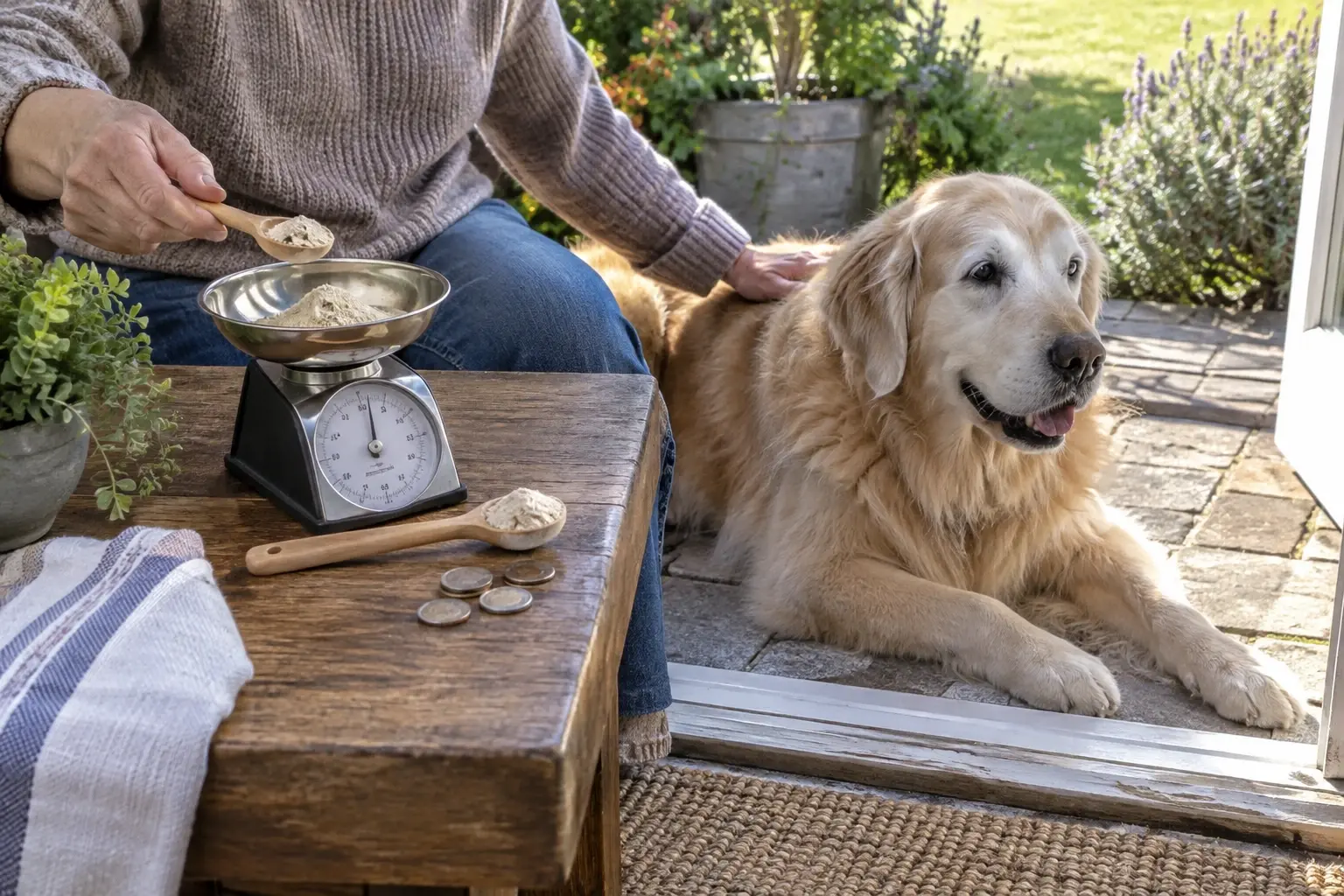
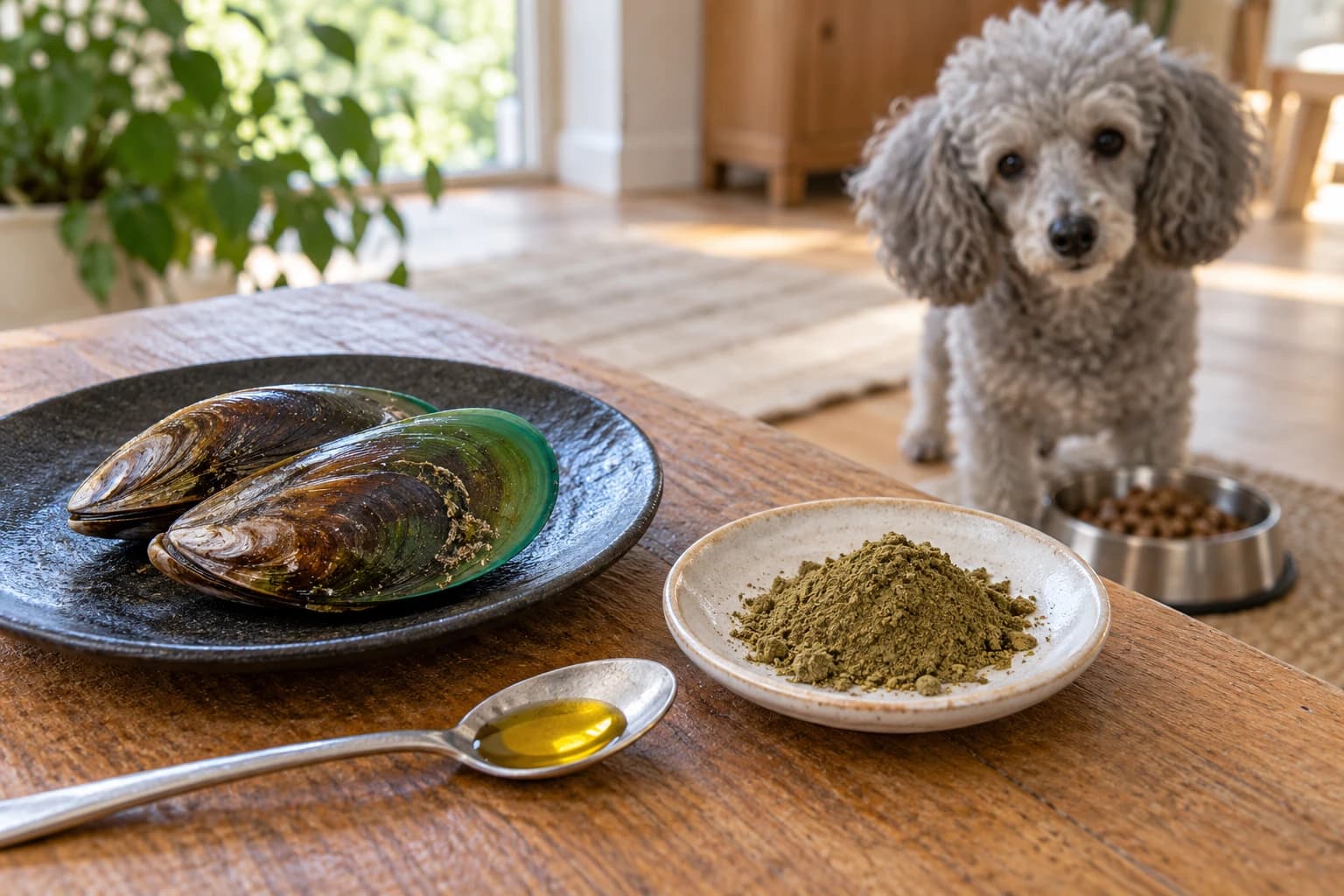
Our green-lipped mussel powder is one ingredient, New Zealand green-lipped mussel (Perna canaliculus), measured by the gram and mixed into food. A 100 g jar is $29.99. See green-lipped mussel for dogs: the evidence.
Joint diets
Veterinary joint diets high in fish oil, such as Hill's j/d and Royal Canin Mobility Support, have their own trials. See dog food for joint health.
What to skip
A 2022 review of 72 trials found a very marked lack of effect of glucosamine-chondroitin products on arthritis pain. See glucosamine for senior dogs.
Treatment 5: surgery
Surgery fixes the underlying problem in some dogs, such as a torn cruciate ligament, and COAST lists preventive surgery for some young dogs with hip dysplasia. For a joint with pain that medication cannot control, the COAST guidelines list joint replacement, removing the head of the joint (excision arthroplasty) or fusing the joint (arthrodesis), and note that the evidence supports total hip replacement as a good option for suitable dogs, with excellent function reported in most of them. A board-certified surgeon can tell you whether your dog is a candidate.
Treatment 6: home changes
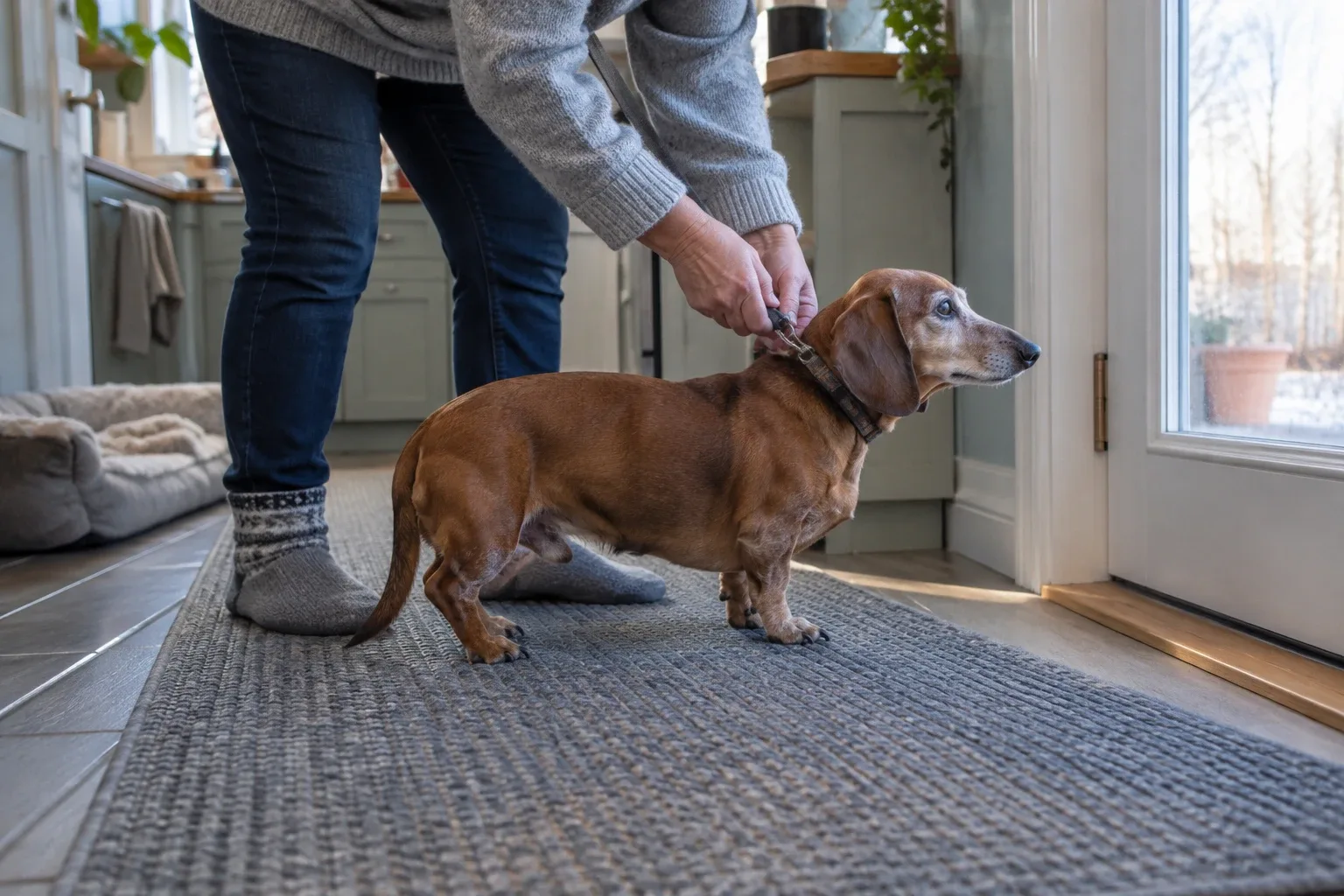
- Non-slip rugs or yoga mats on hard floors
- Ramps for the car, sofa and bed; see dog ramp for bed
- Raised bowls and an orthopedic bed
- Short nails for grip
- A warm, dry, draught-free place to rest; VCA notes cold and damp may worsen stiffness
- A coat for cold walks
- A slow start: a few minutes of gentle walking before anything more active
See old dog slipping on floor.
Tracking progress
The 2022 AAHA pain guidelines recommend owner questionnaires such as the Canine Brief Pain Inventory, free to download, and videos of your dog moving. Score your dog before a new treatment and again every few weeks so you and your vet can see what is working. See how to tell if a dog supplement is working.
Signs the pain is not well controlled
Arthritis changes over time, and a plan that worked last year may not be enough now. The 2022 AAHA pain guidelines note that dogs shift weight off a painful limb when standing and walking. Book a review with your vet if you notice:
- more trouble getting up, or more stiffness after rest
- reluctance to walk, jump or use stairs
- licking at a joint, or irritability when touched
- restlessness or panting at night; see senior dog panting at night
- a score on your pain questionnaire that is creeping up
Your vet may adjust the dose, add another medicine, refer your dog for rehabilitation, or look again for another cause, such as a ligament tear or spinal problem.
FAQ
Can arthritis in dogs be cured?
No, but VCA notes many dogs with arthritis continue to enjoy active, happy lives with treatment and lifestyle changes.
What is the best medication for arthritis in dogs?
It depends on your dog's health and other medicines. NSAIDs are most widely used; Librela is an option for some dogs. Your vet will choose.
What can I give my dog for arthritis at home?
Weight control, short regular walks, non-slip floors, warmth and a joint supplement with trial results, such as fish oil or green-lipped mussel. Never give human painkillers.
Can I give my dog ibuprofen or Tylenol for arthritis?
No. Ibuprofen can cause stomach ulcers and perforation in dogs, and acetaminophen can damage the liver. If your dog has eaten either, call your vet or a pet poison line straight away.
Does laser therapy work for dogs with arthritis?
Two controlled trials say it can help: in one, most laser-treated dogs could lower their NSAID dose; in the other, laser beat a 3-week course of meloxicam on pain and function scores for the first month. Both trials had 20 dogs, so ask a rehabilitation vet whether your dog is a good candidate.
How long can a dog live with arthritis?
Arthritis is a long-term condition. In UK vet records, dogs with osteoarthritis lived with it for an estimated 11.4% of their lifespan, so treatment is about keeping those years comfortable and active.
How long does it take for arthritis treatment to work?
Librela can work within days to weeks, according to VCA. Supplements take longer: in the green-lipped mussel trial, the difference from placebo appeared at day 56. Laser trials ran for 3 to 6 weeks.
References
- American College of Veterinary Surgeons. Osteoarthritis in Dogs.
- VCA Animal Hospitals. Degenerative Joint Disease in Dogs, Helping Your Dog with Osteoarthritis, Bedinvetmab, Arthritis and Nutrition for Dogs, Gabapentin.
- U.S. Food and Drug Administration. Dear Veterinarian Letter about adverse events reported in dogs treated with Librela.
- Merck Veterinary Manual. Toxicoses From Human Analgesics in Animals.
- Cornell University College of Veterinary Medicine. What to expect when taking your limping dog to the veterinarian.
- Anderson KL, et al. Prevalence, duration and risk factors for appendicular osteoarthritis in a UK dog population under primary veterinary care. Scientific Reports. 2018. PMID: 29618832
- Smith GK, et al. Lifelong diet restriction and radiographic evidence of osteoarthritis of the hip joint in dogs. 2006. PMID: 16948575
- Marshall WG, et al. The effect of weight loss on lameness in obese dogs with osteoarthritis. 2010. PMID: 20237844
- Looney AL, et al. A randomized blind placebo-controlled trial investigating the effects of photobiomodulation therapy (PBMT) on canine elbow osteoarthritis. Canadian Veterinary Journal. 2018. PMID: 30197438
- Alves JC, et al. A randomized double-blinded controlled trial on the effects of photobiomodulation therapy in dogs with osteoarthritis. American Journal of Veterinary Research. 2022. PMID: 35895799
- Baker-Meuten A, et al. Evaluation of acupuncture for the treatment of pain associated with naturally-occurring osteoarthritis in dogs. BMC Veterinary Research. 2020. PMID: 32977836
- Roush JK, et al. Evaluation of the effects of dietary supplementation with fish oil omega-3 fatty acids on weight bearing in dogs with osteoarthritis. 2010. PMID: 20043801
- Pollard B, et al. Clinical efficacy and tolerance of an extract of green-lipped mussel in dogs presumptively diagnosed with degenerative joint disease. 2006. PMID: 16751841
- Bierer TL, Bui LM. Improvement of arthritic signs in dogs fed green-lipped mussel. 2002.
- Barbeau-Grégoire M, et al. A 2022 systematic review and meta-analysis of enriched therapeutic diets and nutraceuticals in canine and feline osteoarthritis. 2022. PMID: 36142319
- Cachon T, et al. COAST Development Group's international consensus guidelines for the treatment of canine osteoarthritis. 2023.
- American Animal Hospital Association. 2022 Pain Management Guidelines: chronic pain assessment in dogs, 2023 Senior Care Guidelines: pain management.
- Yoshikawa K, et al. Surface electromyography of the gluteus medius, vastus lateralis, and gastrocnemius muscles during sit-to-stand and stand-to-sit transitions in normal Beagles. Research in Veterinary Science. 2025. PMID: 40616965
For individual health questions, your veterinarian remains the best partner.